View methods side by side.
Choose up to four methods. Add them using the search and share the comparison by copying its link.
| Criterion |  Operations Runbook | 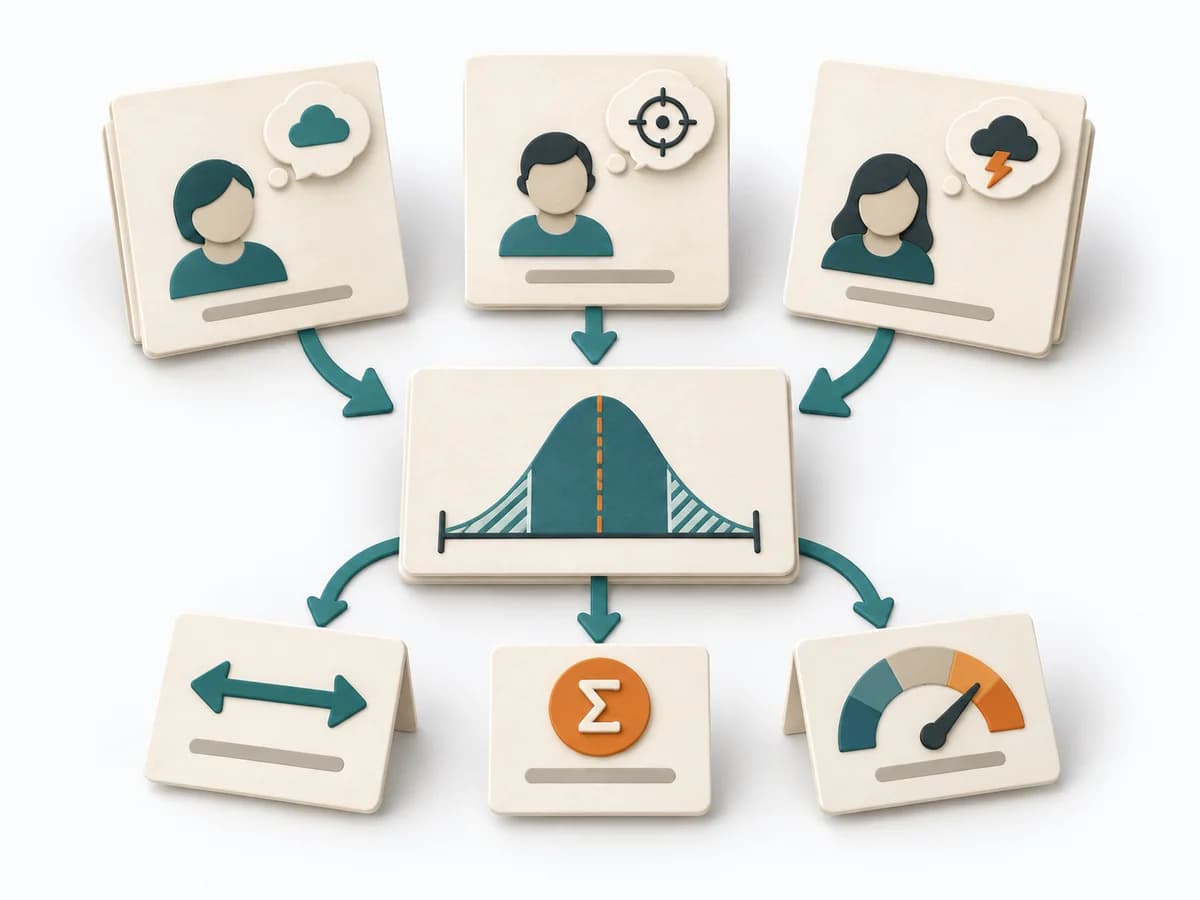 Decision Making Three-Point Estimation |  Operations Learning Review |
|---|---|---|---|
Purposedifferent | For recurring operational tasks or incidents, the method keeps solid action logic ready. It reduces uncertainty when time pressure, role changes, or rare situations demand fast access. | A single estimate for effort, time, or risk often looks too smooth for the real uncertainty behind it. It separates options, evaluation criteria, and open risks. The result is captured as a Three-Point Estimate, Risk Range, and Assumption Notes. | After a project phase with mixed results, the method makes learning from the individual case reusable. It connects events, decisions, and systemic conditions into robust insights. |
Complexitydifferent | Low | Medium | Medium |
Timedifferent | 20-60 min | 10-30 min je Item | 1-3 h |
Participantsdifferent | 1-4 | 1-8 | 3-10 |
Formatdifferent | Async | Workshop + async | Workshop |
Outputdifferent | Runbook, Checklist, Escalation Path | Three-Point Estimate, Risk Range, Assumption Notes | Learning Review Notes, System Factors, Improvement Actions |
Tagsno overlap | OperationsReliabilityDocumentation | EstimationUncertaintyForecasting | LearningRetrospectiveIncidentOperations |
Often compared together
Methods with strong topical overlap with the current selection, not yet in the comparison.