View methods side by side.
Choose up to four methods. Add them using the search and share the comparison by copying its link.
| Criterion |  Facilitation Question Burst | 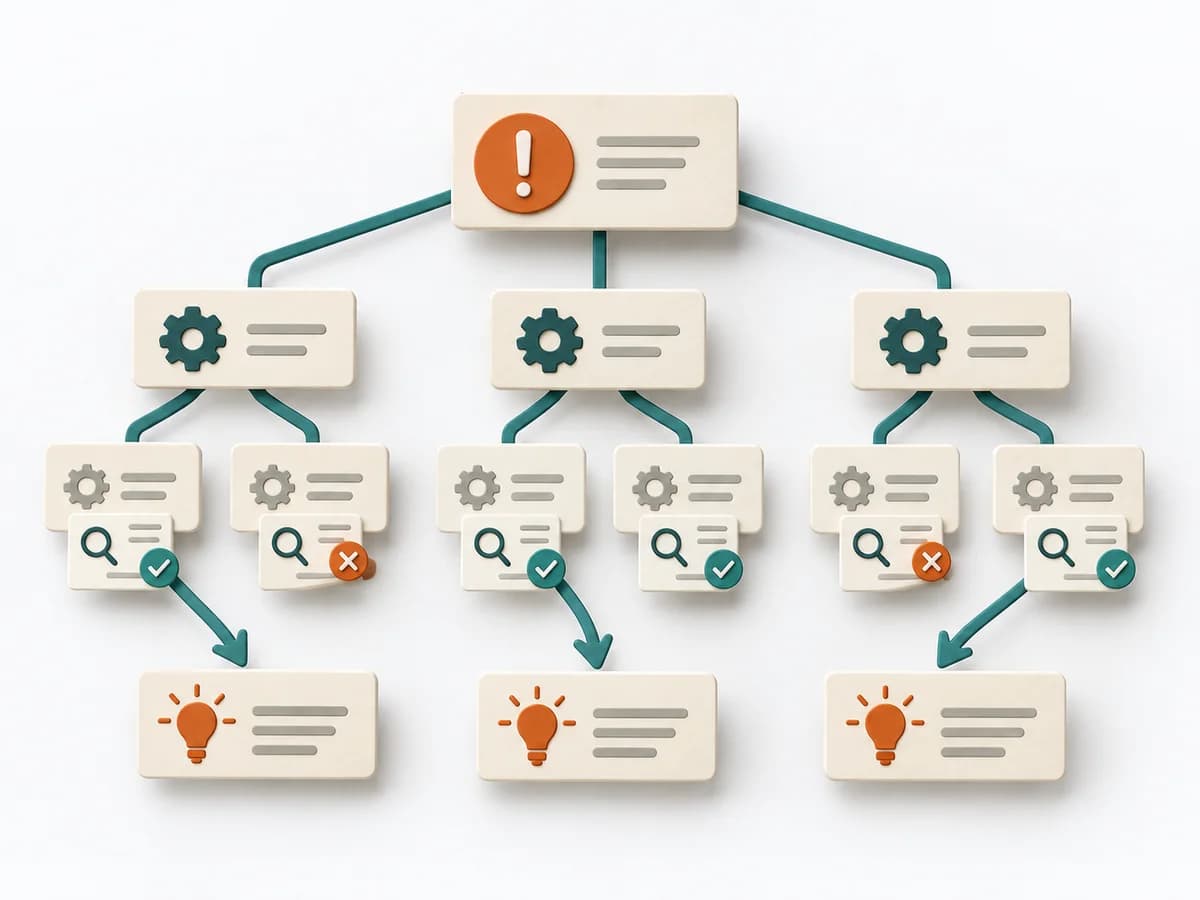 Operations Root Cause Tree Analysis |  Facilitation Stakeholder Salience Model |
|---|---|---|---|
Purposedifferent | When a problem gets covered up too quickly with answers, Question Burst puts the better question at the center. The format opens the thinking space before the group commits to an interpretation. | For a problem with several suspected causes, the method builds a causal structure instead of a mere list. It makes visible how causes connect and where the strongest points of leverage lie. | When stakeholders appear to matter very differently, the Stakeholder Salience Model rates their actual priority through power, legitimacy, and urgency. It turns individual contributions into a visible selection. The result is captured as a Salience diagram and a class-based strategy. |
Complexitydifferent | Low | Medium | Medium |
Timedifferent | 15-30 min | 1-3 h | 60-90 min |
Participantsdifferent | 2-8 | 2-8 | 3-6 |
Formatsame | Workshop | Workshop | Workshop |
Outputdifferent | Question List, Reframed Challenge, Learning Prompts | Cause Tree, Evidence Notes, Countermeasures | Salience Diagram, Strategy per Class |
Tagsno overlap | QuestionsReframingFacilitationSensemaking | Root causeTreeIncidentQuality | StakeholdersFacilitationAlignmentGovernance |
Often compared together
Methods with strong topical overlap with the current selection, not yet in the comparison.



