View methods side by side.
Choose up to four methods. Add them using the search and share the comparison by copying its link.
| Criterion | 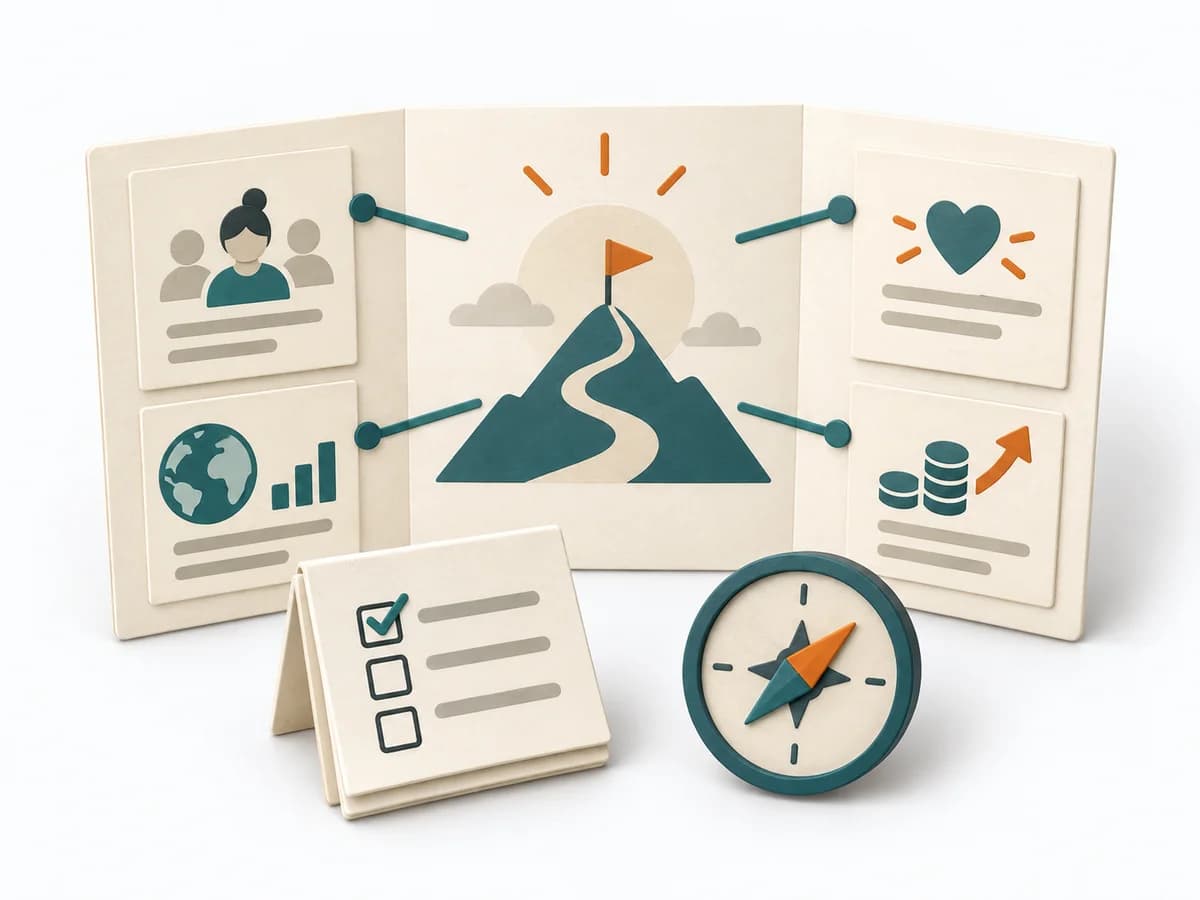 Product Strategy Product Vision Board |  Operations 5 Whys |  Facilitation Alignment Mapping |
|---|---|---|---|
Purposedifferent | When a product needs a shared direction, it connects target audience, benefit, and business picture in a clear vision. It makes the envisioned future legible for the team. | For a single, hard-to-explain deviation, the method exposes the causal chain behind the visible symptom. It keeps the cause open until a controllable condition emerges instead of a mere description. | When several people work toward one goal but hold different mental maps, Alignment Mapping makes the discrepancies visible. It arranges goals, assumptions, and priorities so shared direction becomes verifiable. |
Complexitydifferent | Low | Low | Medium |
Timedifferent | 1-2 h | 15-30 min | 1-2 h |
Participantsdifferent | 2-8 | 2-6 | 4-12 |
Formatdifferent | Workshop + async | Workshop | Workshop |
Outputdifferent | Product Vision Board, Vision Statement, Assumptions and Validation Questions | Root cause notes, Countermeasures | Alignment Map, Open Issues, Decision Questions |
Tagsno overlap | VisionCanvasStrategyAlignment | Root causeIncidentLeanProblem solving | AlignmentStakeholdersStrategyFacilitation |
Often compared together
Methods with strong topical overlap with the current selection, not yet in the comparison.



