View methods side by side.
Choose up to four methods. Add them using the search and share the comparison by copying its link.
| Criterion | 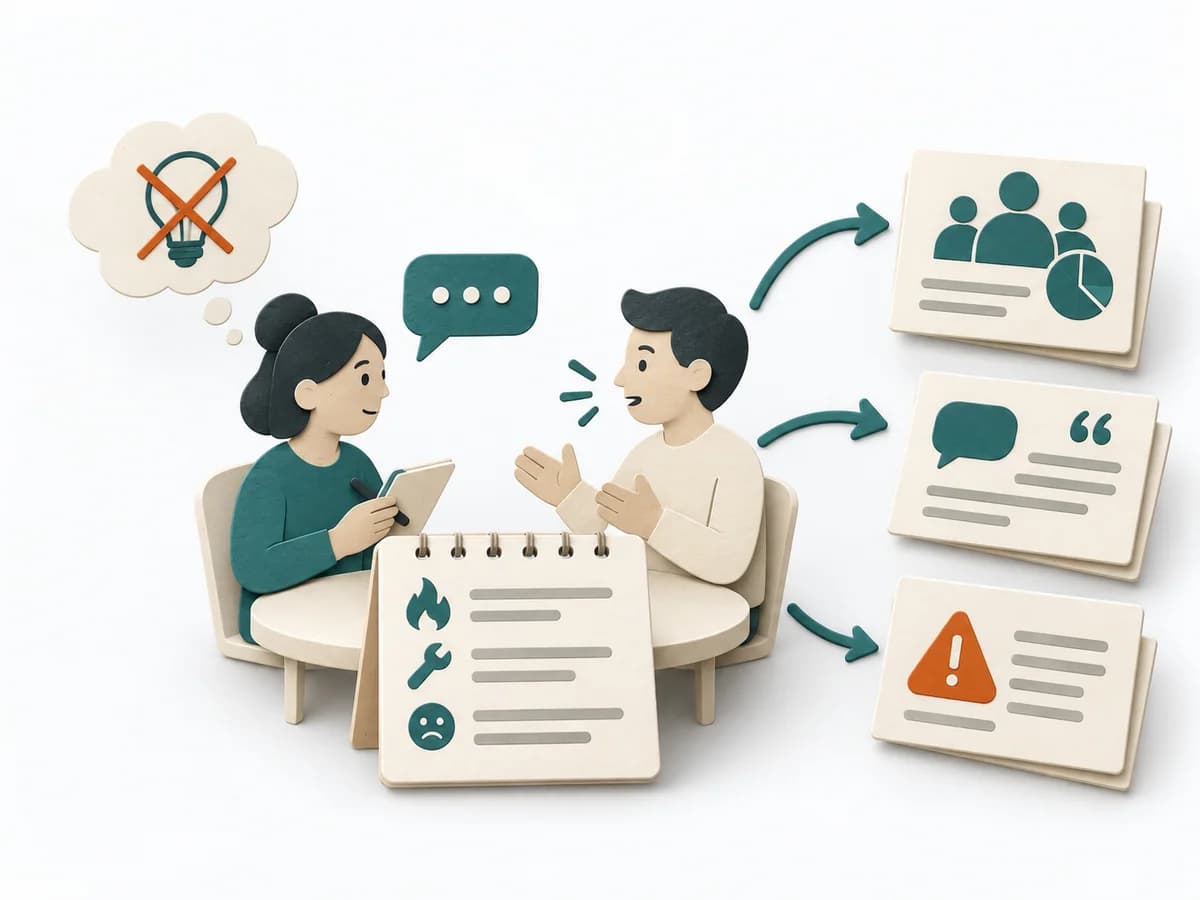 Product Discovery Problem Interview | 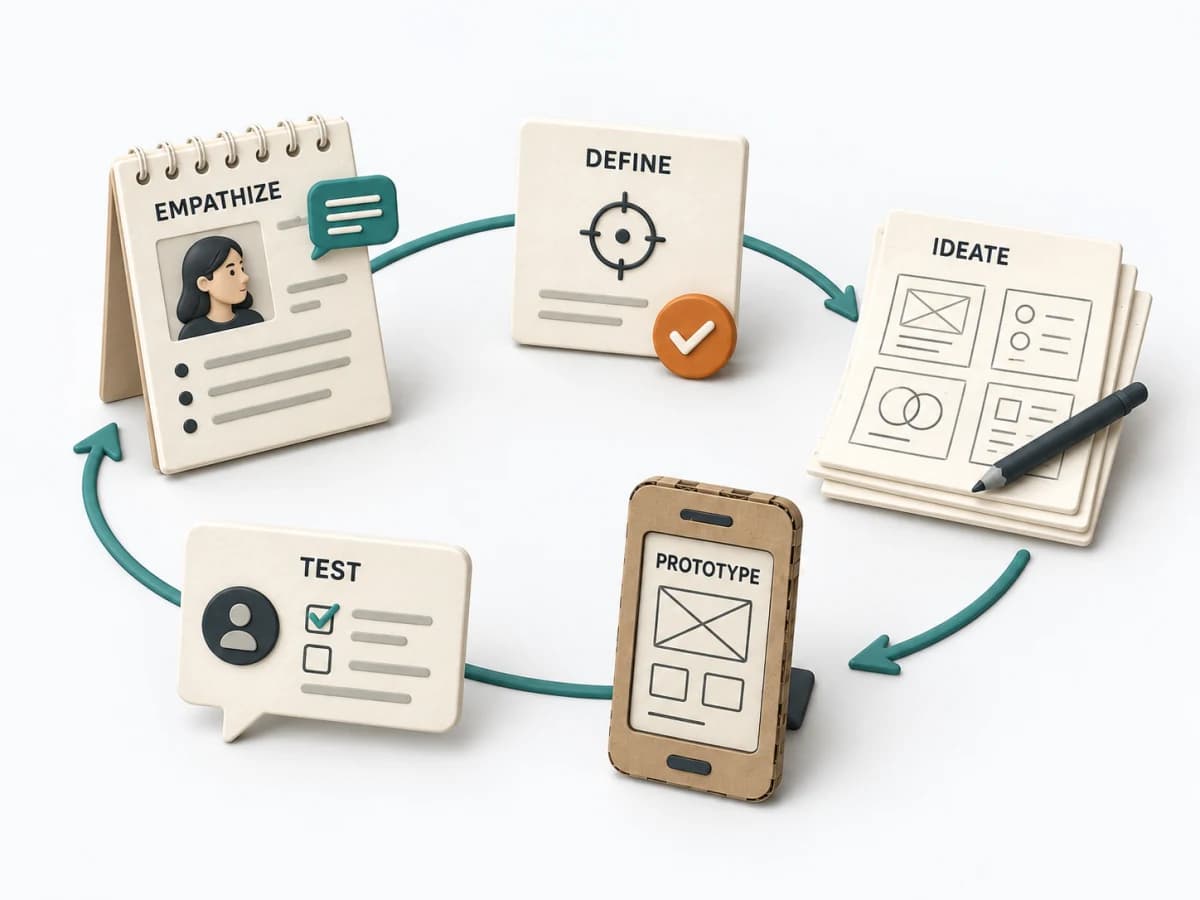 Innovation Design Thinking | 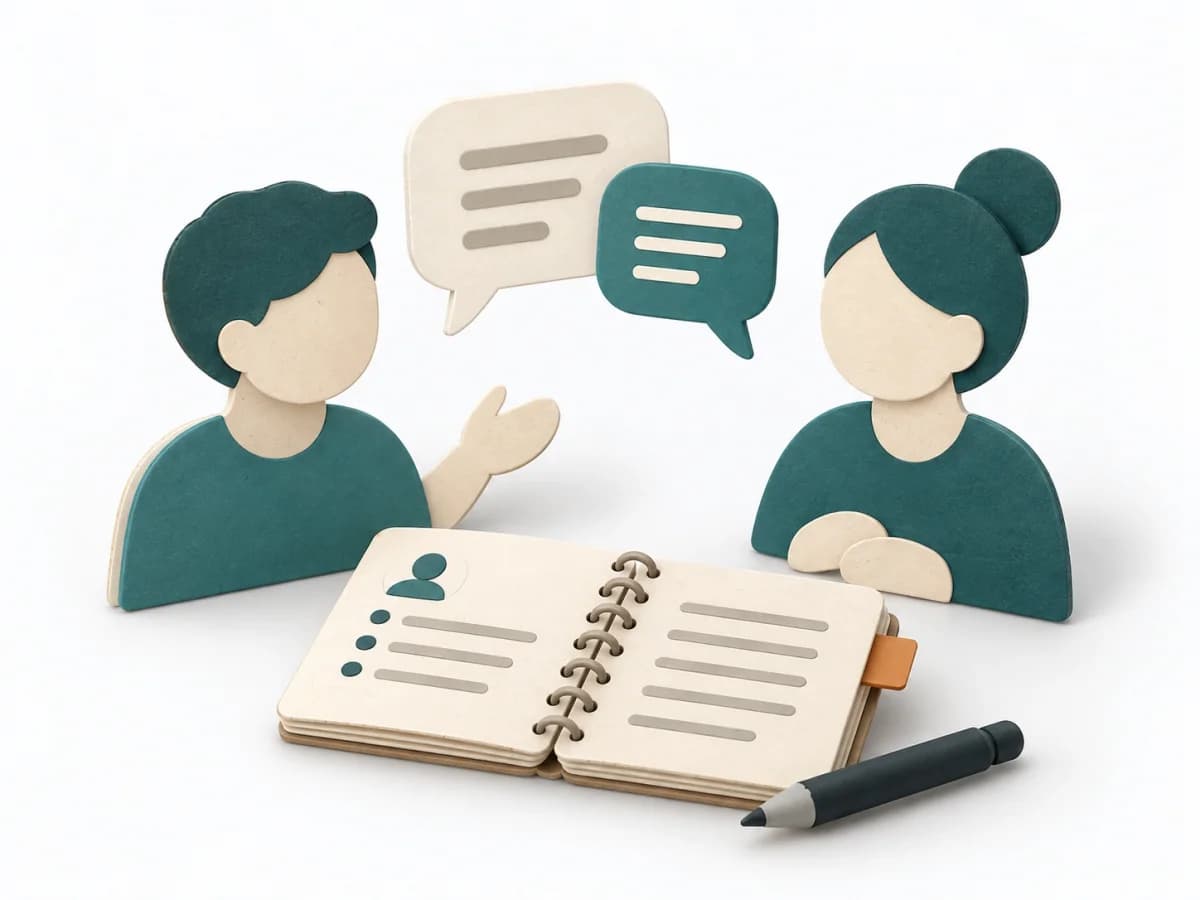 UX Research User Interviews |
|---|---|---|---|
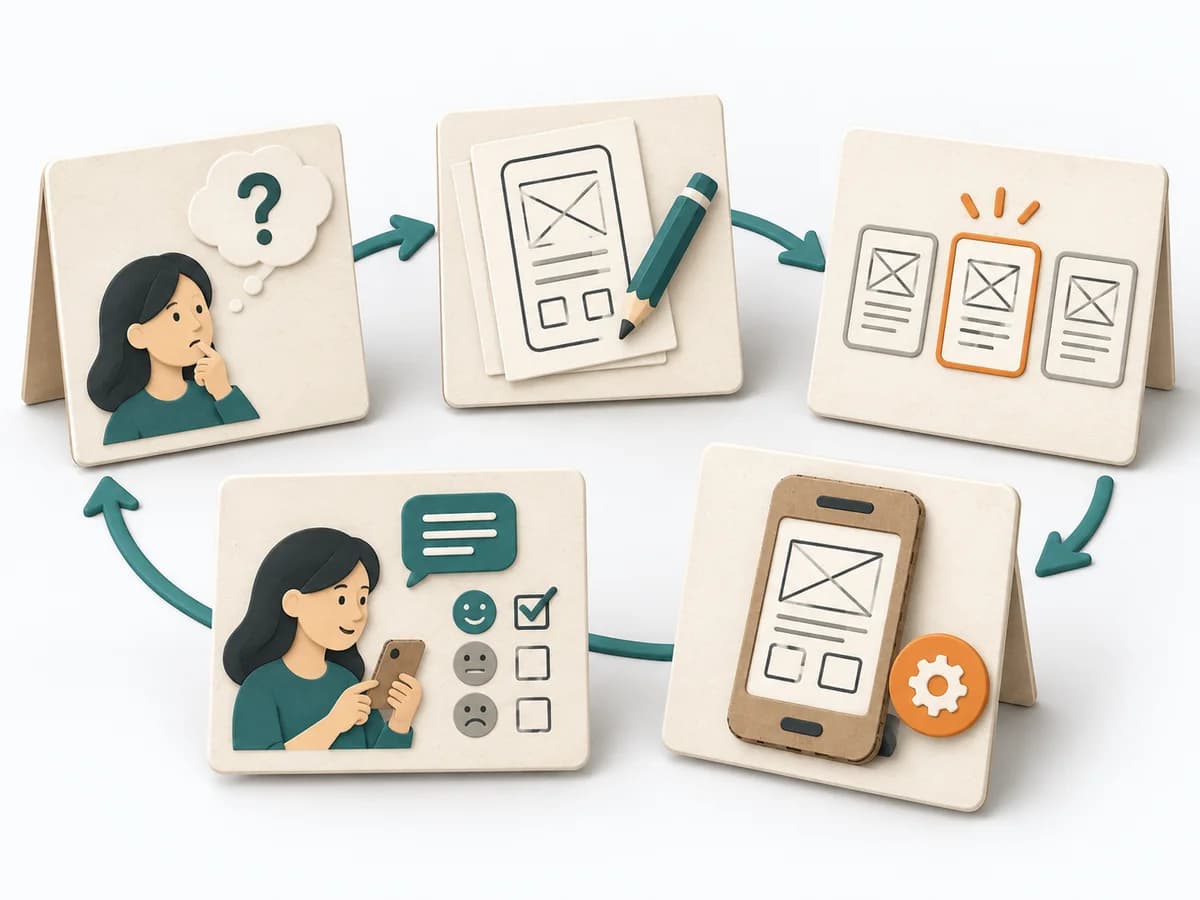
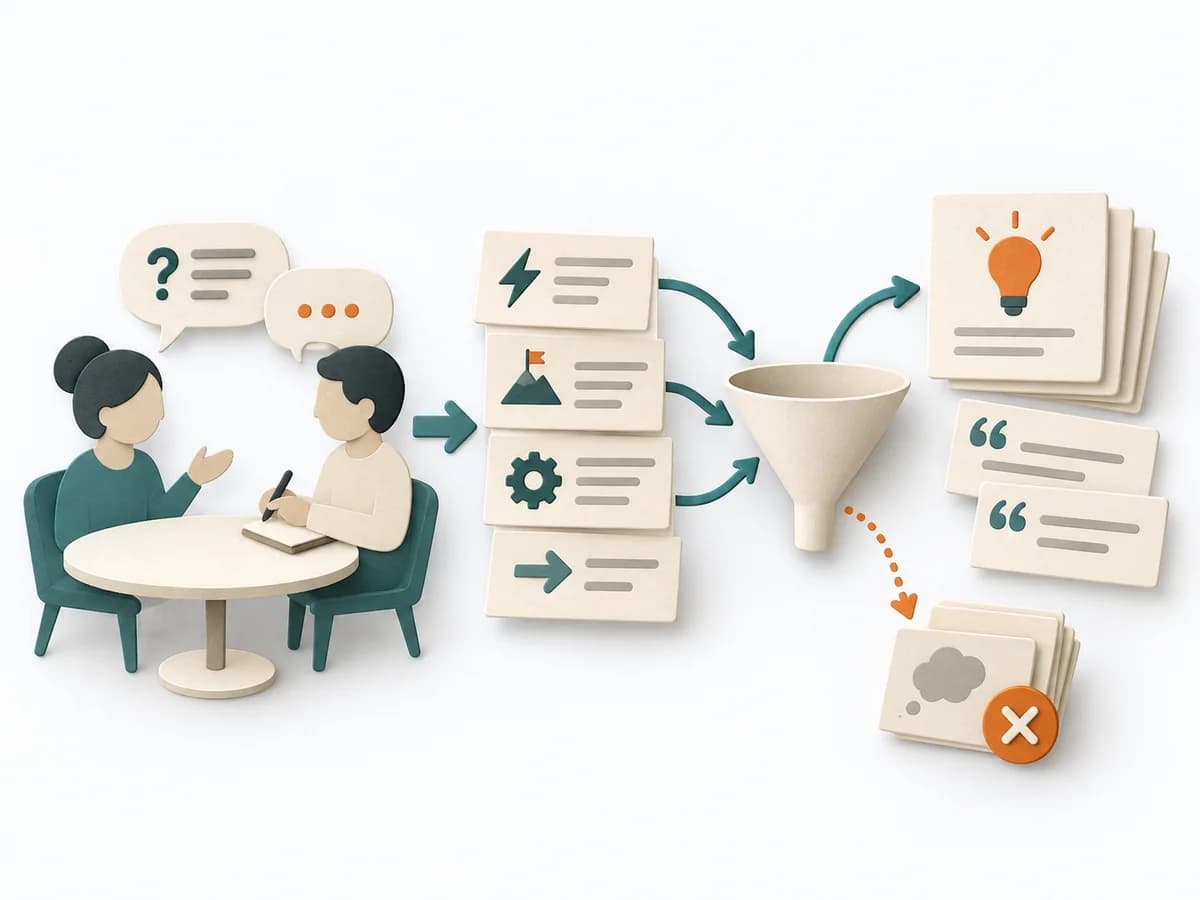
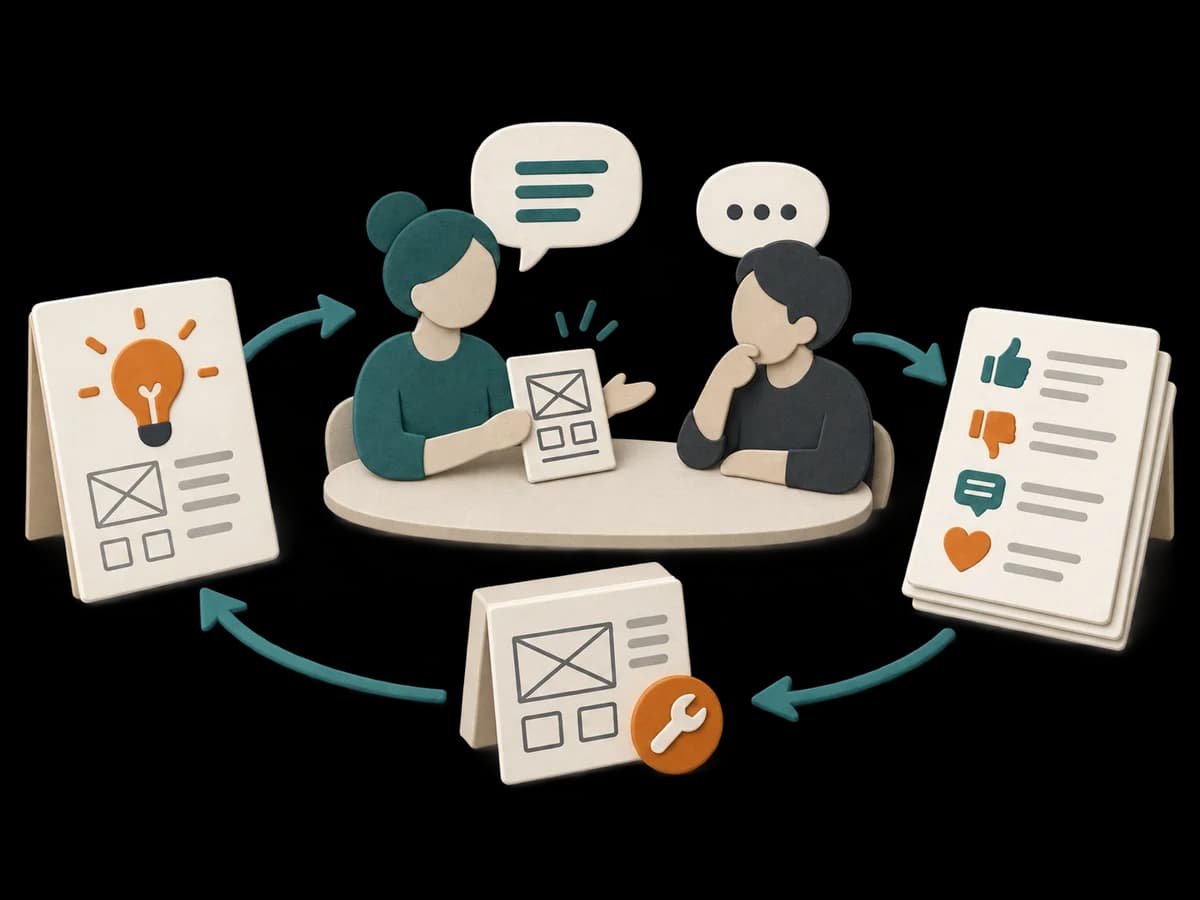
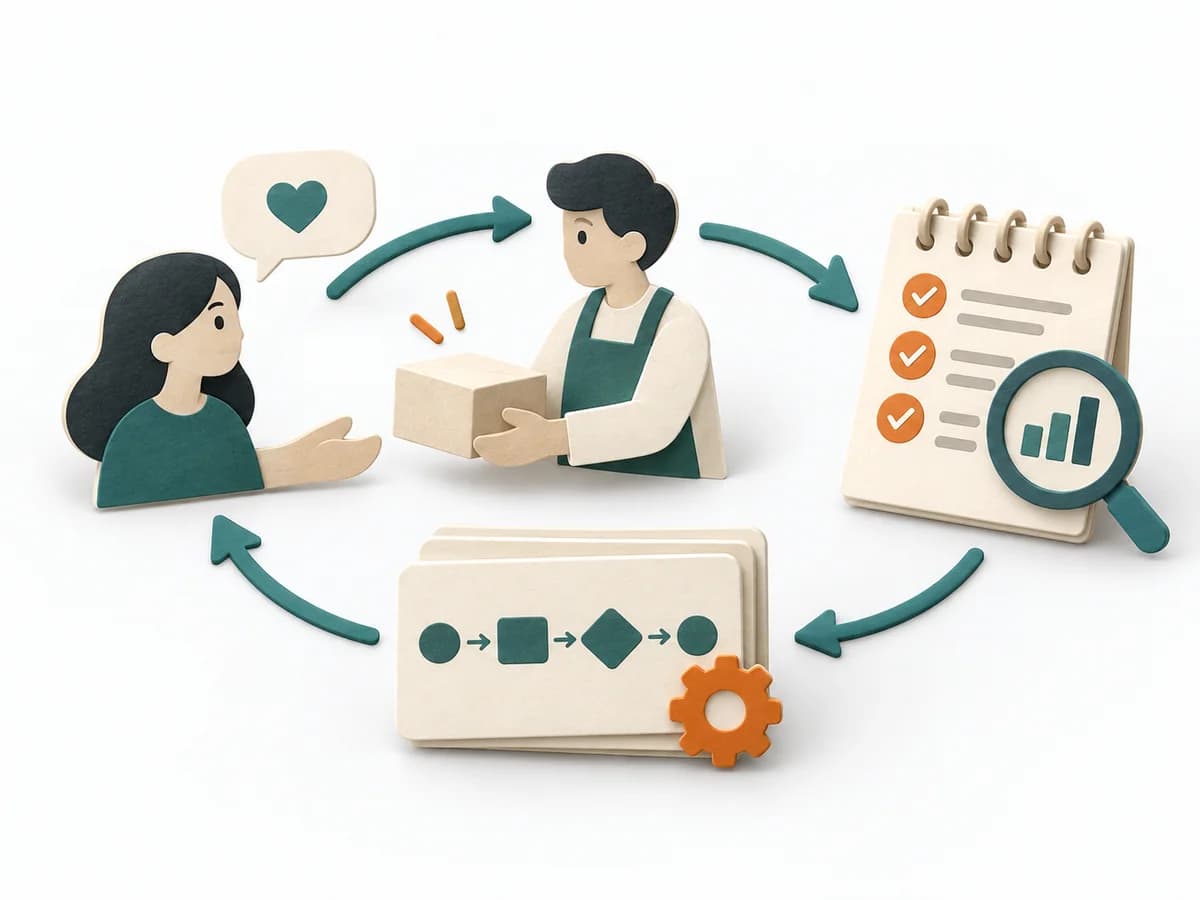
Purposedifferent | When the picture of the problem still needs to become solid, it asks about real situations and consequences. It separates genuine suffering from mere interest in a solution. | For complex user problems with an uncertain cause, the method connects observation, interpretation, and experiment into a learning cycle. It keeps the focus on real needs and avoids premature solution language. This produces robust decisions for product and service. | When teams derive needs only from assumptions and real motives are missing, user interviews give direct access to behavior and meaning. Conversations from the target group's everyday life make patterns, tensions, and open questions solidly visible. |
Complexitydifferent | Medium | High | Low |
Timedifferent | 30-60 min je Interview | 1 Tag bis mehrere Wochen | 30–60 min per interview |
Participantsdifferent | 5-12 Interviews | 4-10 | 1 participant per interview |
Formatdifferent | Workshop + async | Workshop | Workshop + async |
Outputdifferent | Problem Evidence, Risk Notes, Customer Segments | Problem Statement, Prototype, Test Learnings | Interview Notes, Themes, Insight Summary |
Tagsno overlap | DiscoveryInterviewsValidation | InnovationPrototypeResearch | QualitativeResearchCustomerDiscovery |
Often compared together
Methods with strong topical overlap with the current selection, not yet in the comparison.