View methods side by side.
Choose up to four methods. Add them using the search and share the comparison by copying its link.
| Criterion |  Systems Thinking Polarity Mapping |  Operations PDCA Cycle | 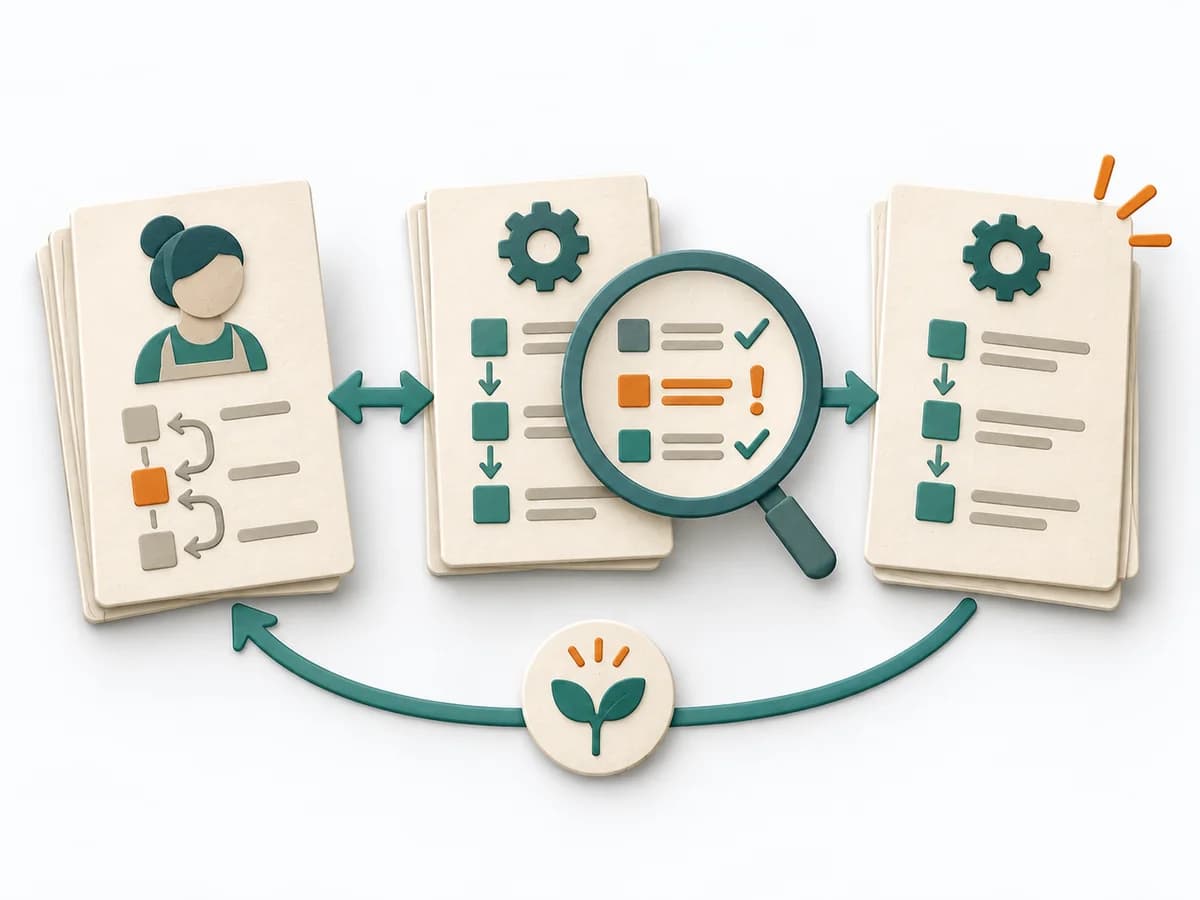 Operations Standard Work Analysis |
|---|---|---|---|
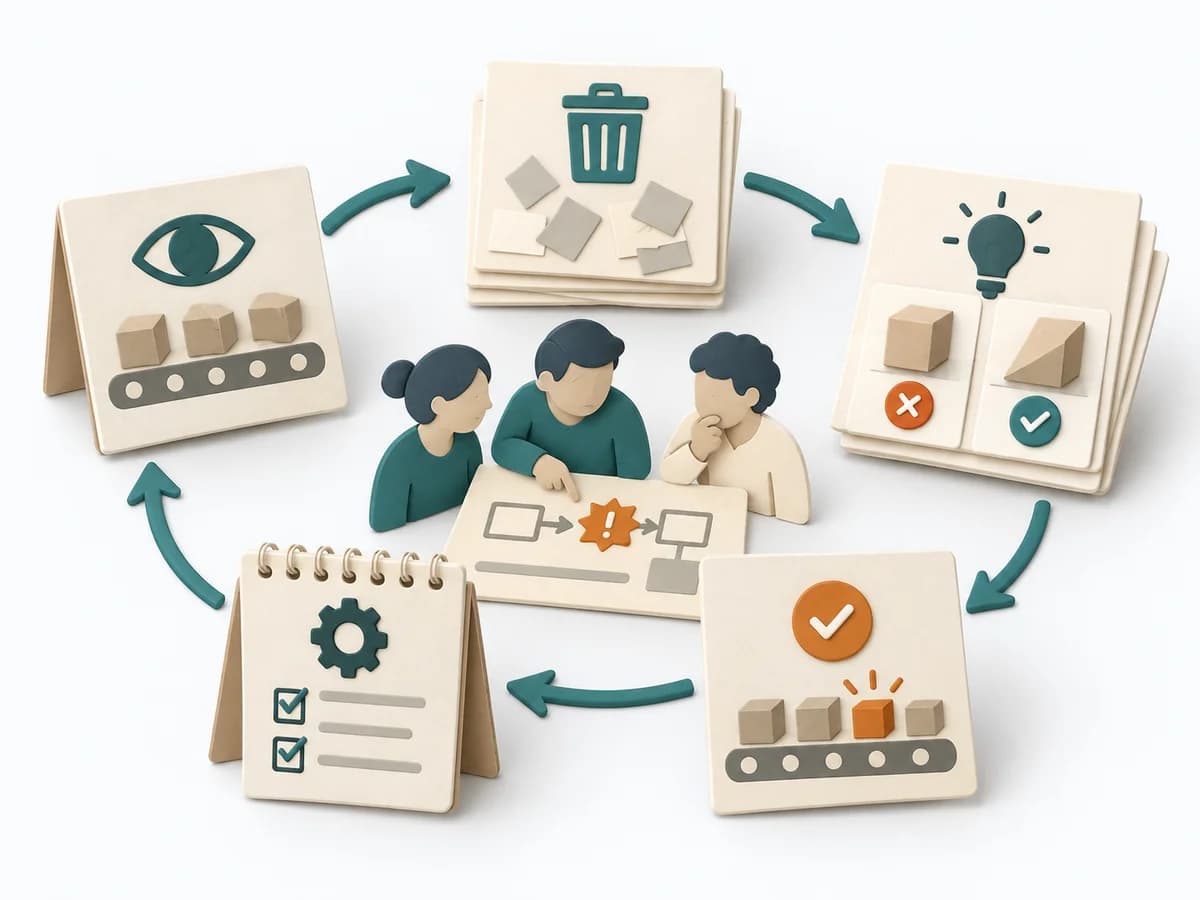
Purposedifferent | Polarity Mapping makes tensions between two opposing poles tangible, such as standardization and adaptation or control and autonomy. The method guards against making apparent either-or decisions prematurely. | For an improvement that still has to prove itself in everyday work, the method runs it through small learning loops. It connects planning, checking, and standardization into a repeatable learning mode. | When the same task is done differently depending on the person, the method exposes the reliable core. It creates comparability without unnecessarily choking off needed latitude. |
Complexitydifferent | Medium | Low | Medium |
Timedifferent | 1-2 h | 1 h bis mehrere Wochen | 1-3 h |
Participantsdifferent | 3-12 | 1-8 | 2-6 |
Formatdifferent | Workshop | Workshop + async | Workshop |
Outputdifferent | Polarity Map, Warning Signs, Balance Actions | PDCA Log, Experiment Plan, Learning Outcome, Standard Change | Standard Work Sheet, Deviation List, Improved Standard, Training Needs |
Tagsno overlap | Systems thinkingTradeoffsLeadership | Continuous improvementLeanExperiments | LeanProcessQuality |
Often compared together
Methods with strong topical overlap with the current selection, not yet in the comparison.