View methods side by side.
Choose up to four methods. Add them using the search and share the comparison by copying its link.
| Criterion | 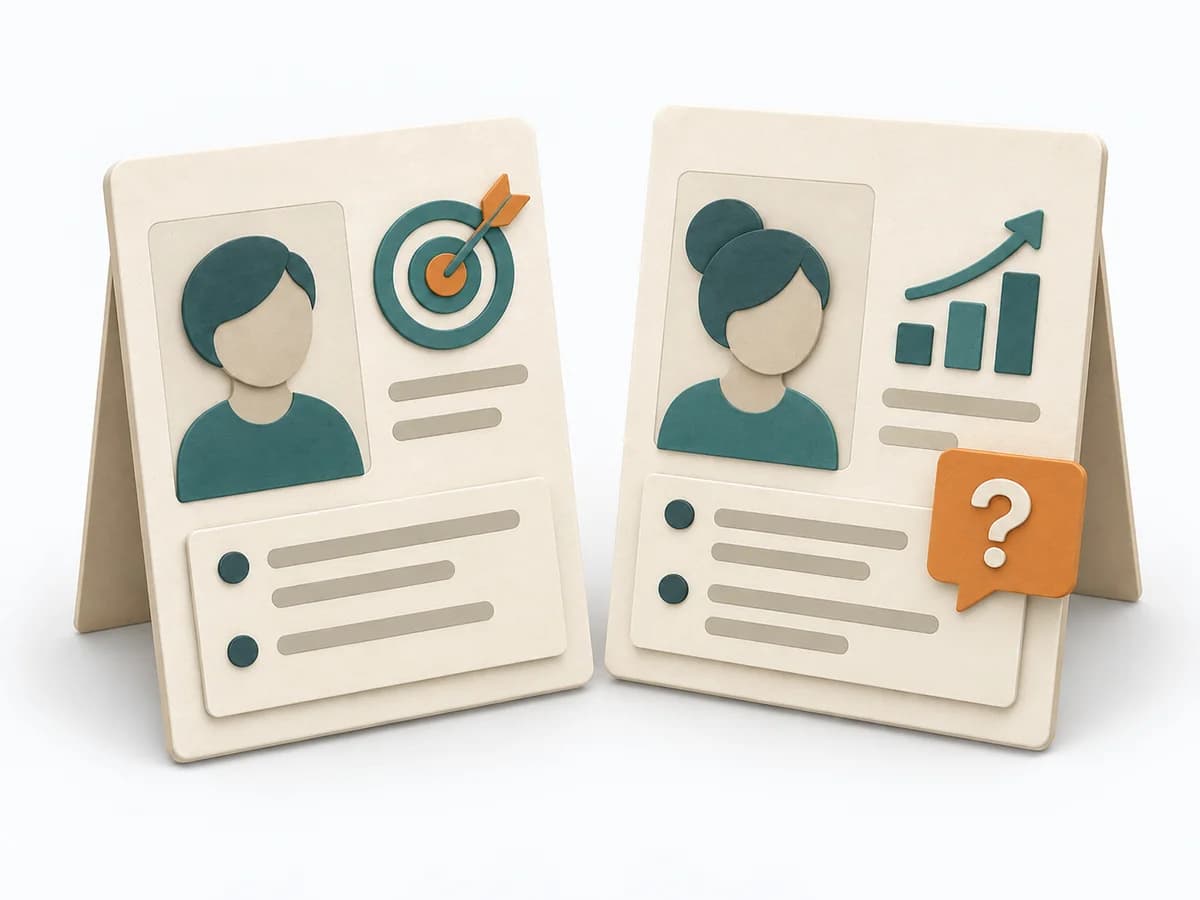 UX Research Personas | 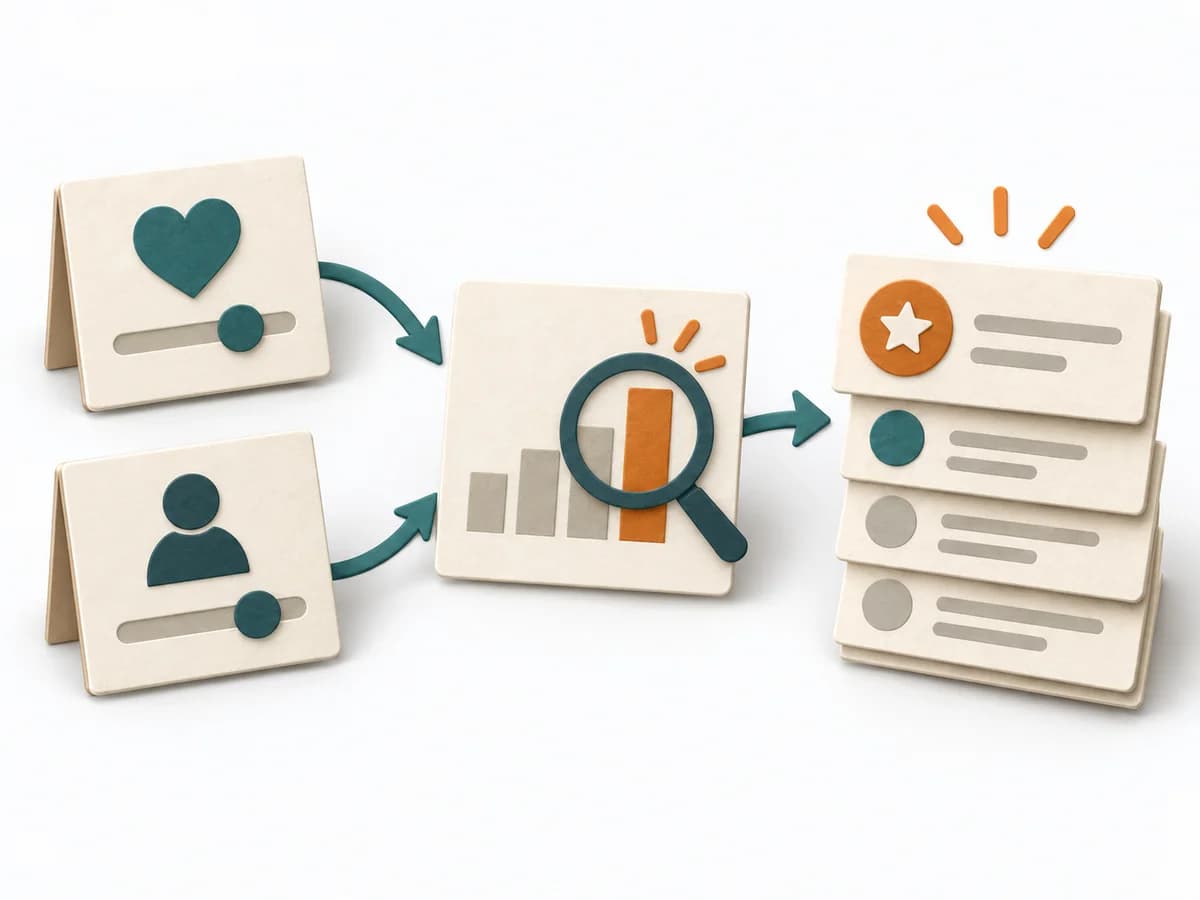 Product Discovery Opportunity Scoring |  Domain Modeling EventStorming |
|---|---|---|---|
Purposedifferent | When target groups stay too vague and teams talk about the same people differently, personas create a shared, solid picture of usage. Condensed profiles make needs, contexts, and differences tangible enough for decisions. | When opportunities need ranking by their effect, it makes importance and satisfaction directly comparable. It separates problem, assumption, solution, and evidence. The result is captured as an opportunity-score table and top outcomes. | When a domain consists of many events, rules, and states, it creates a shared modeling space for the team. It bundles language, flows, and boundaries before domain knowledge fragments into siloed views. |
Complexitysame | Medium | Medium | Medium |
Timedifferent | 1-3 Tage | 60-120 min | 2-8 h |
Participantsdifferent | Internes Team | 3-6 | 5-12 |
Formatdifferent | Workshop + async | Workshop + async | Workshop |
Outputdifferent | Persona Profiles, Needs Summary, Scenario Notes | Opportunity Score Table, Top Outcomes | Event Timeline, Ubiquitous Language, Boundaries, Open Questions |
Tagsno overlap | ResearchCustomerSynthesis | PrioritizationDiscoveryOutcomesNeeds | Domain-Driven DesignEventsDiscoveryWorkshop |
Often compared together
Methods with strong topical overlap with the current selection, not yet in the comparison.