View methods side by side.
Choose up to four methods. Add them using the search and share the comparison by copying its link.
| Criterion |  Knowledge Modeling PARA Method |  Delivery RAID Log | 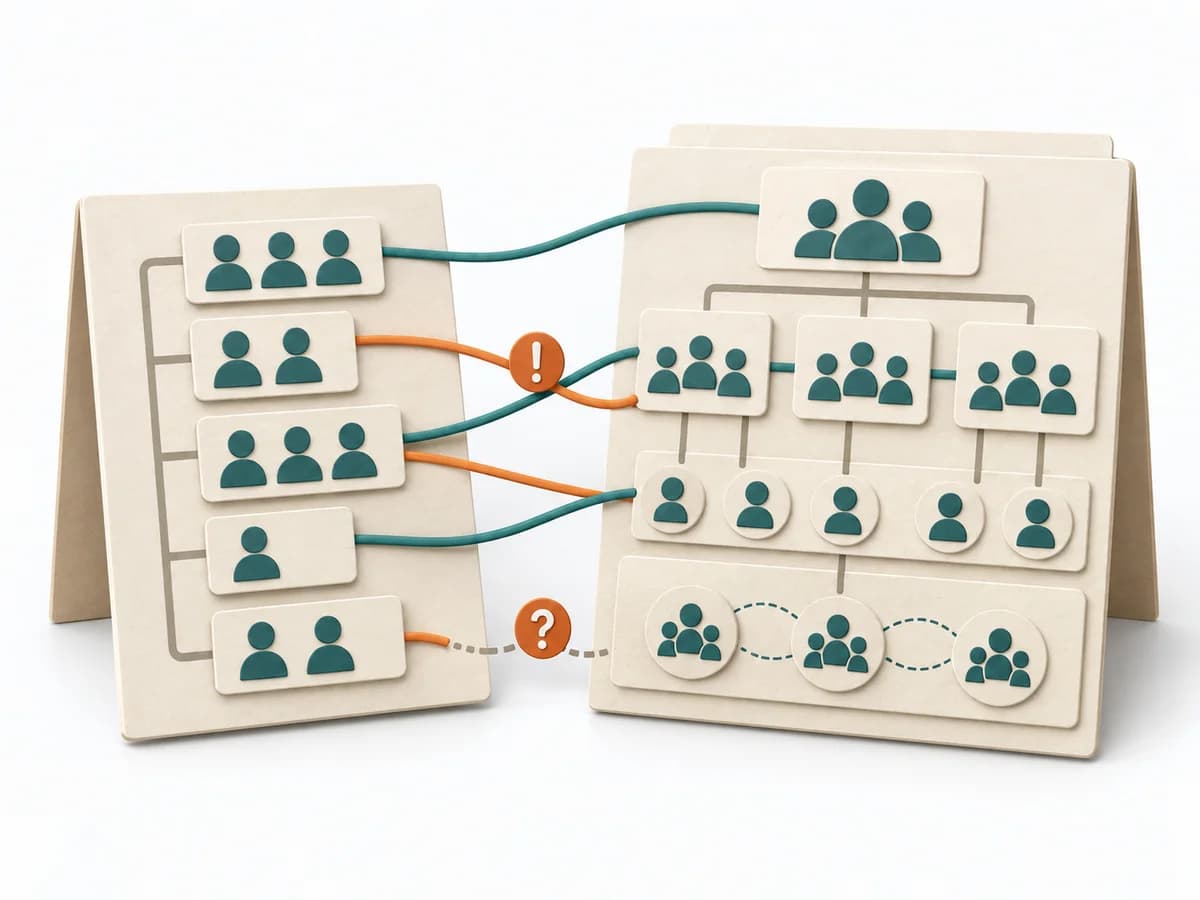 Team Design Spotify Model Mapping |
|---|---|---|---|
Purposedifferent | The PARA Method organizes knowledge into Projects, Areas, Resources, and Archives. It creates order when digital notes, files, and tasks no longer cleanly fit current work. | Helps clarify scope, sequence, and delivery flow in concrete terms. It makes work, boundaries, and order steerable. The result is captured as a RAID Log and a source for status reporting. | When a team landscape has grown without clear grouping, it maps roles and relationships onto the Spotify model. It clarifies responsibility, interaction, and load between teams. The result is captured as a Spotify model map and action list. |
Complexitydifferent | Medium | Low | Medium |
Timedifferent | 1-3 h Setup, laufend | 30 min Setup, dann laufend | 90-180 min |
Participantsdifferent | 1 | 1-3 maintaining, briefing for everyone | 5-15 |
Formatdifferent | Async | Async | Workshop |
Outputdifferent | PARA Structure, Project Notes, Knowledge Archive | RAID Log, Status Report Source | Spotify Model Map, Action List |
Tagsno overlap | KnowledgeProductivityOrganization | RiskTrackingStakeholdersGovernance | TeamOrganizationAlignmentDiagnosis |
Often compared together
Methods with strong topical overlap with the current selection, not yet in the comparison.