View methods side by side.
Choose up to four methods. Add them using the search and share the comparison by copying its link.
| Criterion |  Knowledge Modeling PARA Method |  Product Discovery Fake Door Test | 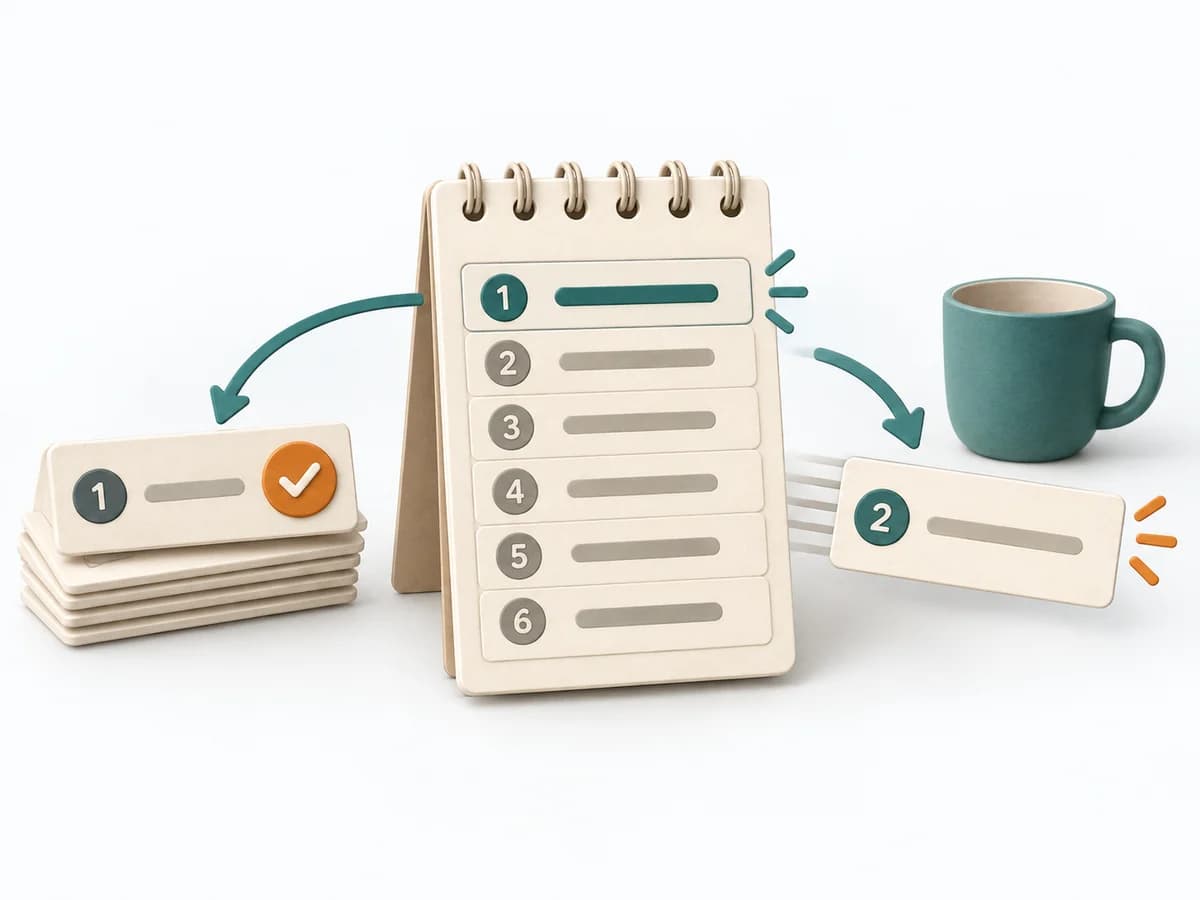 Operations Ivy Lee Method |
|---|---|---|---|
Purposedifferent | The PARA Method organizes knowledge into Projects, Areas, Resources, and Archives. It creates order when digital notes, files, and tasks no longer cleanly fit current work. | When demand is still unclear, it measures interest in a feature before it is built. It separates real behavior from polite agreement and deliberately keeps build effort small. | With a restless workday full of too many open items, the method creates radical simplicity. It directs attention to a short sequence instead of a broad, still-open field. |
Complexitydifferent | Medium | Medium | Low |
Timedifferent | 1-3 h Setup, laufend | 1-5 Tage | 5-10 min daily |
Participantsdifferent | 1 | Nutzertraffic | 1 |
Formatsame | Async | Async | Async |
Outputdifferent | PARA Structure, Project Notes, Knowledge Archive | Click Data, Interest Signal, Learning Decision | Daily Priority List, Completion Notes |
Tagsno overlap | KnowledgeProductivityOrganization | ValidationExperimentsDemandDiscovery | PrioritizationProductivityExecution |
Often compared together
Methods with strong topical overlap with the current selection, not yet in the comparison.