View methods side by side.
Choose up to four methods. Add them using the search and share the comparison by copying its link.
| Criterion |  Knowledge Modeling PARA Method | 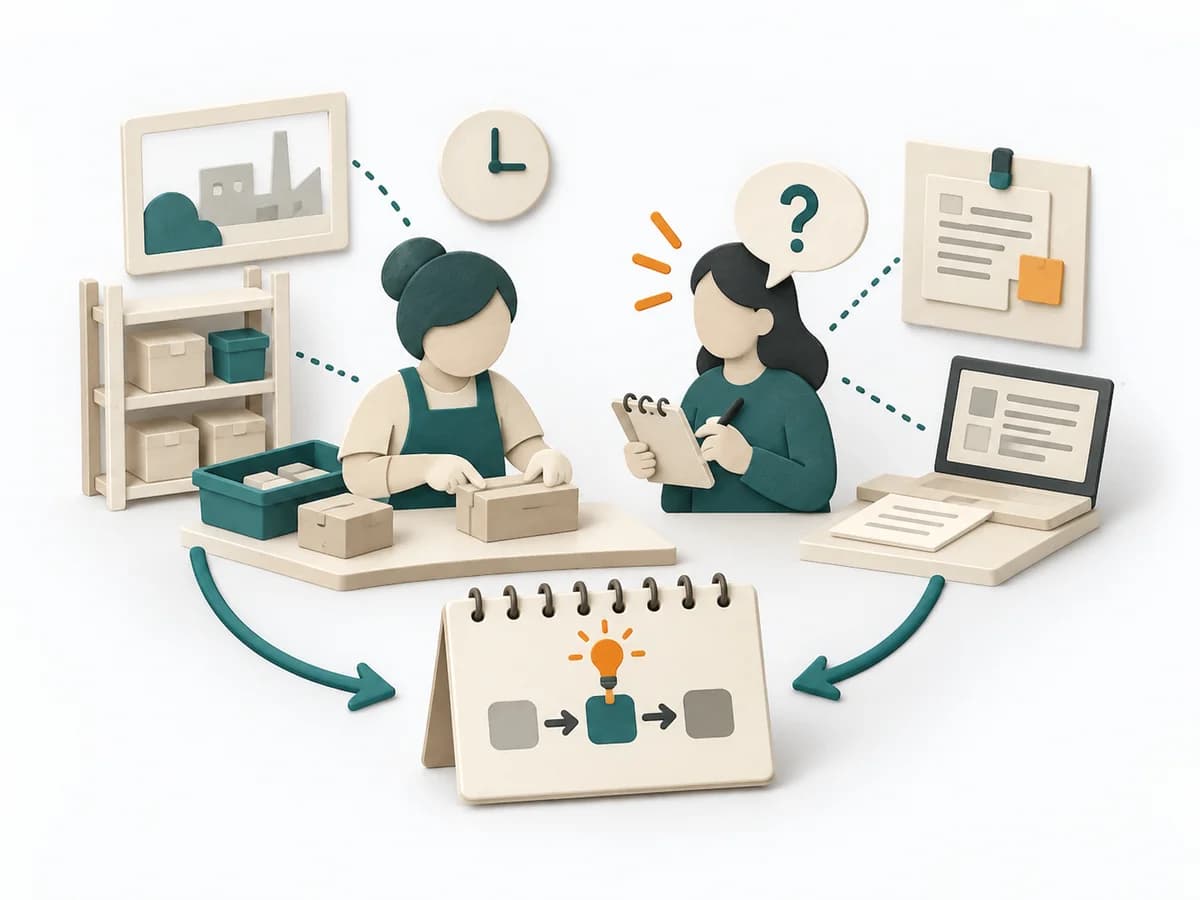 UX Research Contextual Inquiry |  Systems Thinking Leverage Points |
|---|---|---|---|
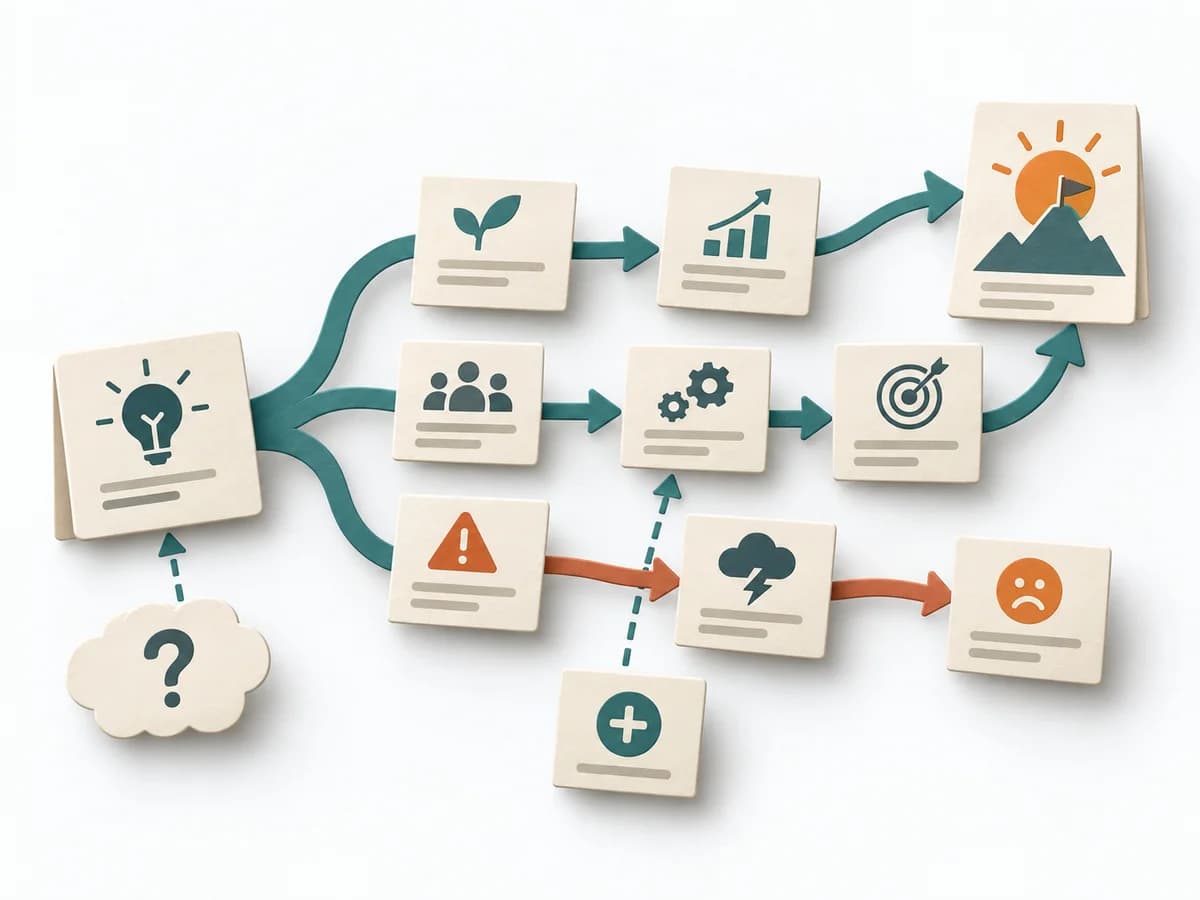
Purposedifferent | The PARA Method organizes knowledge into Projects, Areas, Resources, and Archives. It creates order when digital notes, files, and tasks no longer cleanly fit current work. | When work processes are known only from accounts and the real context stays hidden, Contextual Inquiry makes behavior at the workplace visible. Observation and follow-up questions together show how people actually work, get interrupted, and improvise. | Leverage Points show exactly where interventions in a system produce a disproportionate effect. It draws relationships, patterns, and feedback loops. The result is captured as a leverage map and action strategy. |
Complexitydifferent | Medium | Medium | High |
Timedifferent | 1-3 h Setup, laufend | 1-3 Wochen | Half day |
Participantsdifferent | 1 | 4-12 Beobachtungen | 3-12 |
Formatdifferent | Async | Workshop + async | Workshop |
Outputdifferent | PARA Structure, Project Notes, Knowledge Archive | Field Notes, Workflow Insights, Pain Points | Leverage Map, Action Strategy |
Tagsno overlap | KnowledgeProductivityOrganization | UX researchObservationContext | Systems thinkingChangeStrategy |
Often compared together
Methods with strong topical overlap with the current selection, not yet in the comparison.