View methods side by side.
Choose up to four methods. Add them using the search and share the comparison by copying its link.
| Criterion | 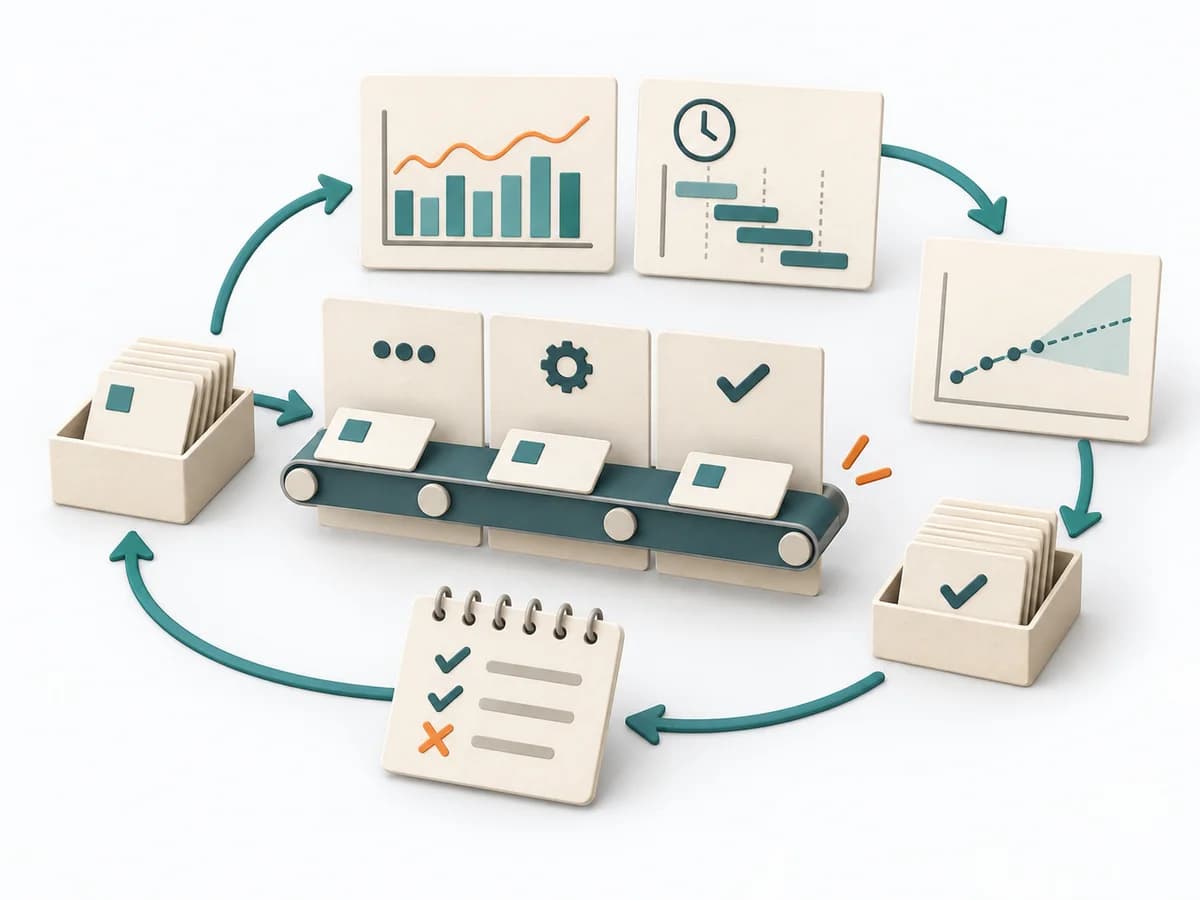 Agile NoEstimates | 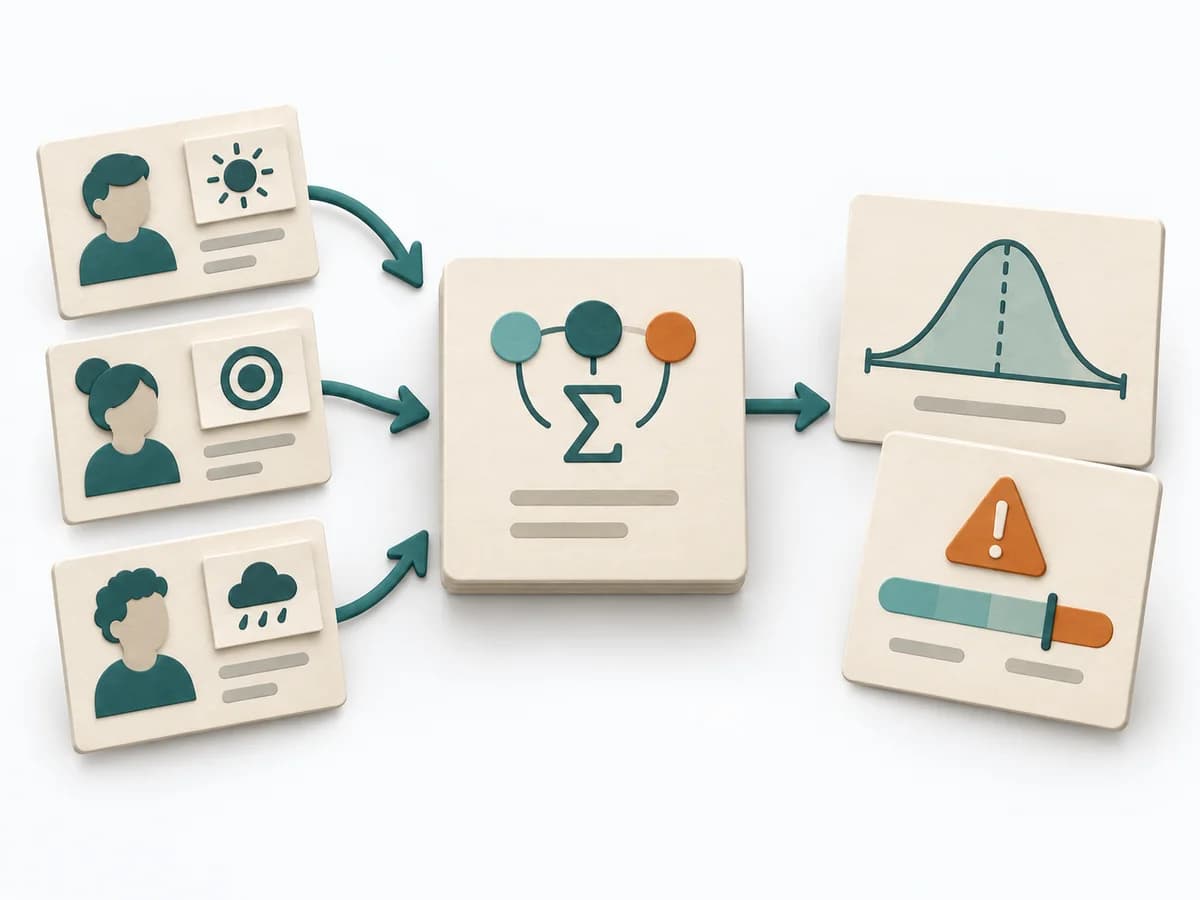 Decision Making PERT Estimation |  Facilitation Decision Jam |
|---|---|---|---|
Purposedifferent | When estimating slows a team down more than it helps, it shifts the focus to flow, small slices, and real lead time. It sorts work by value, risk, and delivery ability. The result is captured as Throughput Data, Flow Forecast, and Slicing Rules. | On complex initiatives, a plain average tends to understate just how uncertain the outcome really is. It separates options, evaluation criteria, and open risks. The result is captured as a PERT Estimate, Expected Value, and Risk Notes. | When a decision is stuck, Decision Jam loosens the knot through structured separation of problem, idea, and selection. The format creates movement without jumping prematurely at the first seemingly elegant answer. |
Complexitydifferent | Medium | Medium | Low |
Timedifferent | laufend | 15-45 min | 60-90 min |
Participantsdifferent | 2-12 | 1-8 | 4-10 |
Formatdifferent | Workshop + async | Workshop + async | Workshop |
Outputdifferent | Throughput Data, Flow Forecast, Slicing Rules | PERT Estimate, Expected Value, Risk Notes | Problem Cluster, Prioritized Challenge, Experiment |
Tagsno overlap | EstimationForecastingFlow | EstimationUncertaintyRisk | FacilitationDecisionProblem solvingWorkshop |
Often compared together
Methods with strong topical overlap with the current selection, not yet in the comparison.