View methods side by side.
Choose up to four methods. Add them using the search and share the comparison by copying its link.
| Criterion |  Systems Thinking Leverage Points | 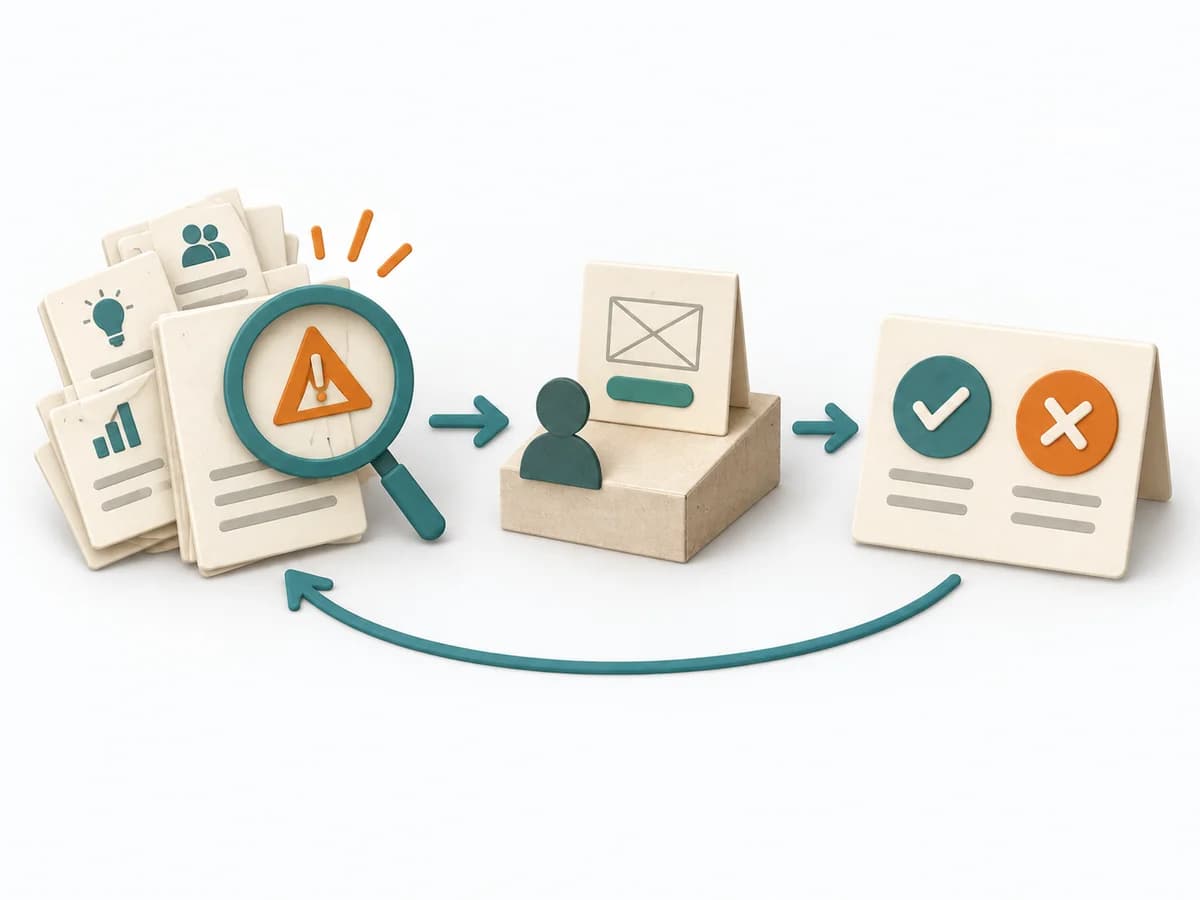 Product Discovery Riskiest Assumption Test | 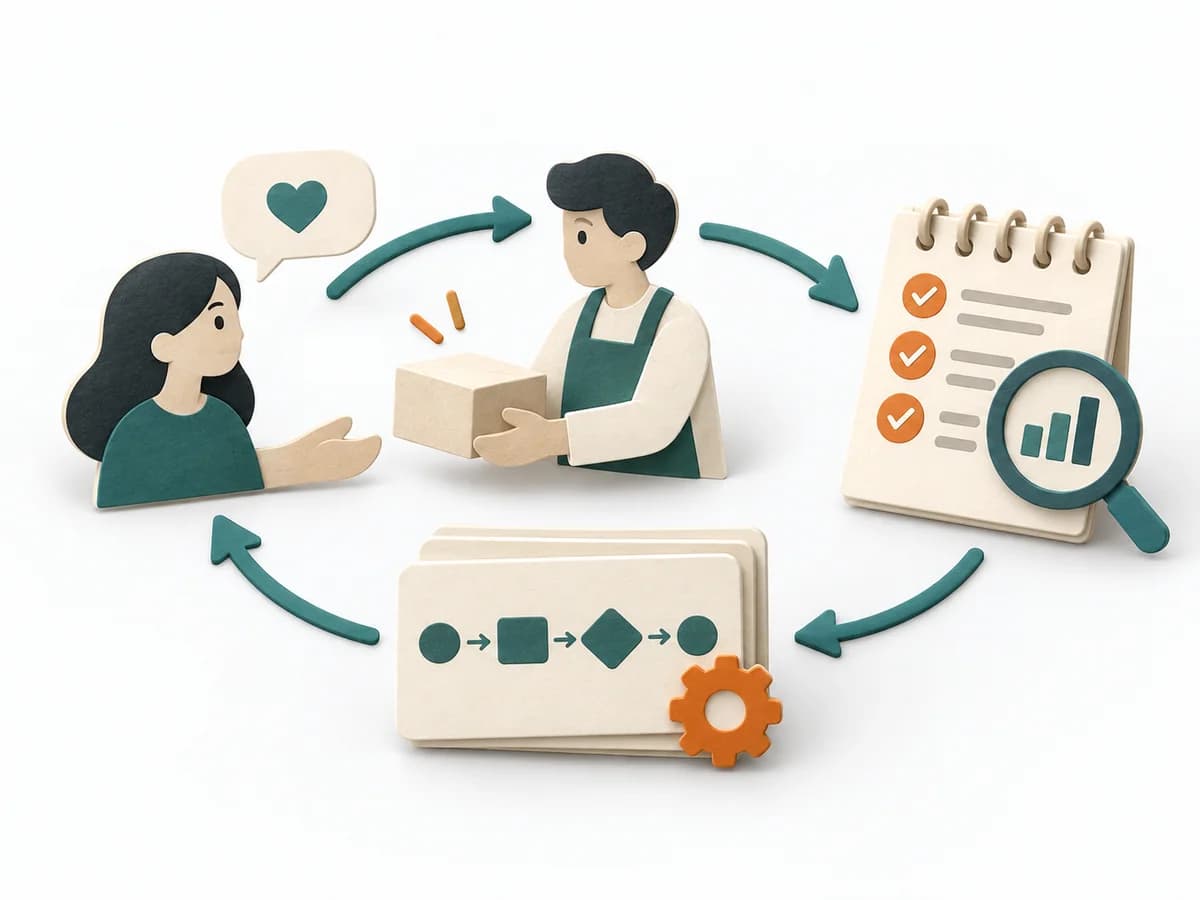 Product Discovery Concierge MVP |
|---|---|---|---|
Purposedifferent | Leverage Points show exactly where interventions in a system produce a disproportionate effect. It draws relationships, patterns, and feedback loops. The result is captured as a leverage map and action strategy. | When an idea hinges on one critical unknown, it prioritizes testing that exact piece of uncertainty first. It separates problem, assumption, solution, and evidence. The result is captured as a prioritized list of assumptions, a test plan, and a result report. | When an idea can first fail or grow through genuine hands-on support, it relies on manual work instead of automation. It shows whether user value holds up even under manual execution. |
Complexitydifferent | High | Medium | Medium |
Timedifferent | Half day | 1-2 Wochen pro Iteration | 1-4 Wochen |
Participantsdifferent | 3-12 | 2-6 | 3-10 Kunden |
Formatdifferent | Workshop | Workshop + async | Workshop + async |
Outputdifferent | Leverage Map, Action Strategy | Prioritized Assumption List, Test Plan, Results Report | Concierge Learnings, Service Blueprint, MVP Risks |
Tagsno overlap | Systems thinkingChangeStrategy | ExperimentsValidationDiscoveryAssumptions | MVPValidationServiceDiscovery |
Often compared together
Methods with strong topical overlap with the current selection, not yet in the comparison.