View methods side by side.
Choose up to four methods. Add them using the search and share the comparison by copying its link.
| Criterion |  UX Design Lean UX Canvas |  Domain Modeling EventStorming |  Facilitation Alignment Mapping |
|---|---|---|---|
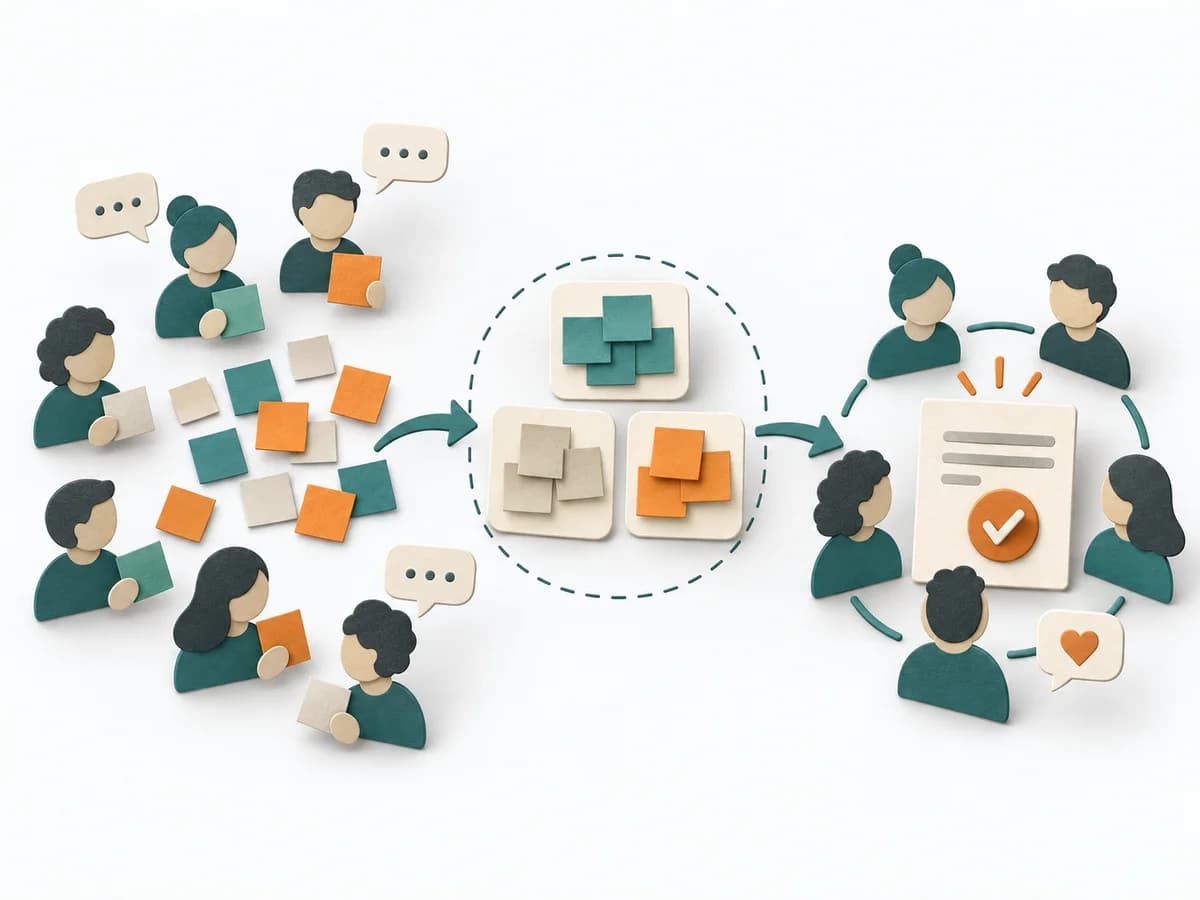
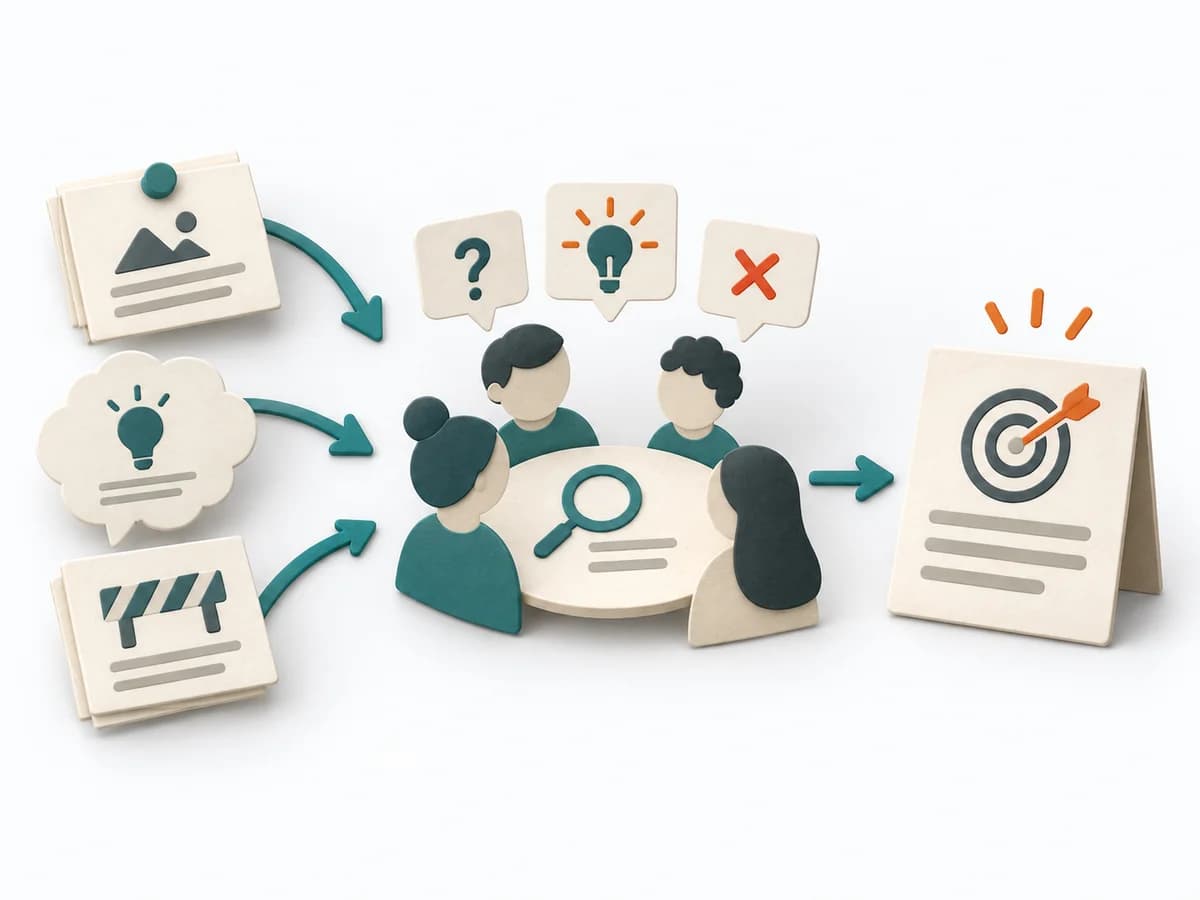
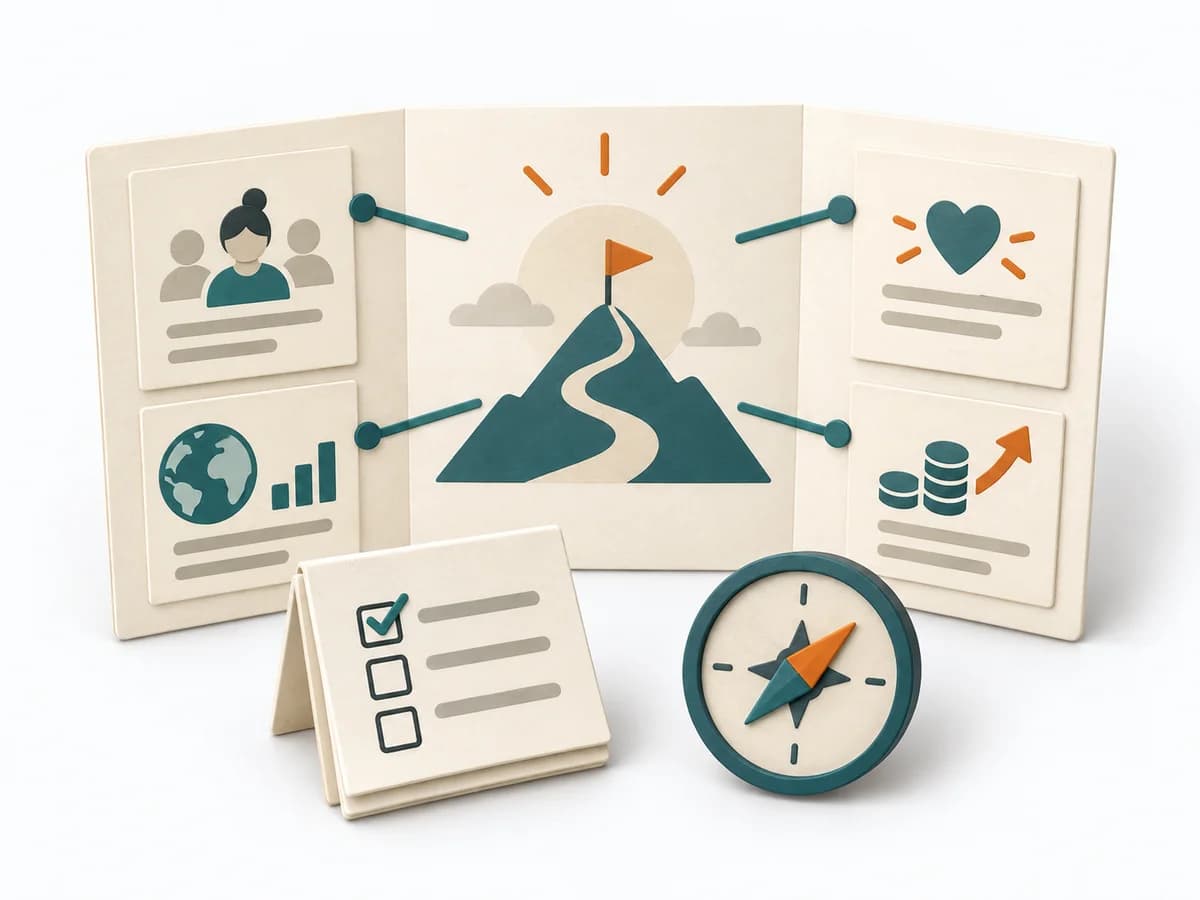
Purposedifferent | The Lean UX Canvas helps clarify user behavior, touchpoints, and concept decisions. It makes assumptions and desired outcomes visible and captures the result as a completed canvas, hypothesis list, and first experiment. | When a domain consists of many events, rules, and states, it creates a shared modeling space for the team. It bundles language, flows, and boundaries before domain knowledge fragments into siloed views. | When several people work toward one goal but hold different mental maps, Alignment Mapping makes the discrepancies visible. It arranges goals, assumptions, and priorities so shared direction becomes verifiable. |
Complexitysame | Medium | Medium | Medium |
Timedifferent | 2-3 h | 2-8 h | 1-2 h |
Participantsdifferent | 3-8 | 5-12 | 4-12 |
Formatdifferent | Workshop + async | Workshop | Workshop |
Outputdifferent | Completed Lean UX Canvas, Hypothesis list, First experiment | Event Timeline, Ubiquitous Language, Boundaries, Open Questions | Alignment Map, Open Issues, Decision Questions |
Tagsno overlap | CanvasHypothesisOutcomesDiscovery | Domain-Driven DesignEventsDiscoveryWorkshop | AlignmentStakeholdersStrategyFacilitation |
Often compared together
Methods with strong topical overlap with the current selection, not yet in the comparison.