View methods side by side.
Choose up to four methods. Add them using the search and share the comparison by copying its link.
| Criterion | 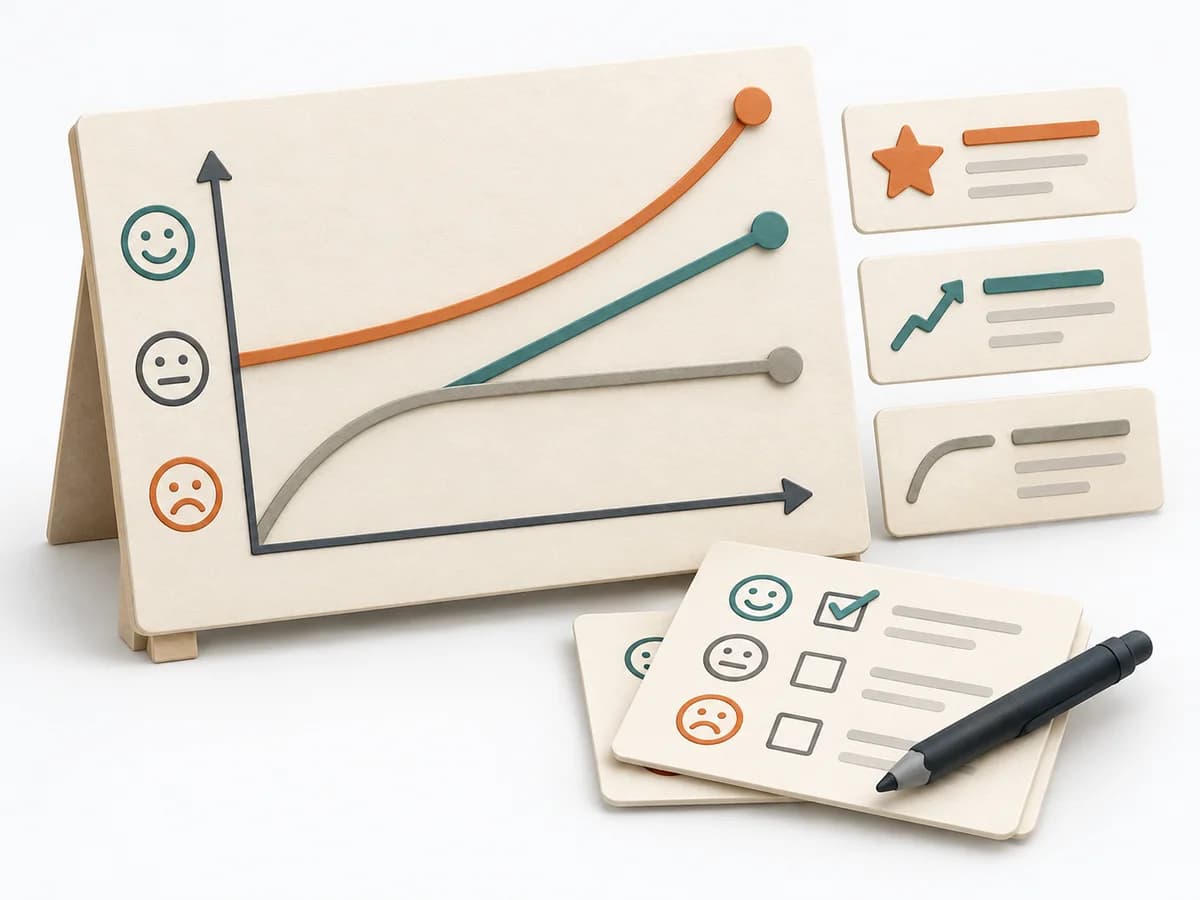 Product Discovery Kano Model |  UX Research Empathy Mapping |  Facilitation Alignment Mapping |
|---|---|---|---|
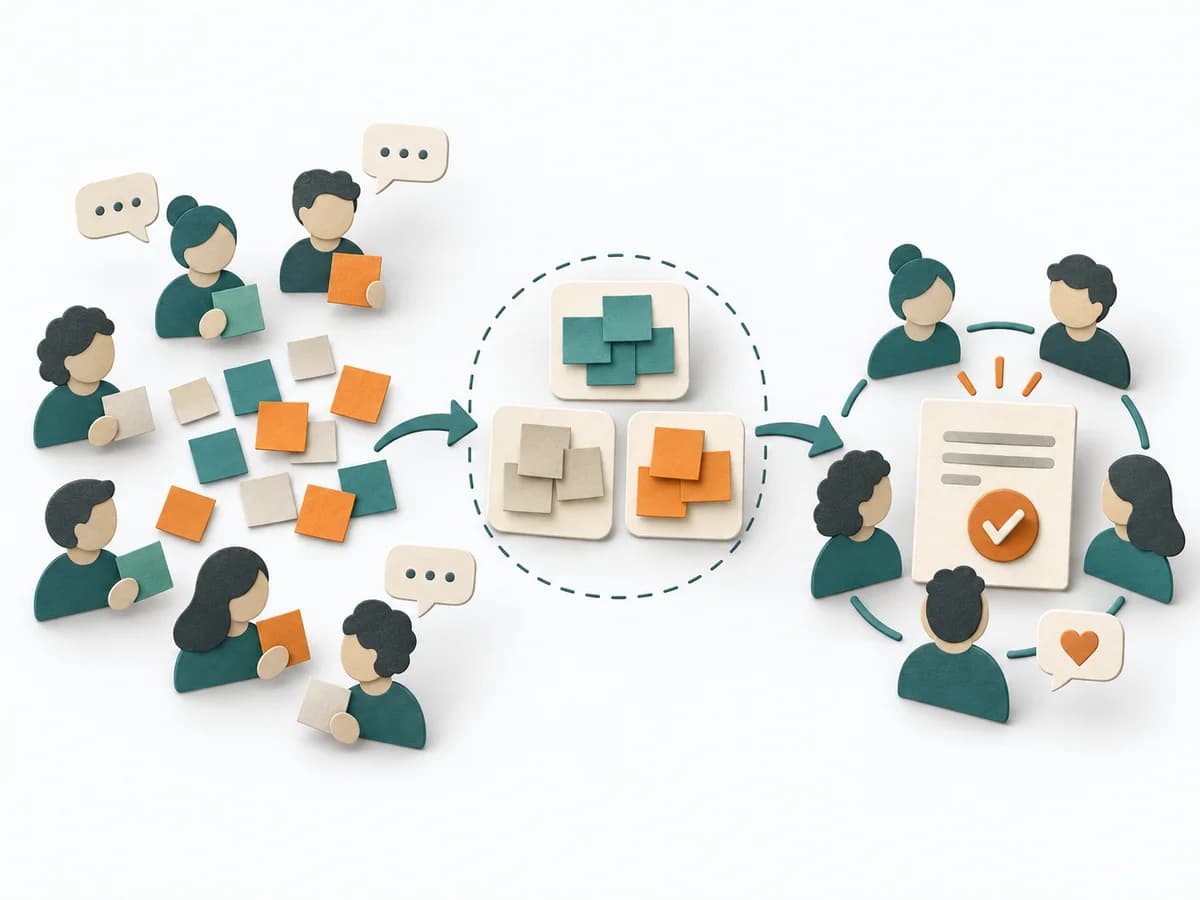
Purposedifferent | When features need to be distinguished by their effect on satisfaction, it makes expectations and surprises comparable. It separates basic needs, performance contribution, and delight. | When a lot is assumed about a target group but little is seen jointly, empathy mapping makes knowledge and gaps directly comparable. The picture also shows which assumptions hold up and where evidence is missing. | When several people work toward one goal but hold different mental maps, Alignment Mapping makes the discrepancies visible. It arranges goals, assumptions, and priorities so shared direction becomes verifiable. |
Complexitydifferent | Medium | Low | Medium |
Timedifferent | 1-2 Tage | 30–60 min | 1-2 h |
Participantsdifferent | 10-50 | 4-8 | 4-12 |
Formatdifferent | Workshop + async | Workshop | Workshop |
Outputdifferent | Kano Matrix, Feature Classes, Priority Themes | Empathy Map, Assumptions List, Research Gaps | Alignment Map, Open Issues, Decision Questions |
Tagsno overlap | SatisfactionPrioritizationCustomer | SynthesisQualitativeWorkshop | AlignmentStakeholdersStrategyFacilitation |
Often compared together
Methods with strong topical overlap with the current selection, not yet in the comparison.