View methods side by side.
Choose up to four methods. Add them using the search and share the comparison by copying its link.
| Criterion | 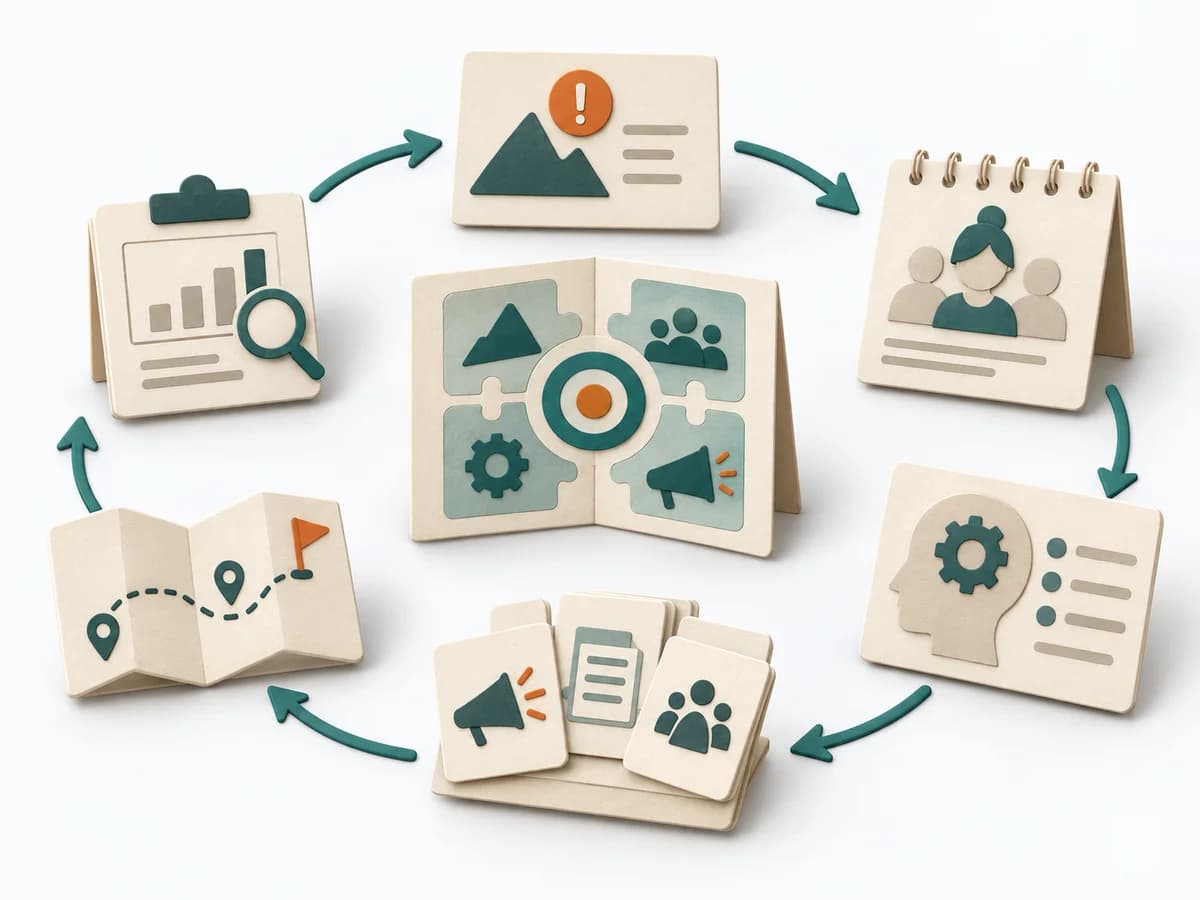 Systems Thinking Intervention Mapping | 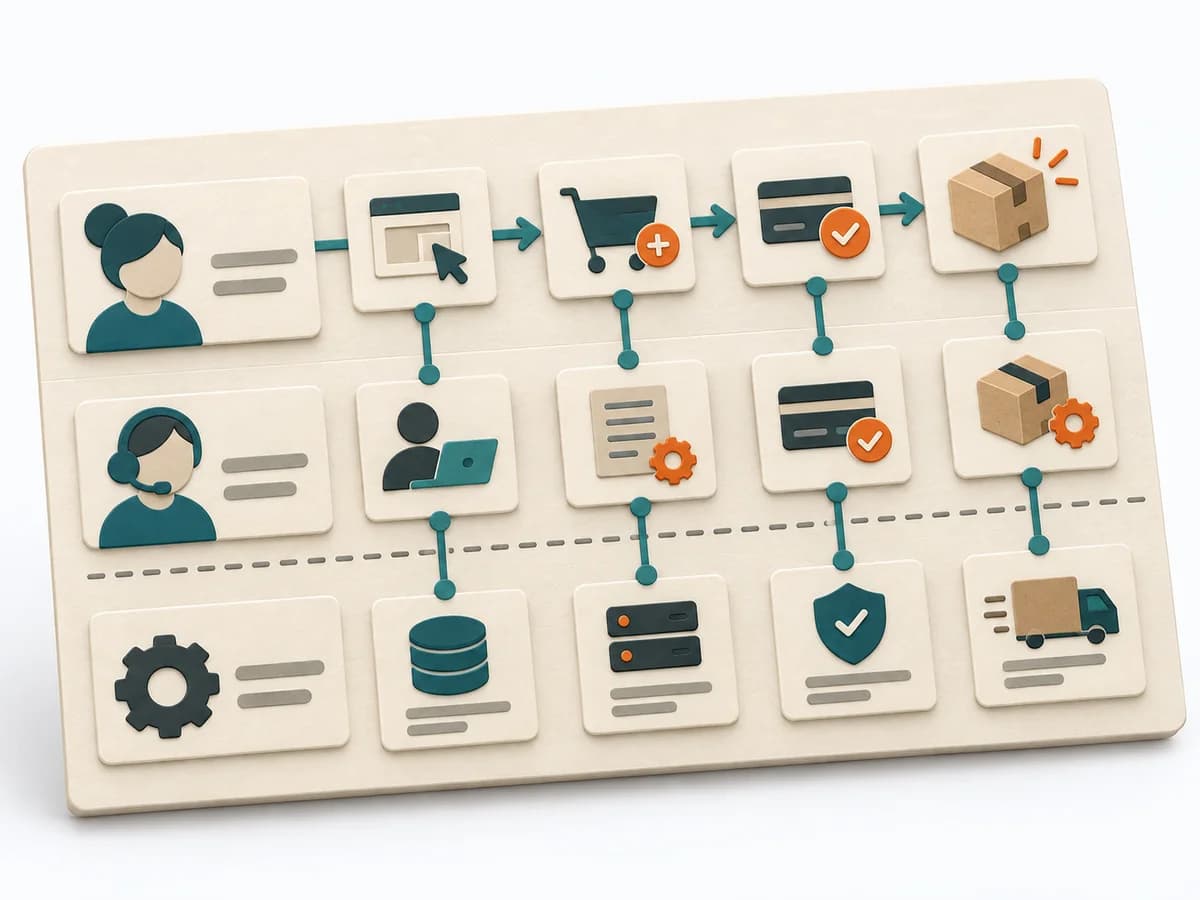 UX Design Service Blueprinting | 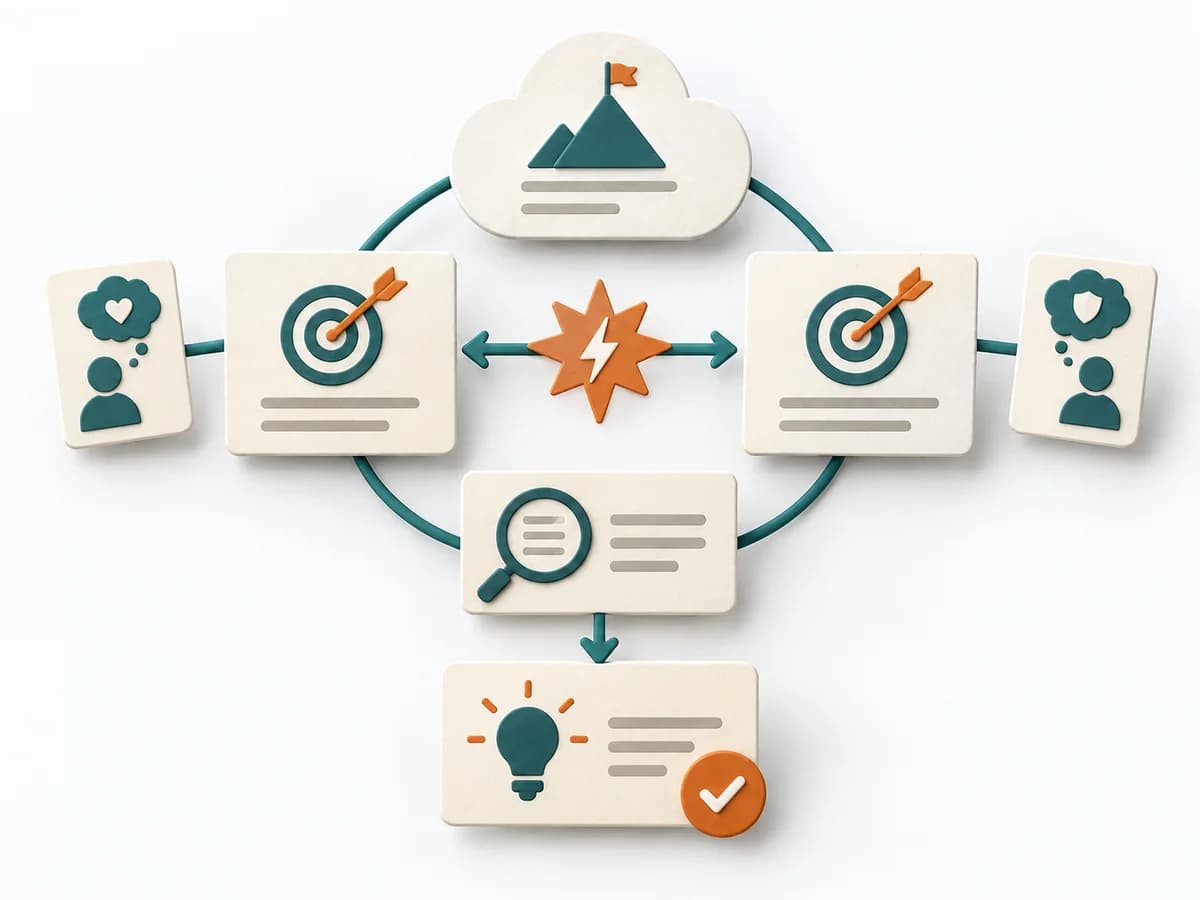 Systems Thinking Evaporating Cloud |
|---|---|---|---|
Purposedifferent | Intervention Mapping translates a need for change into a planned, evaluable program. The method connects target group, determinants, actions, and measurement into a traceable chain. | When a service experience is spread across several touchpoints, it brings frontstage and backstage together. It shows where user contact and internal responsibility must fit. | The method makes visible why two seemingly incompatible demands arise and which assumption must be tested to resolve the conflict. |
Complexitydifferent | High | High | Medium |
Timedifferent | 1-5 Tage | 0.5-2 Tage | 60-120 min |
Participantsdifferent | 4-12 | 6-12 | 2-8 |
Formatdifferent | Workshop + async | Workshop | Workshop |
Outputdifferent | Logic Model, Change Objectives, Intervention Components, Evaluation Plan | Service Blueprint, Fail Points, Ownership Map | Conflict Cloud, Assumption List, Breakthrough Ideas, Next Experiments |
Tagsno overlap | ChangeSystems thinkingCapability | Service designOperationsJourneyBlueprint | Theory of ConstraintsAssumptionsSystems thinking |
Often compared together
Methods with strong topical overlap with the current selection, not yet in the comparison.