View methods side by side.
Choose up to four methods. Add them using the search and share the comparison by copying its link.
| Criterion | 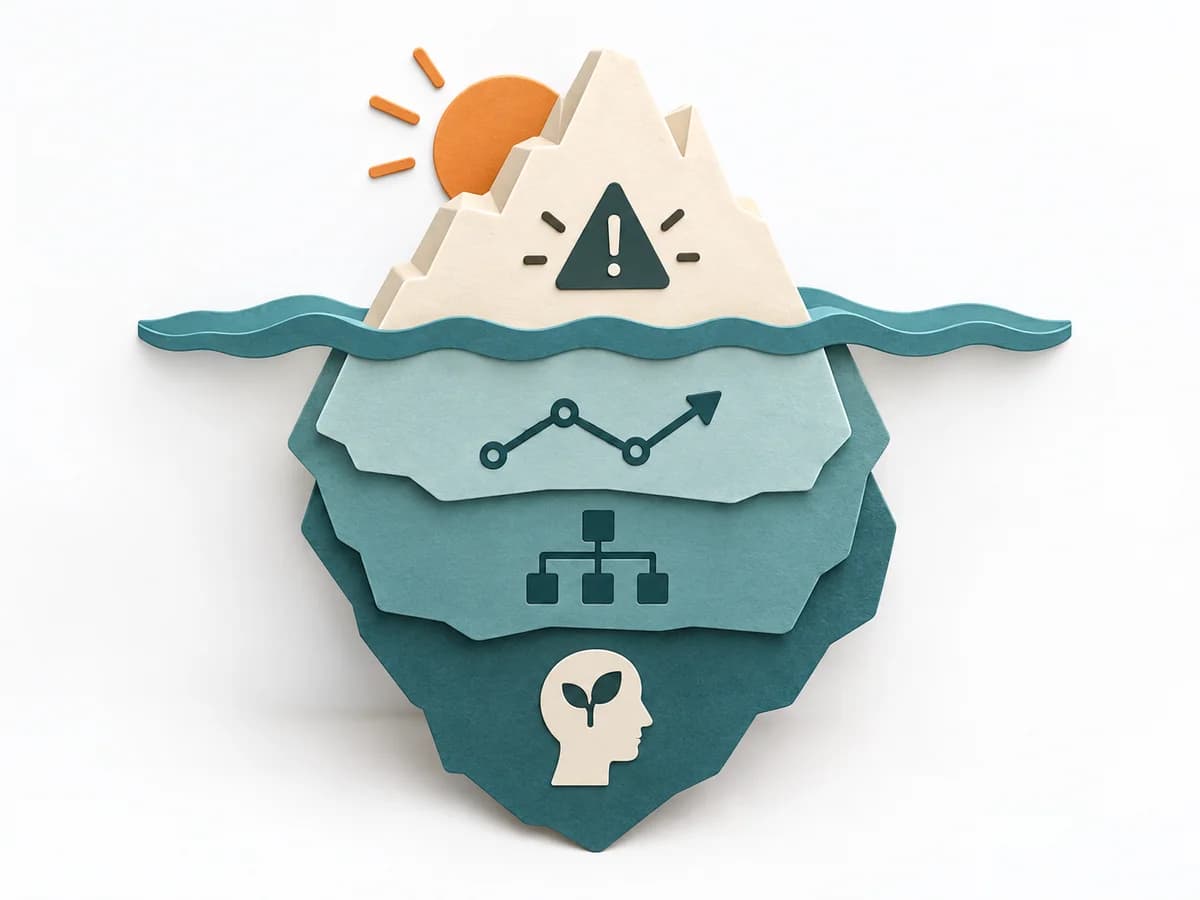 Systems Thinking Iceberg Model | 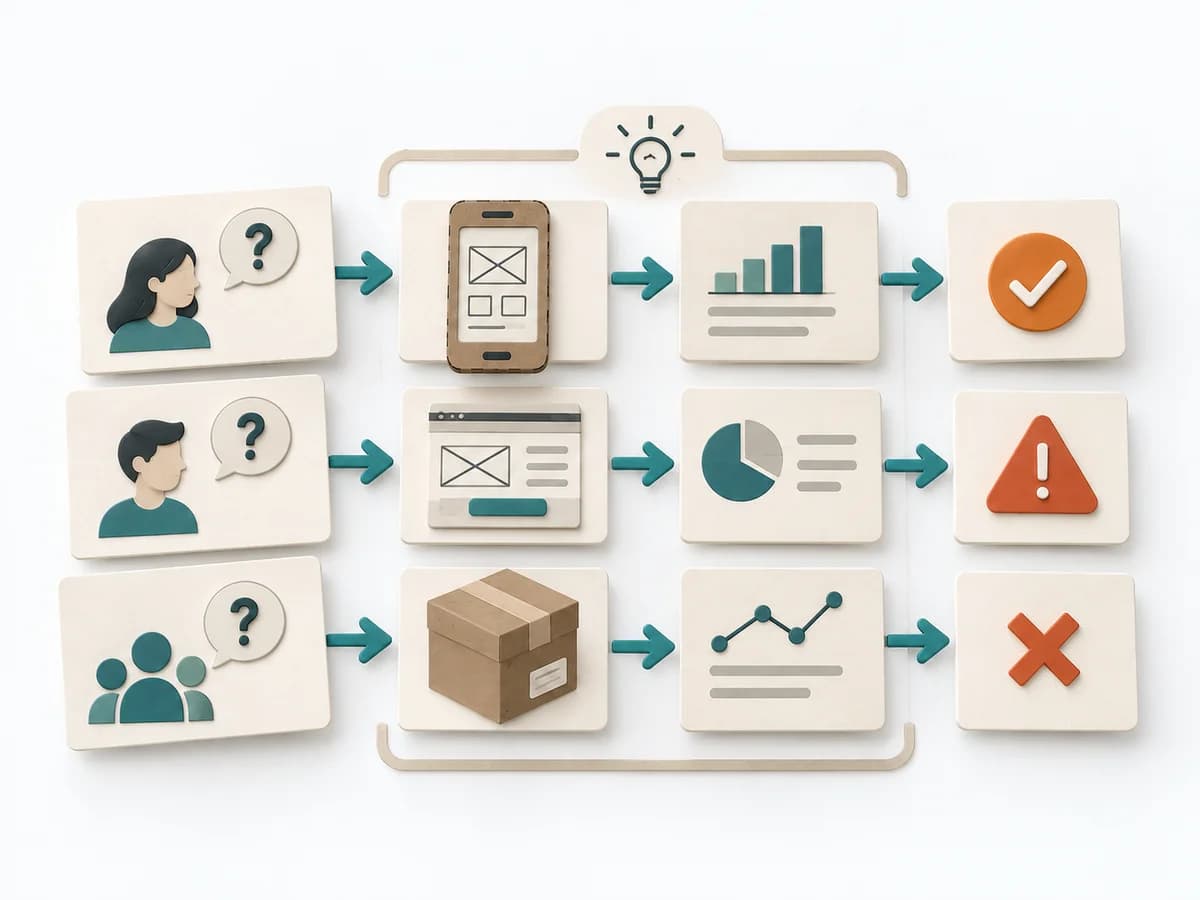 Product Discovery MVP Test Matrix |  Product Discovery Experiment Canvas |
|---|---|---|---|
Purposedifferent | The Iceberg Model separates visible events from patterns, structures, and mental models. This turns a single observation into a deeper understanding of why a problem keeps recurring. | When several minimal variants compete to answer the same question, it makes comparing and choosing between them cleaner. It separates problem, assumption, solution, and evidence. The result is captured as a Test Matrix and a Test Plan. | When experiments become unreadable after the fact, it arranges hypothesis, signal, and learning goal on a single canvas. It separates problem, assumption, solution, and evidence. The result is captured as a Completed Experiment Canvas and a Success Metric. |
Complexitydifferent | Low | Medium | Low |
Timedifferent | 30-60 min | 45-75 min | 30-60 min |
Participantsdifferent | 2-10 | 2-8 | 1-5 |
Formatdifferent | Workshop + async | Workshop | Workshop + async |
Outputdifferent | Iceberg Worksheet, Pattern Notes, Intervention Ideas | Test Matrix, Test Plan | Completed Experiment Canvas, Success Metric |
Tagsno overlap | Systems thinkingRoot causePatterns | ExperimentsValidationDiscoveryOptions | ExperimentsValidationDiscoveryHypothesis |
Often compared together
Methods with strong topical overlap with the current selection, not yet in the comparison.