View methods side by side.
Choose up to four methods. Add them using the search and share the comparison by copying its link.
| Criterion |  Engineering Hypothesis-Driven Troubleshooting |  Product Discovery Pretotyping | 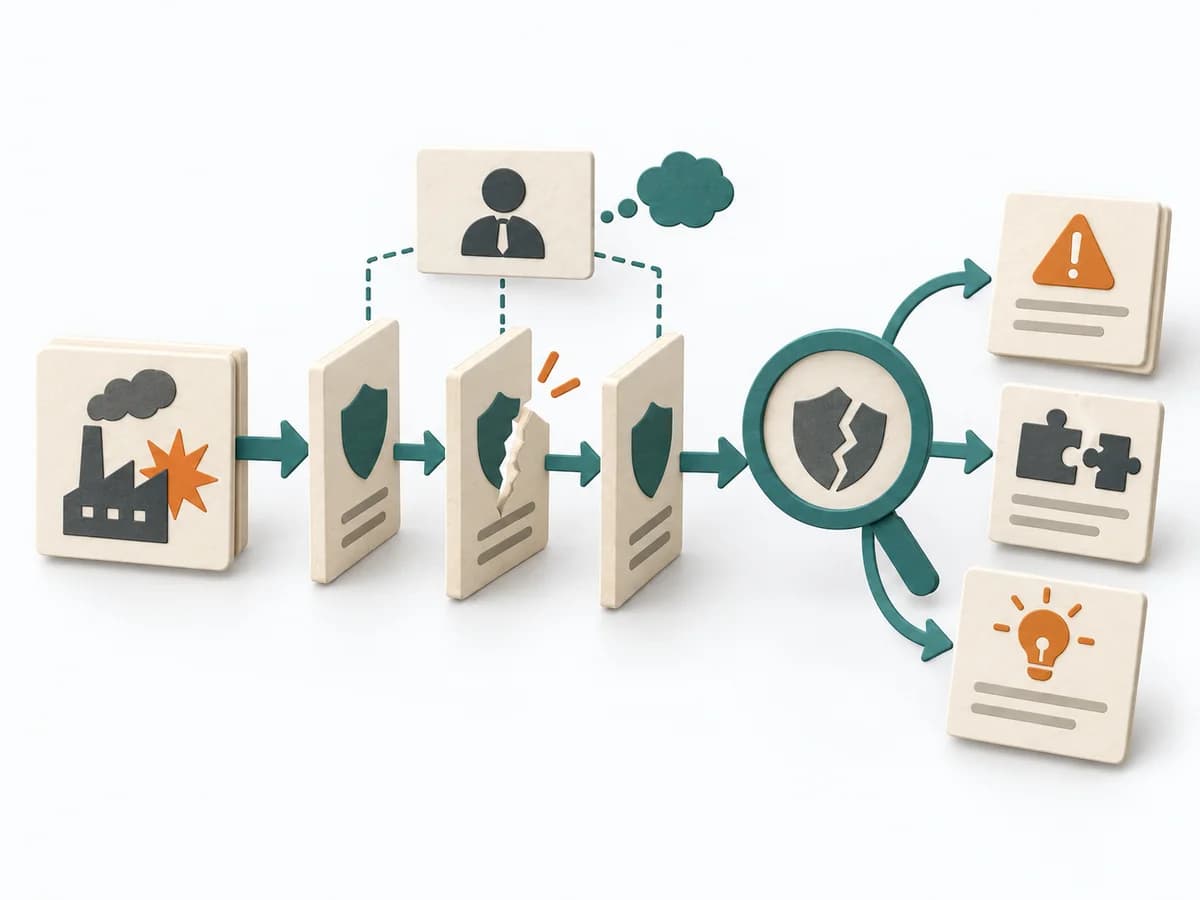 Operations MORT Analysis |
|---|---|---|---|
Purposedifferent | When systems fail unexpectedly, spontaneous attempts often produce more noise than insight. Hypothesis-driven Troubleshooting translates symptoms into testable assumptions and makes troubleshooting learnable. | Pretotyping clarifies whether a customer problem and solution idea create enough real demand. It separates problem, assumption, solution, and evidence, and captures the result as a pretotyping sketch, test setup, and conversion data. | For a safety-relevant event or a system with high protection requirements, the method examines where controls failed. It exposes both technical and organizational gaps. |
Complexitydifferent | Medium | Low | High |
Timedifferent | 30-240 min | Stunden bis wenige Tage | Mehrere Tage bis Wochen |
Participantsdifferent | 1-6 | 1-4 | 2-6 |
Formatsame | Workshop + async | Workshop + async | Workshop + async |
Outputdifferent | Hypothesis Log, Test Plan, Evidence Notes, Diagnosis Summary | Pretotyping sketch, Test setup, Conversion data, Go or no-go decision | MORT Worksheets, Findings per Branch, Corrective Actions, Systemic Recommendations |
Tagsno overlap | TroubleshootingProblem solvingDiagnosis | ValidationDemandMVP | Root causeSafetySystemicIncident |
Often compared together
Methods with strong topical overlap with the current selection, not yet in the comparison.