View methods side by side.
Choose up to four methods. Add them using the search and share the comparison by copying its link.
| Criterion | 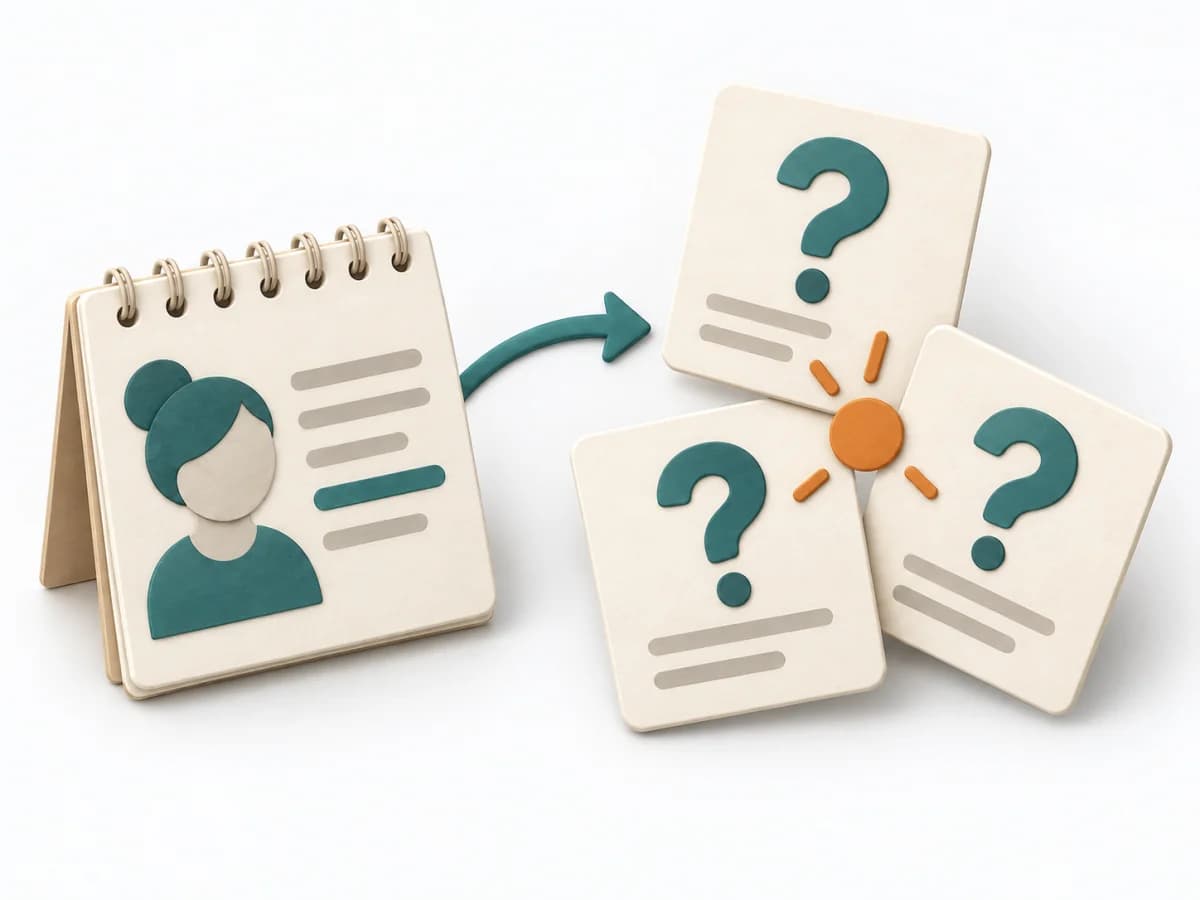 Innovation How Might We |  Systems Thinking Leverage Points |  Decision Making Delphi Method |
|---|---|---|---|
Purposedifferent | With a stuck problem carrying many implicit assumptions, the method translates observations into open, workable questions. It sharpens the problem frame without pre-thinking the solution, turning frustration or fuzziness into a search space with clear direction. | Leverage Points show exactly where interventions in a system produce a disproportionate effect. It draws relationships, patterns, and feedback loops. The result is captured as a leverage map and action strategy. | When knowledge is distributed and direct dominance should be avoided, groups quickly fall under the sway of their opinion leaders. The Delphi Method gathers assessments iteratively and gradually brings expert judgments closer together. |
Complexitydifferent | Low | High | High |
Timedifferent | 30–45 min | Half day | 1-4 Wochen |
Participantsdifferent | 1-10 | 3-12 | 6-30 Experten |
Formatdifferent | Workshop + async | Workshop | Async |
Outputdifferent | HMW Questions, Challenge Framing, Idea Prompts | Leverage Map, Action Strategy | Expert Forecast, Consensus Range, Assumption Notes |
Tagsno overlap | FramingOpportunityIdeationQuestions | Systems thinkingChangeStrategy | ForecastingExpertsDecisionStrategy |
Often compared together
Methods with strong topical overlap with the current selection, not yet in the comparison.