View methods side by side.
Choose up to four methods. Add them using the search and share the comparison by copying its link.
| Criterion | 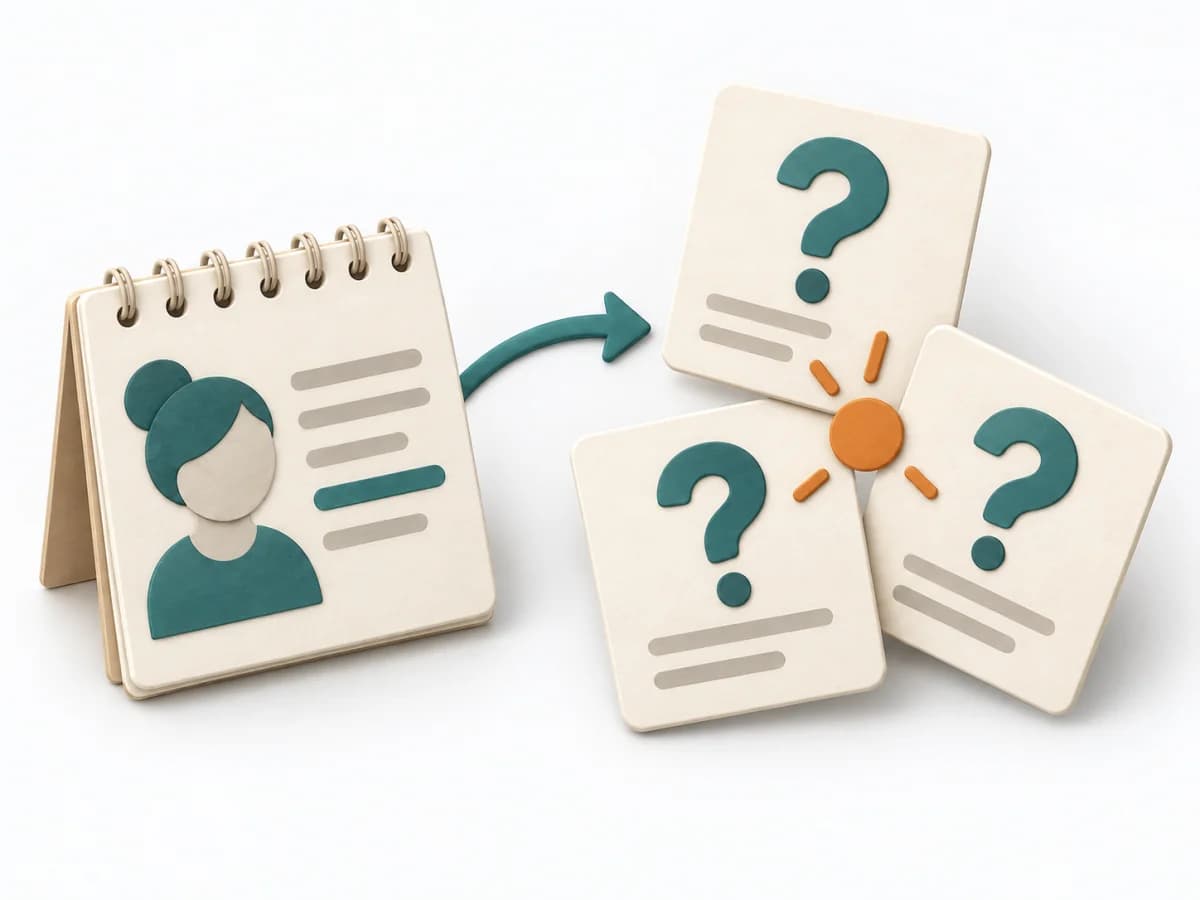 Innovation How Might We |  Knowledge Modeling Knowledge Mapping |  Decision Making Assumption Surfacing |
|---|---|---|---|
Purposedifferent | With a stuck problem carrying many implicit assumptions, the method translates observations into open, workable questions. It sharpens the problem frame without pre-thinking the solution, turning frustration or fuzziness into a search space with clear direction. | Knowledge Mapping makes knowledge, gaps, and transfer paths visible across a field. It fits when expertise should not just exist but also be findable and transferable. | Plans often contain assumptions that were never openly stated and remain dangerous precisely because of that. Assumption Surfacing makes these silent premises visible and prioritizes which of them carry the initiative or could sink it. |
Complexitydifferent | Low | Medium | Low |
Timedifferent | 30–45 min | 1-3 h | 45-90 min |
Participantsdifferent | 1-10 | 3-12 | 2-8 |
Formatdifferent | Workshop + async | Workshop | Workshop + async |
Outputdifferent | HMW Questions, Challenge Framing, Idea Prompts | Knowledge Map, Critical Knowledge Areas, Transfer Plan | Assumption List, Critical Assumptions, Learning Plan |
Tagsno overlap | FramingOpportunityIdeationQuestions | KnowledgeMappingRisk | AssumptionsRiskDecisionDiscovery |
Often compared together
Methods with strong topical overlap with the current selection, not yet in the comparison.



