View methods side by side.
Choose up to four methods. Add them using the search and share the comparison by copying its link.
| Criterion |  Growth Hooked Model | 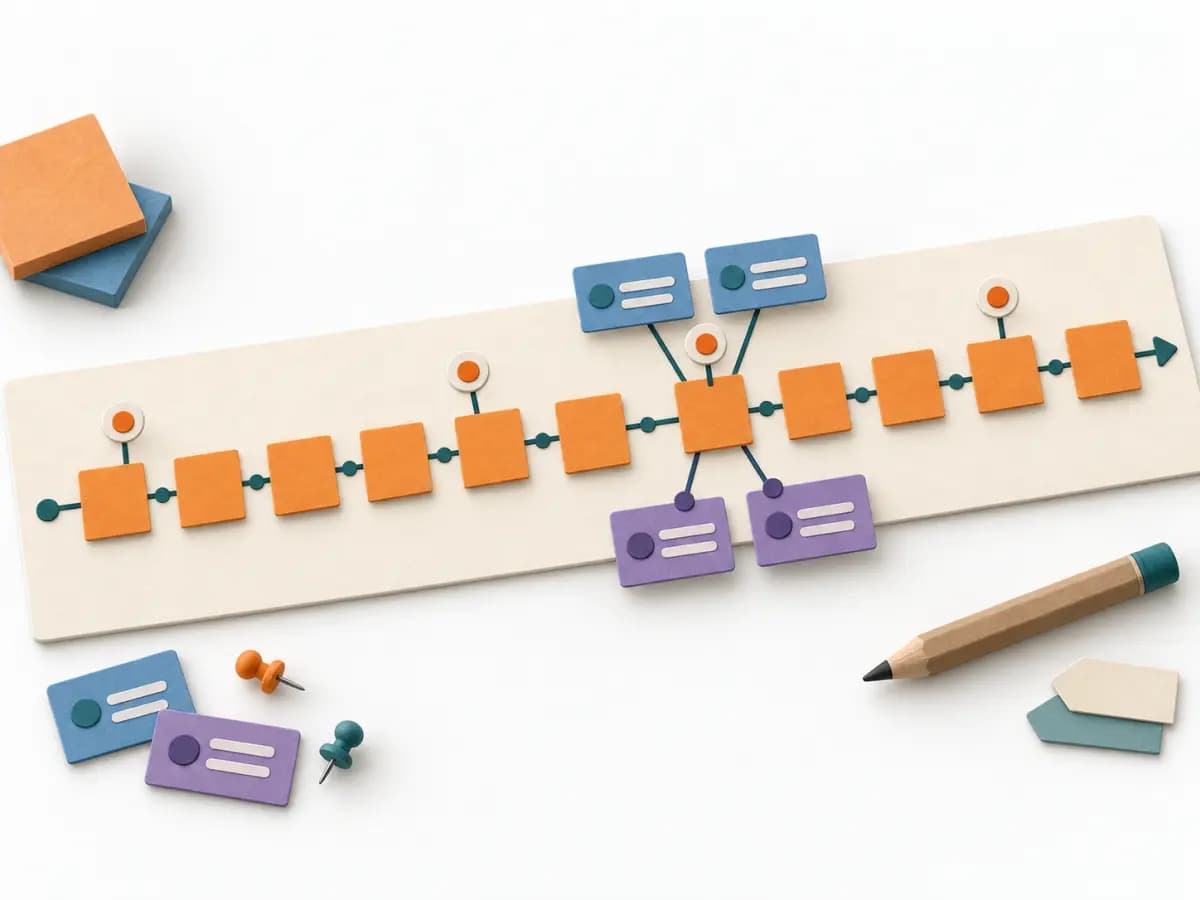 Domain Modeling EventStorming | 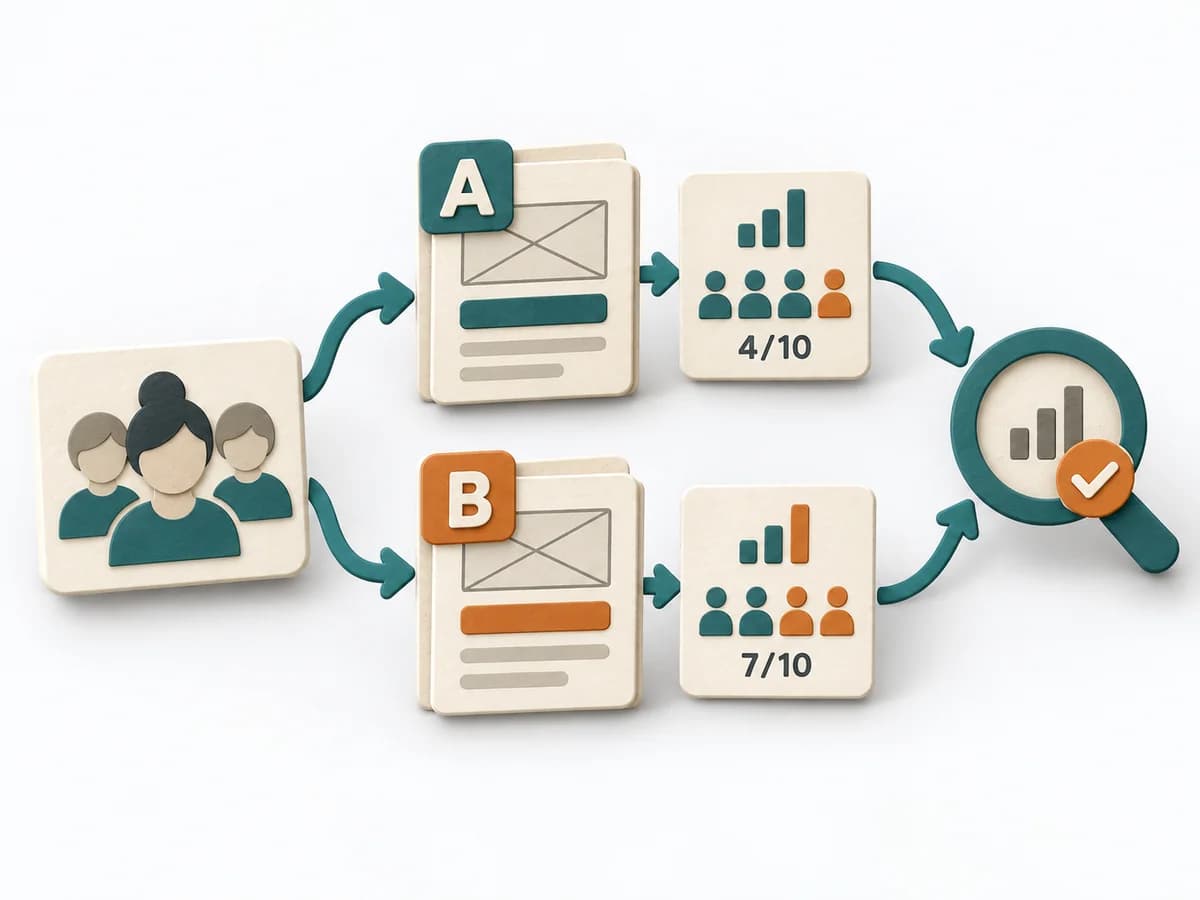 Growth A/B Testing |
|---|---|---|---|
Purposedifferent | The Hooked Model helps clarify engagement loops, user behavior, and experiments. It makes repeat behavior measurable and captures the result as a hooked loop, trigger map, and reward design. | When a domain consists of many events, rules, and states, it creates a shared modeling space for the team. It bundles language, flows, and boundaries before domain knowledge fragments into siloed views. | When two variants compete, discussions quickly decide by taste rather than effect. A/B Testing checks behavior under controlled conditions and separates real improvement from chance or expectation effects. |
Complexitydifferent | Medium | Medium | High |
Timedifferent | Multiple workshops over several weeks | 2-8 h | 1-4 Wochen |
Participantsdifferent | 2-8 | 5-12 | 1-6 |
Formatdifferent | Workshop + async | Workshop | Async |
Outputdifferent | Hooked loop, Trigger map, Reward design, Ethics check | Event Timeline, Ubiquitous Language, Boundaries, Open Questions | Experiment results, Decision log, Learning summary |
Tagsno overlap | GrowthBehaviorRetention | Domain-Driven DesignEventsDiscoveryWorkshop | ExperimentsGrowthAnalyticsValidation |
Often compared together
Methods with strong topical overlap with the current selection, not yet in the comparison.