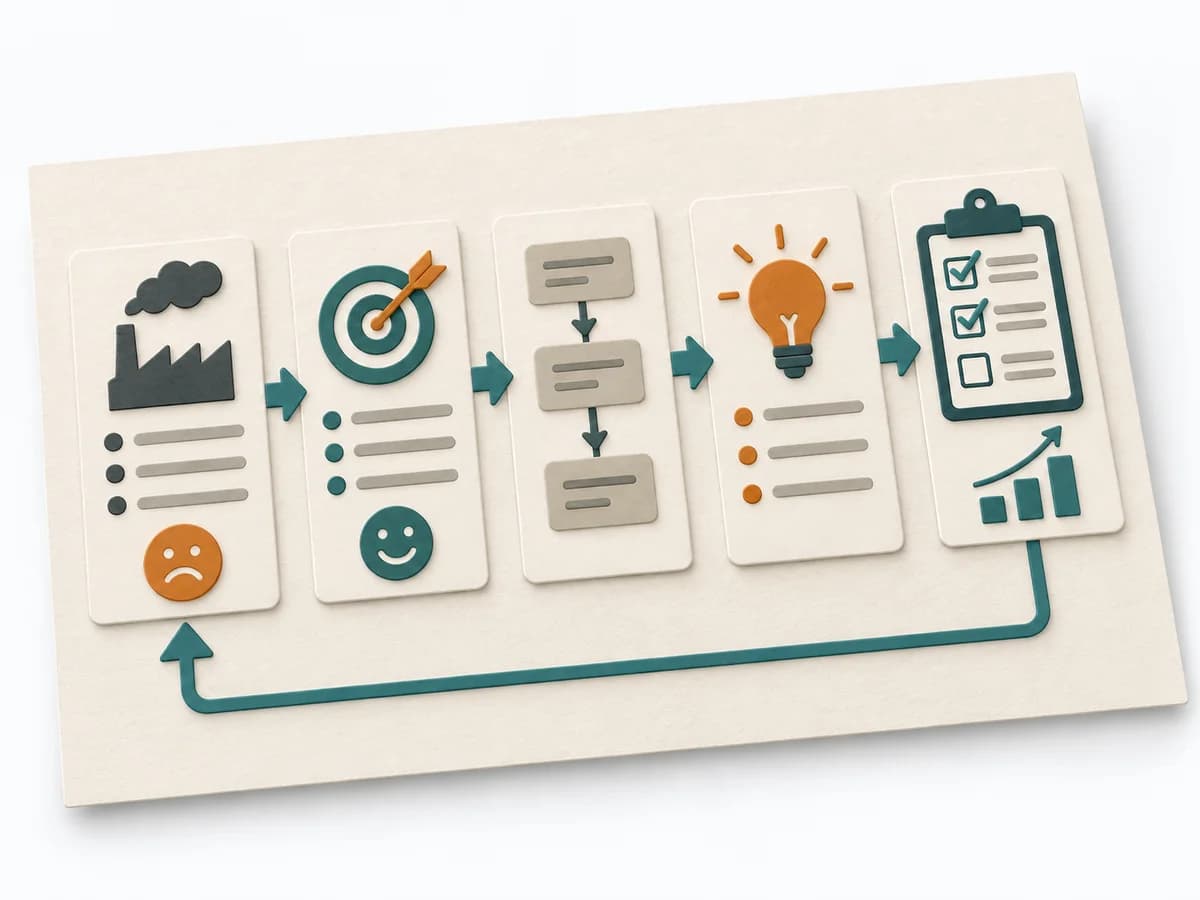
View methods side by side.
Choose up to four methods. Add them using the search and share the comparison by copying its link.
| Criterion | 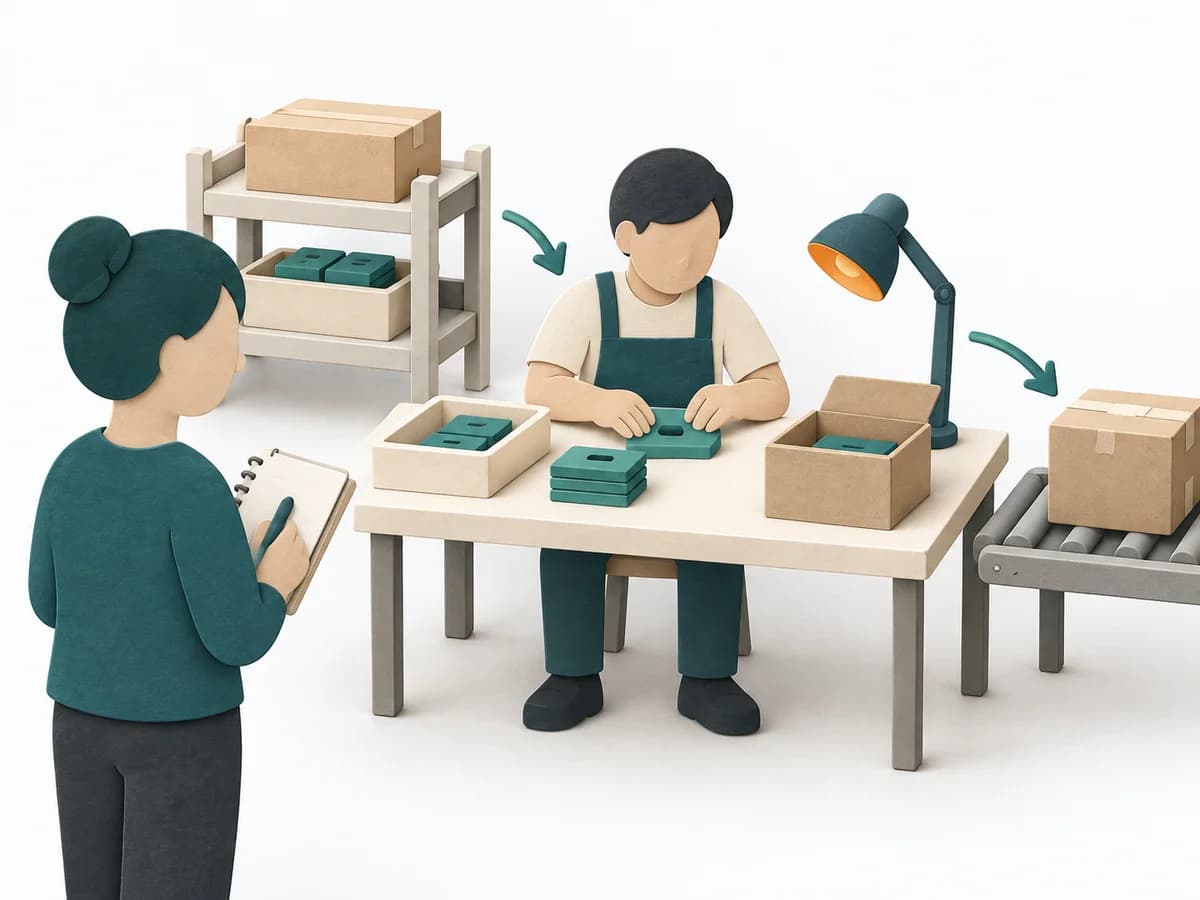 Operations Gemba Walk |  Decision Making OODA Loop | 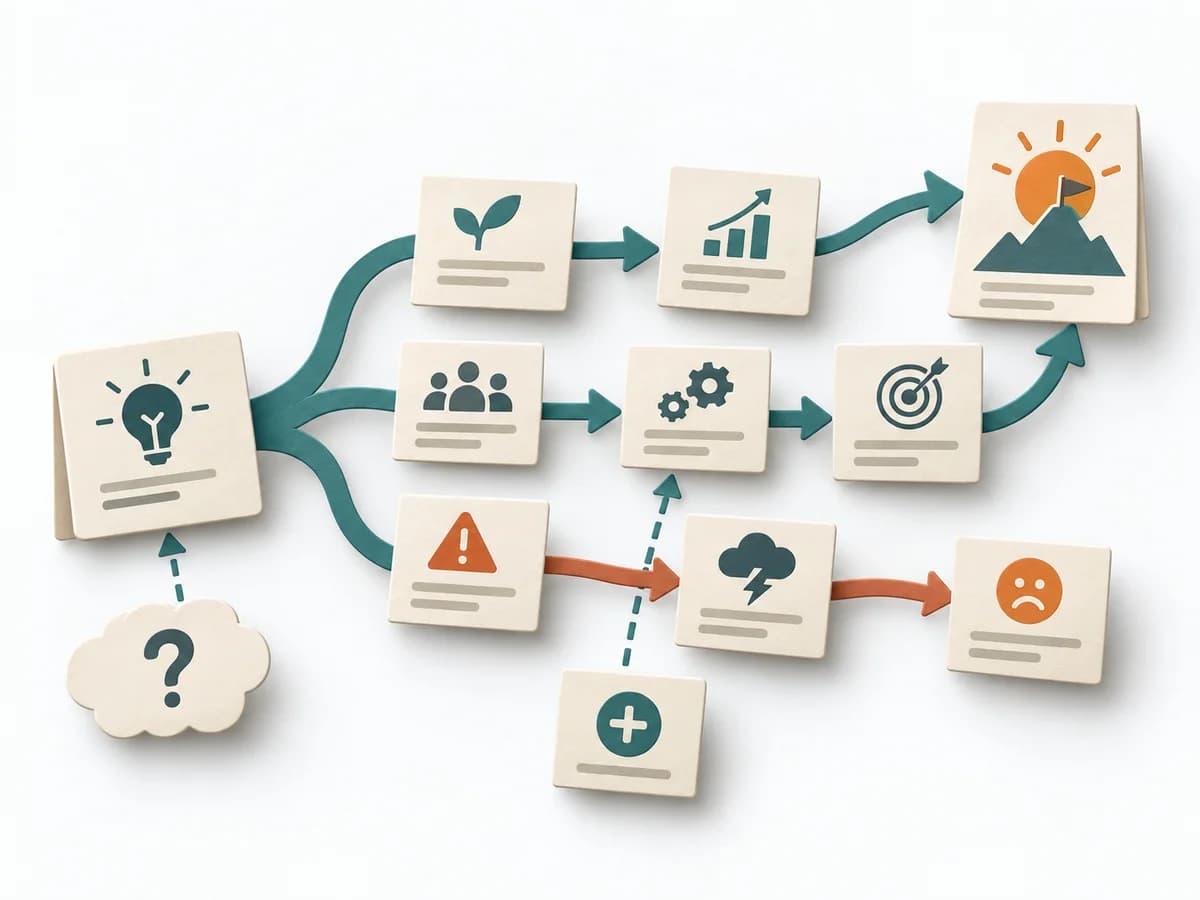 Systems Thinking Future Reality Tree |
|---|---|---|---|
Purposedifferent | When there is uncertainty about the real course of a process, the method brings observation to the place where work happens. It combines perception, follow-up questions, and process knowledge so decisions rest on actual workflows instead of assumptions. | In dynamic situations, decisions become outdated faster than they can be prepared. The OODA Loop holds observing, orienting, deciding, and acting together as a recurring rhythm so reaction does not slide into inertia. | A Future Reality Tree shows how desired actions are meant to lead to a better system state. The method checks whether a path of change holds together logically before time flows into implementation. |
Complexitydifferent | Low | Medium | High |
Timedifferent | 30-120 min | 15-60 min je Zyklus | 2-4 h |
Participantsdifferent | 2-6 | 1-8 | 3-8 |
Formatdifferent | Workshop | Workshop + async | Workshop |
Outputdifferent | Observation Notes, Improvement Ideas | Situation Assessment, Decision Loop, Action Updates | Future Reality Tree, Negative Branches, Assumption List, Improved Injections |
Tagsno overlap | LeanObservationProcessOperations | DecisionChangeLearningStrategy | Theory of ConstraintsSystems thinkingChange |
Often compared together
Methods with strong topical overlap with the current selection, not yet in the comparison.