View methods side by side.
Choose up to four methods. Add them using the search and share the comparison by copying its link.
| Criterion |  Business Strategy GAP Analysis | 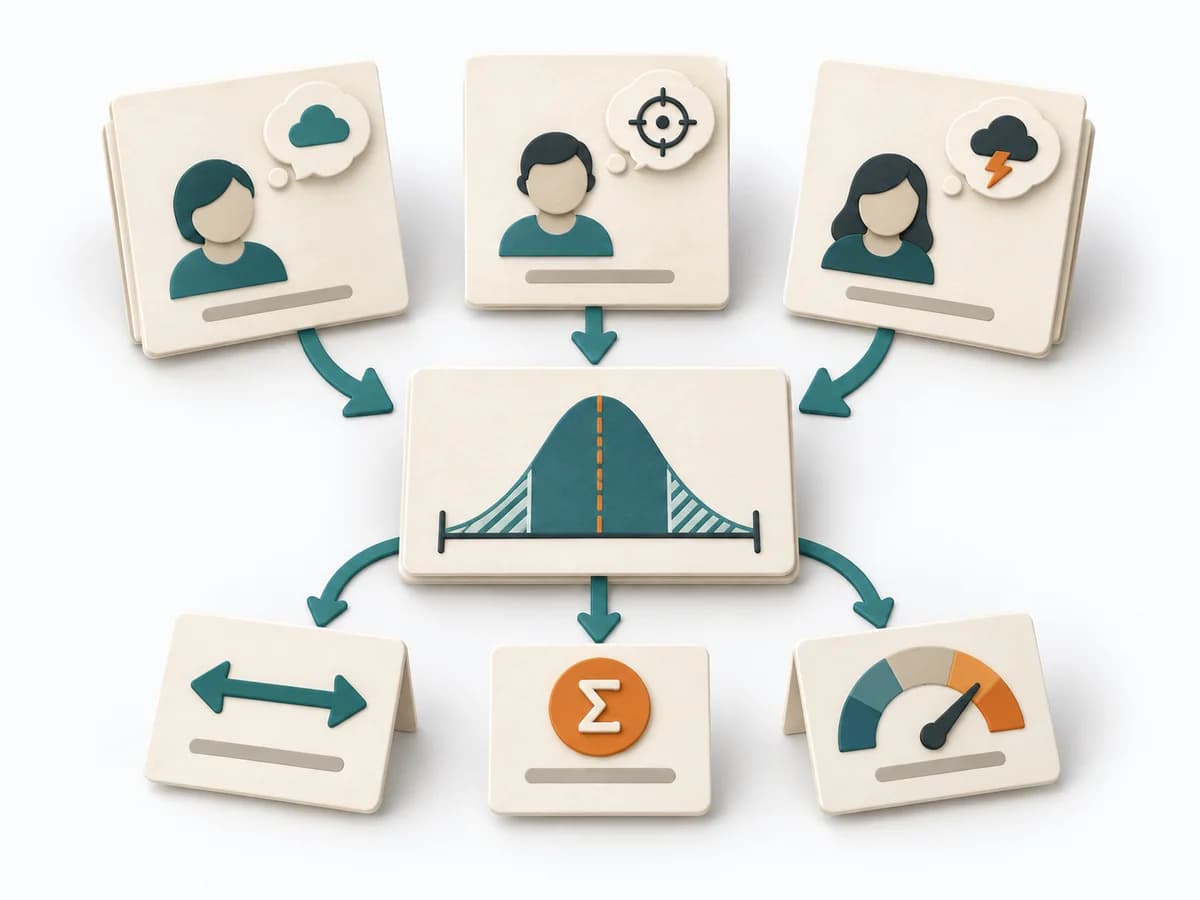 Decision Making Three-Point Estimation | 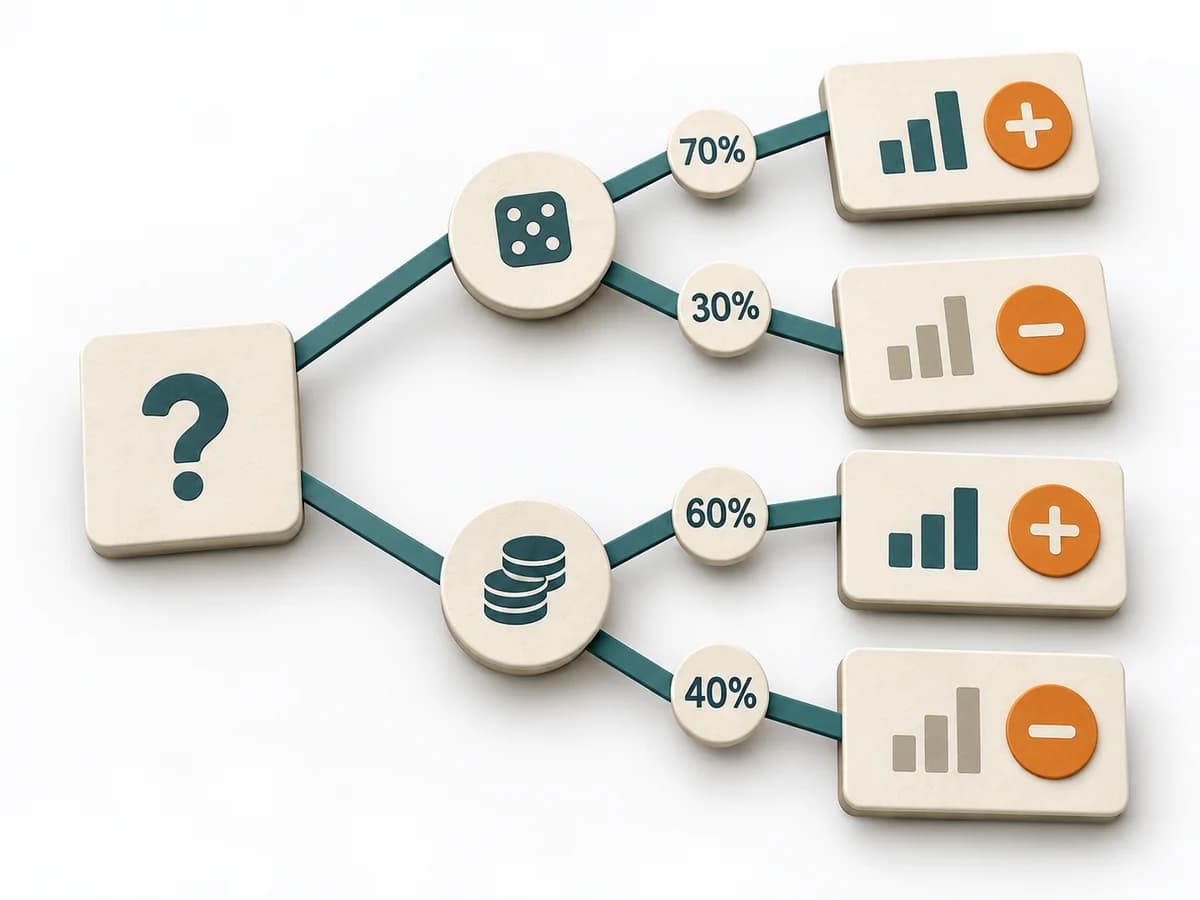 Decision Making Decision Tree |
|---|---|---|---|
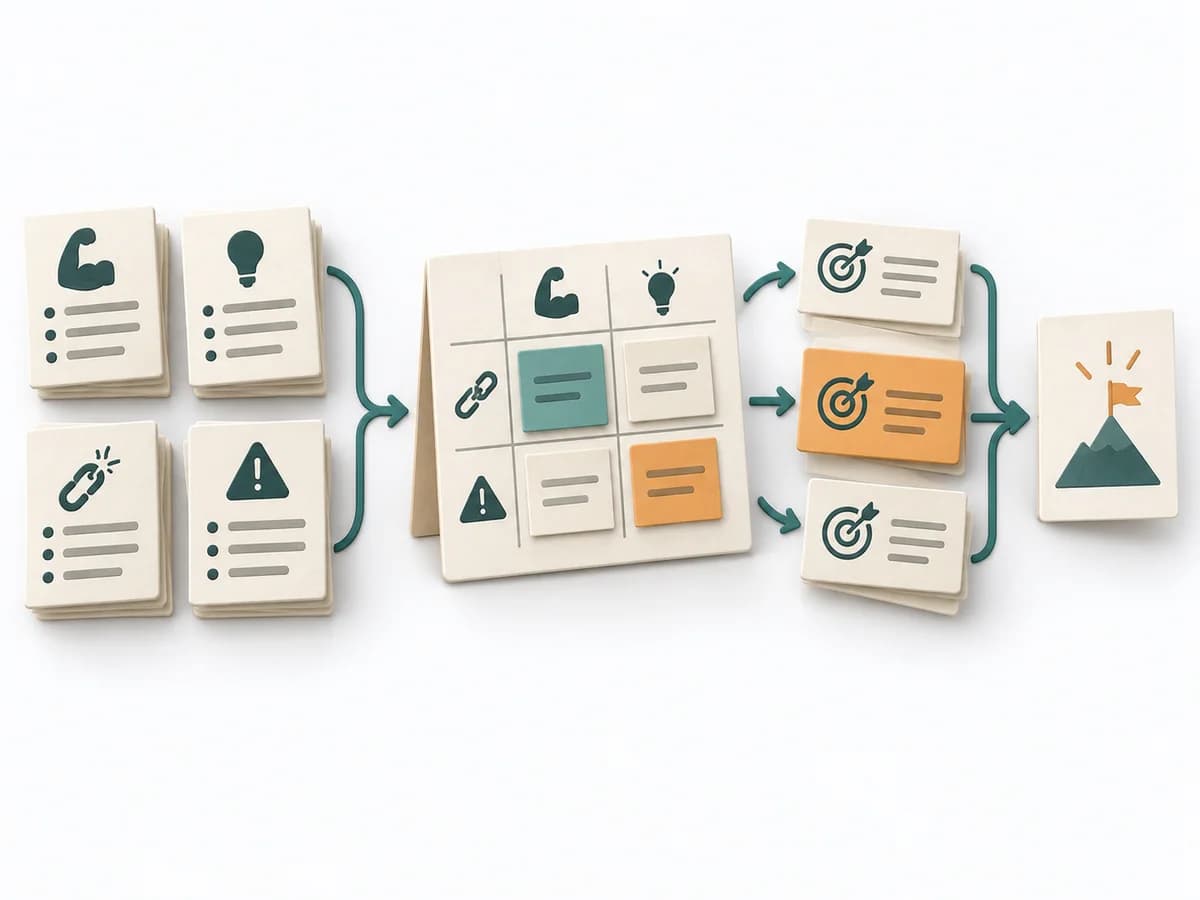
Purposedifferent | GAP Analysis compares the current state with a target picture and makes the distance manageable. It becomes useful when, ahead of new initiatives, it must become clear which capabilities, processes, or resources are missing. | A single estimate for effort, time, or risk often looks too smooth for the real uncertainty behind it. It separates options, evaluation criteria, and open risks. The result is captured as a Three-Point Estimate, Risk Range, and Assumption Notes. | For decisions with follow-on paths and dependencies, a linear comparison is often not enough. A Decision Tree shows how options branch under conditions and which consequences hang on each branch. |
Complexitysame | Medium | Medium | Medium |
Timedifferent | 1-3 h | 10-30 min je Item | 30-90 min |
Participantsdifferent | 2-8 | 1-8 | 1-6 |
Formatsame | Workshop + async | Workshop + async | Workshop + async |
Outputdifferent | Gap Matrix, Action Plan, Risk Notes | Three-Point Estimate, Risk Range, Assumption Notes | Decision Tree, Option Map, Assumption List |
Tagsno overlap | StrategyAnalysisPlanning | EstimationUncertaintyForecasting | DecisionTreeOptions |
Often compared together
Methods with strong topical overlap with the current selection, not yet in the comparison.