View methods side by side.
Choose up to four methods. Add them using the search and share the comparison by copying its link.
| Criterion | 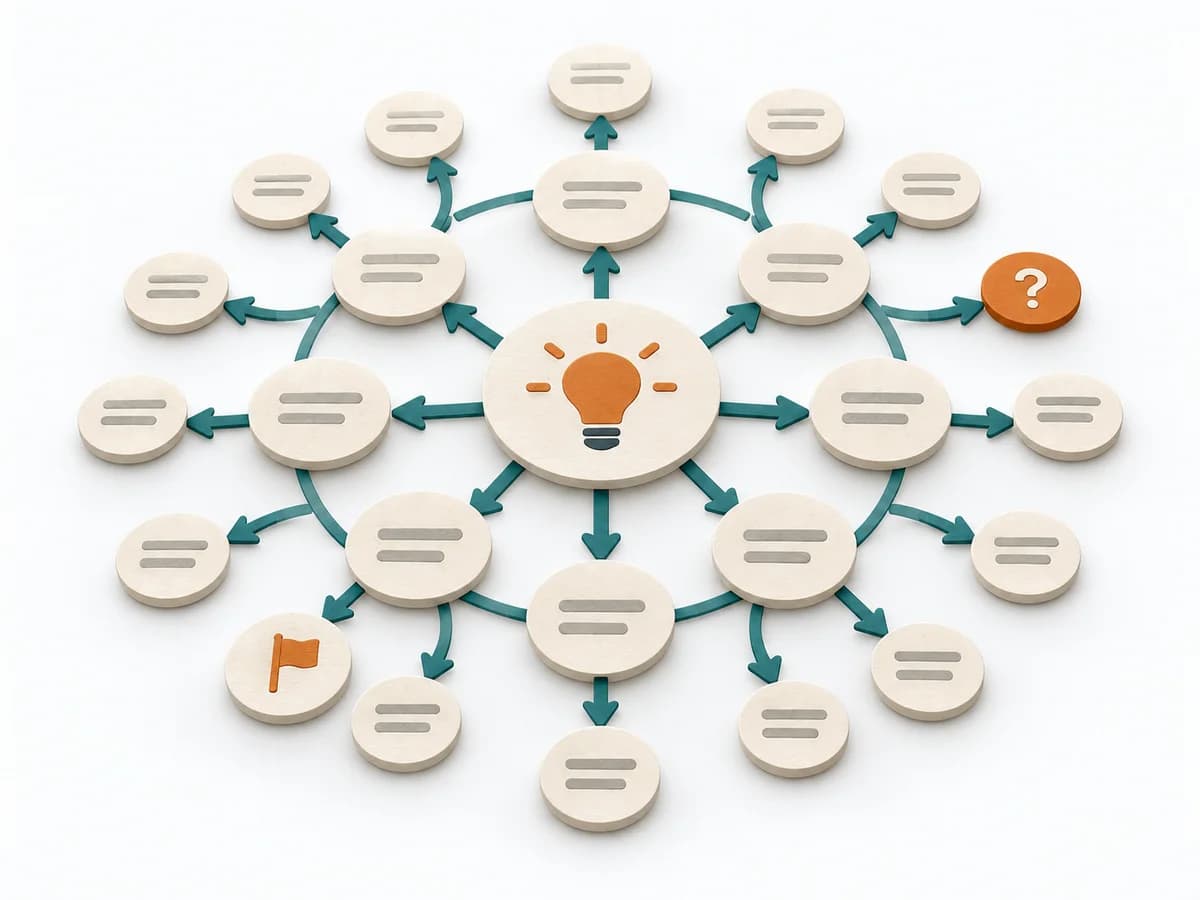 Systems Thinking Futures Wheel |  Business Strategy GAP Analysis |  Decision Making OODA Loop |
|---|---|---|---|
Purposedifferent | The Futures Wheel helps explore the consequences of a decision, a trend, or a strategic move in a structured way. It makes visible which first, second, and third-order effects could arise from an event. | GAP Analysis compares the current state with a target picture and makes the distance manageable. It becomes useful when, ahead of new initiatives, it must become clear which capabilities, processes, or resources are missing. | In dynamic situations, decisions become outdated faster than they can be prepared. The OODA Loop holds observing, orienting, deciding, and acting together as a recurring rhythm so reaction does not slide into inertia. |
Complexitysame | Medium | Medium | Medium |
Timedifferent | 60-120 min | 1-3 h | 15-60 min je Zyklus |
Participantsdifferent | 3-10 | 2-8 | 1-8 |
Formatsame | Workshop + async | Workshop + async | Workshop + async |
Outputdifferent | Futures Wheel, Consequence Chains, Strategic Signals | Gap Matrix, Action Plan, Risk Notes | Situation Assessment, Decision Loop, Action Updates |
Tagsno overlap | ForesightSystems thinkingSignals | StrategyAnalysisPlanning | DecisionChangeLearningStrategy |
Often compared together
Methods with strong topical overlap with the current selection, not yet in the comparison.