View methods side by side.
Choose up to four methods. Add them using the search and share the comparison by copying its link.
| Criterion | 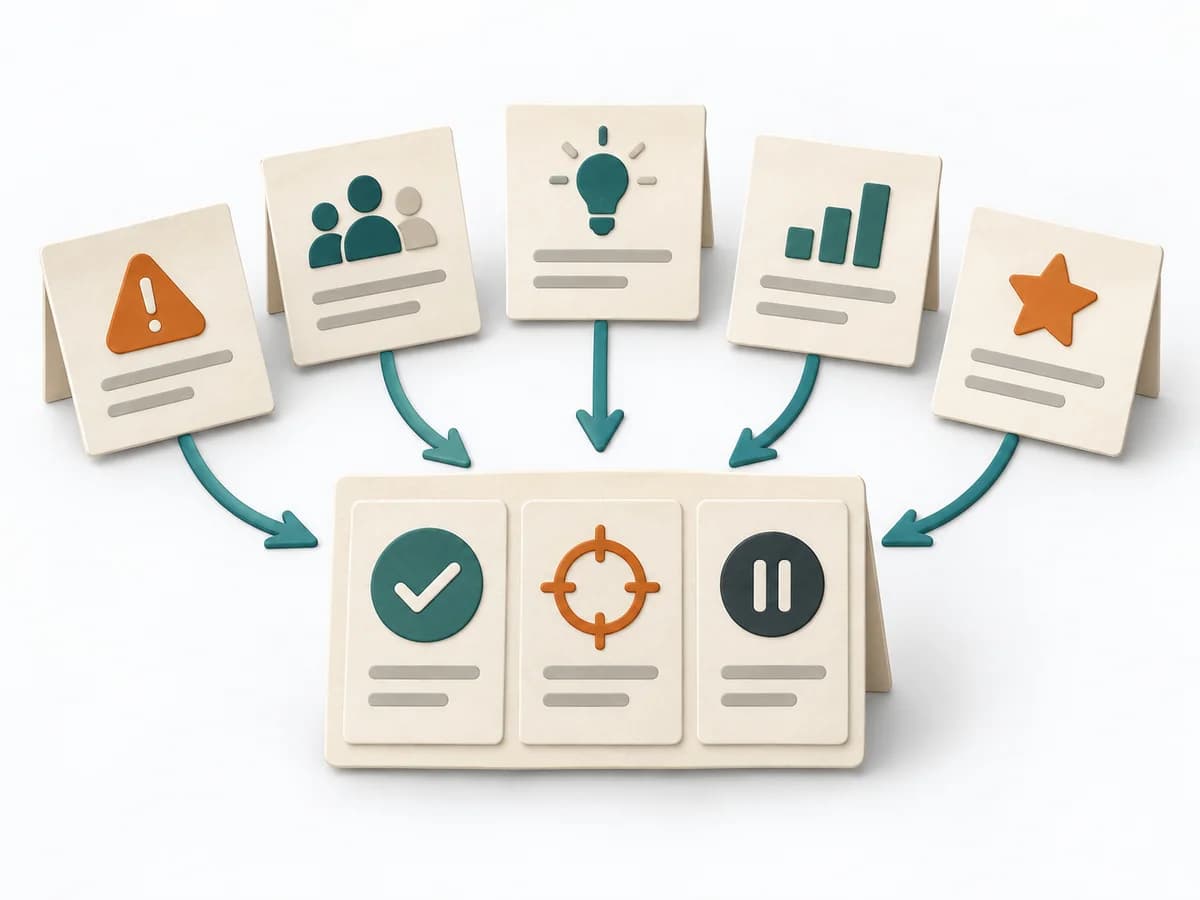 Business Strategy 5-Minuten VC-Check |  Innovation Design Sprint | 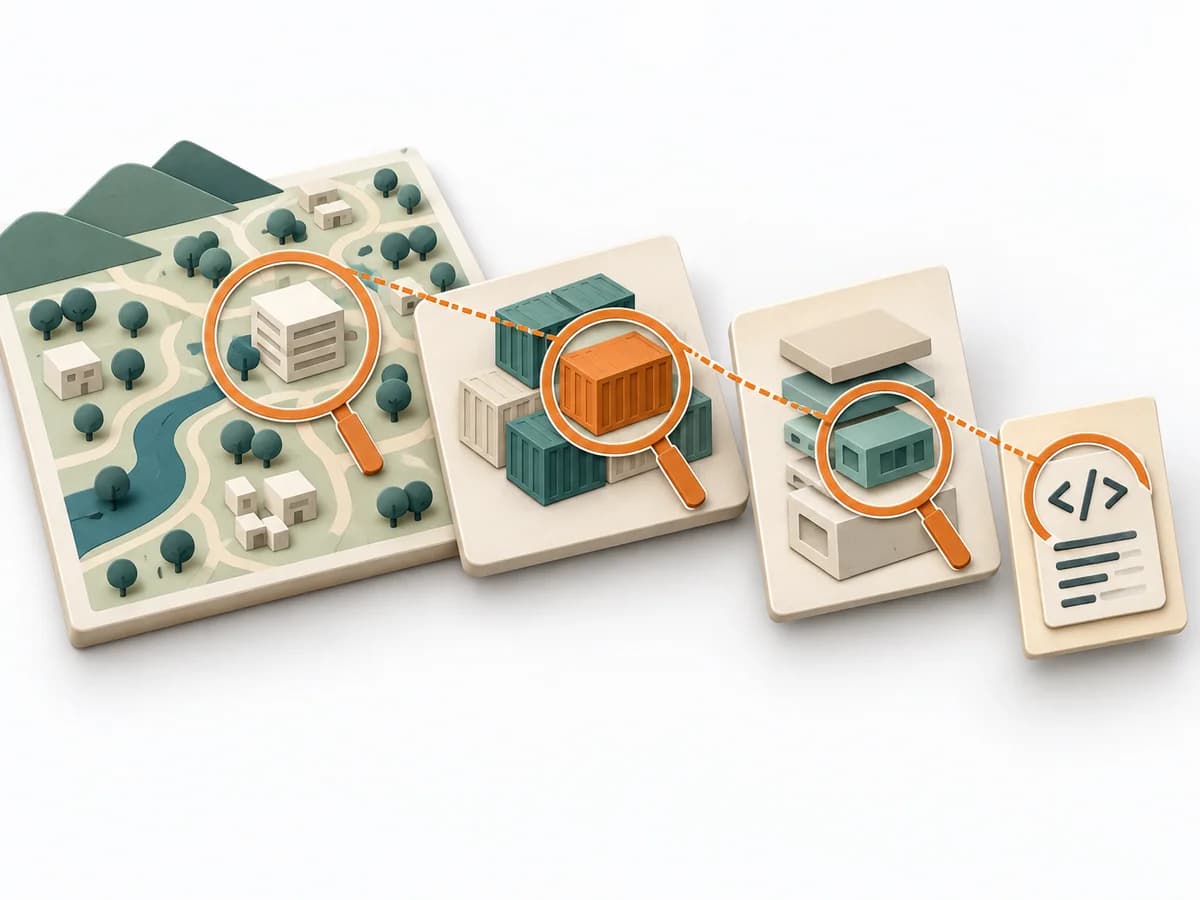 Architecture C4 Model |
|---|---|---|---|
Purposedifferent | The 5-Minute VC Check clarifies opportunities and strategic options at the earliest idea stage. It compares problem quality, customer willingness to pay, alternatives, differentiation, and market potential, and captures the result as a VC-check note, go/sharpen/park decision, and risk list. | When the product question is unclear and time pressure is high, the method takes a team from an open idea to a testable solution. It connects problem understanding, decision, and learning in one compact format, lowering the risk of spending a lot of energy on a mere guess. | The C4 Model makes a system legible across several resolution levels, from context down to code. It suits situations where different audiences need to understand the same architecture from different altitudes. |
Complexitydifferent | Low | High | Low |
Timedifferent | 5-15 min | 4-5 Tage | 1-4 h |
Participantsdifferent | 1-5 | 5-8 | 1-5 |
Formatdifferent | Workshop + async | Workshop | Workshop + async |
Outputdifferent | VC-check note, Go/sharpen/park decision, Risk and assumption list, Next validation step | Prototype, Test Findings, Decision Rationale | Context Diagram, Container Diagram, Component Diagram |
Tagsno overlap | StartupValidationCompetition | Design sprintPrototypeValidationInnovation | ArchitectureCommunicationVisualization |
Often compared together
Methods with strong topical overlap with the current selection, not yet in the comparison.