View methods side by side.
Choose up to four methods. Add them using the search and share the comparison by copying its link.
| Criterion | 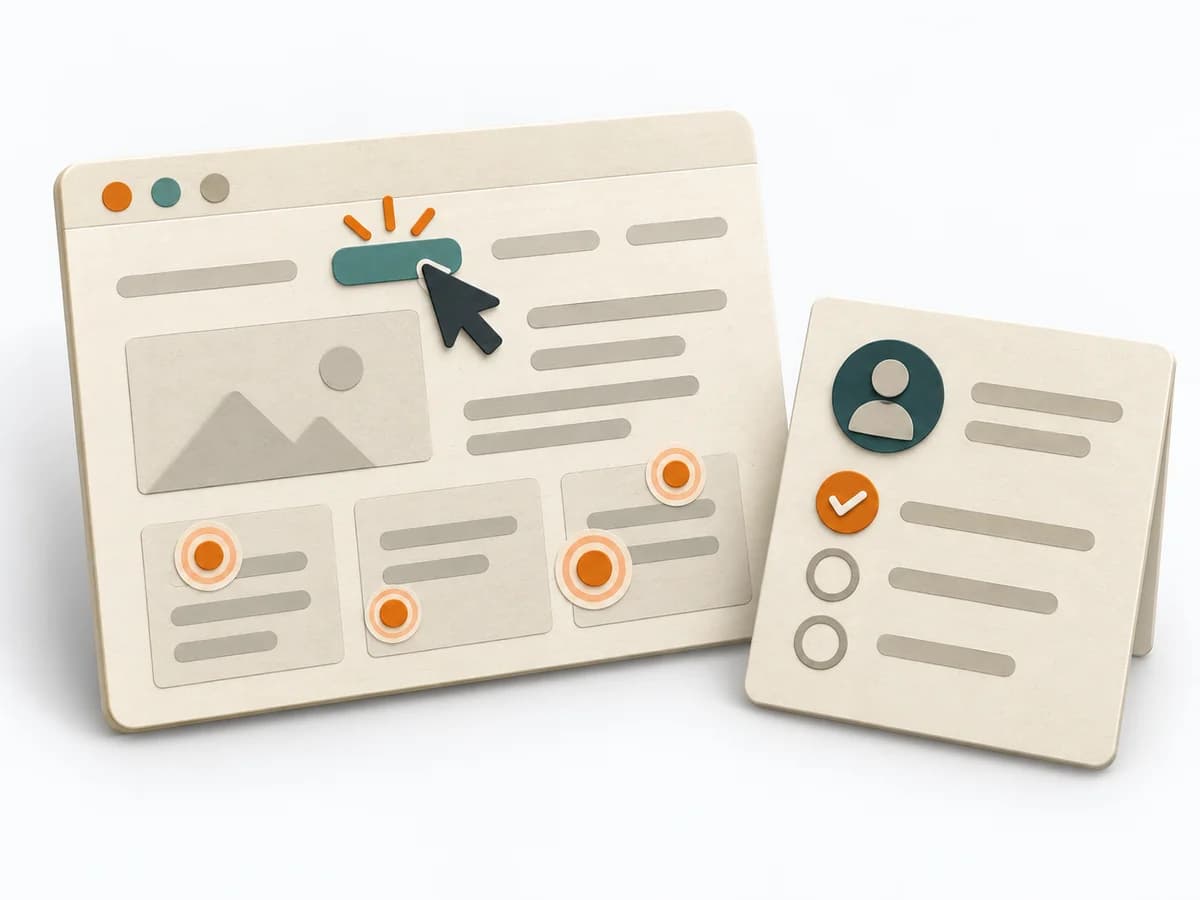 UX Research First-click Testing |  Delivery RAID Log |  Facilitation Stakeholder Salience Model |
|---|---|---|---|
Purposedifferent | When users immediately turn the wrong way on a screen or wireframe, first click testing checks initial orientation at high speed. The first click shows early whether expectation, labeling, and wayfinding fit together. | Helps clarify scope, sequence, and delivery flow in concrete terms. It makes work, boundaries, and order steerable. The result is captured as a RAID Log and a source for status reporting. | When stakeholders appear to matter very differently, the Stakeholder Salience Model rates their actual priority through power, legitimacy, and urgency. It turns individual contributions into a visible selection. The result is captured as a Salience diagram and a class-based strategy. |
Complexitydifferent | Low | Low | Medium |
Timedifferent | 1-2 Tage | 30 min Setup, dann laufend | 60-90 min |
Participantsdifferent | 10-30 | 1-3 maintaining, briefing for everyone | 3-6 |
Formatdifferent | Async | Async | Workshop |
Outputdifferent | Click Heatmap, Success Rate, Design Recommendations | RAID Log, Status Report Source | Salience Diagram, Strategy per Class |
Tagsno overlap | UXNavigationFindabilityValidation | RiskTrackingStakeholdersGovernance | StakeholdersFacilitationAlignmentGovernance |
Often compared together
Methods with strong topical overlap with the current selection, not yet in the comparison.



