View methods side by side.
Choose up to four methods. Add them using the search and share the comparison by copying its link.
| Criterion | 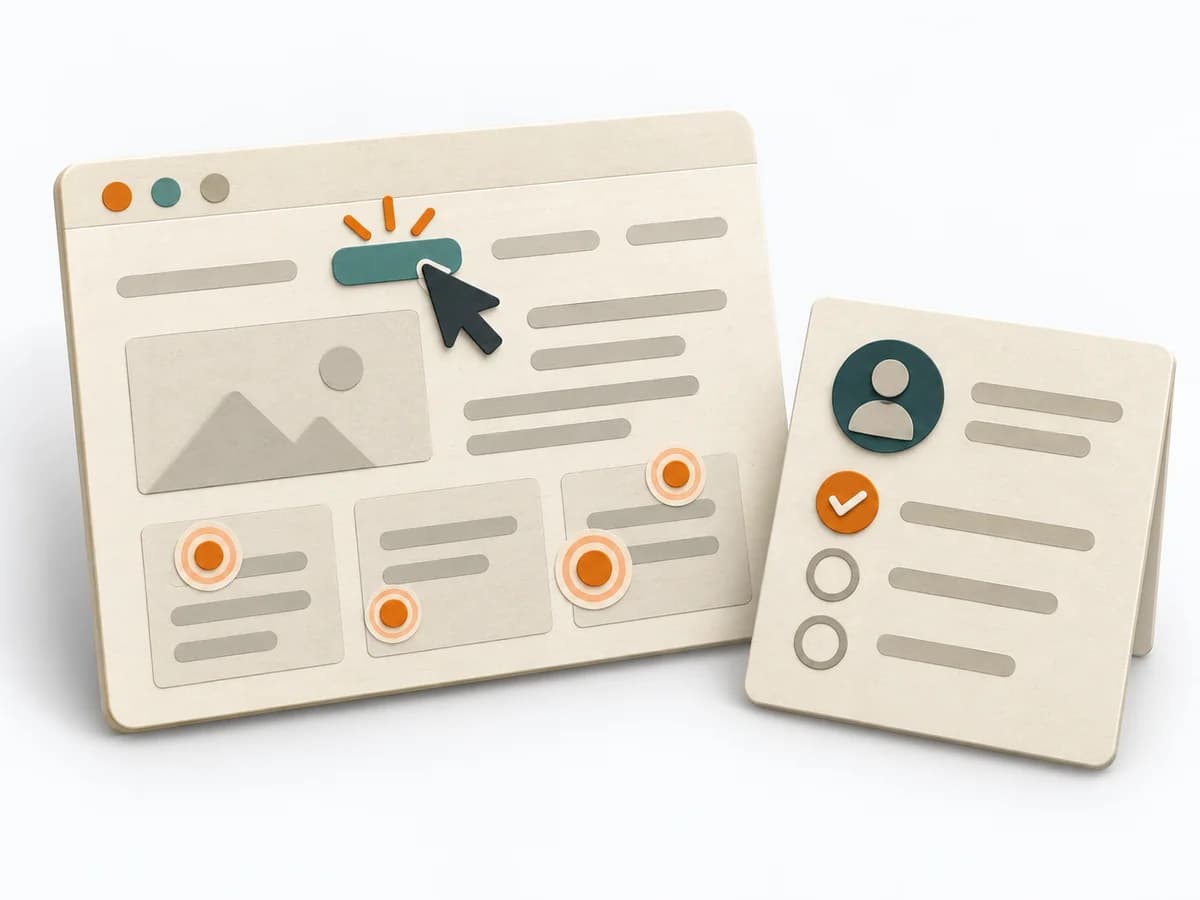 UX Research First-click Testing | 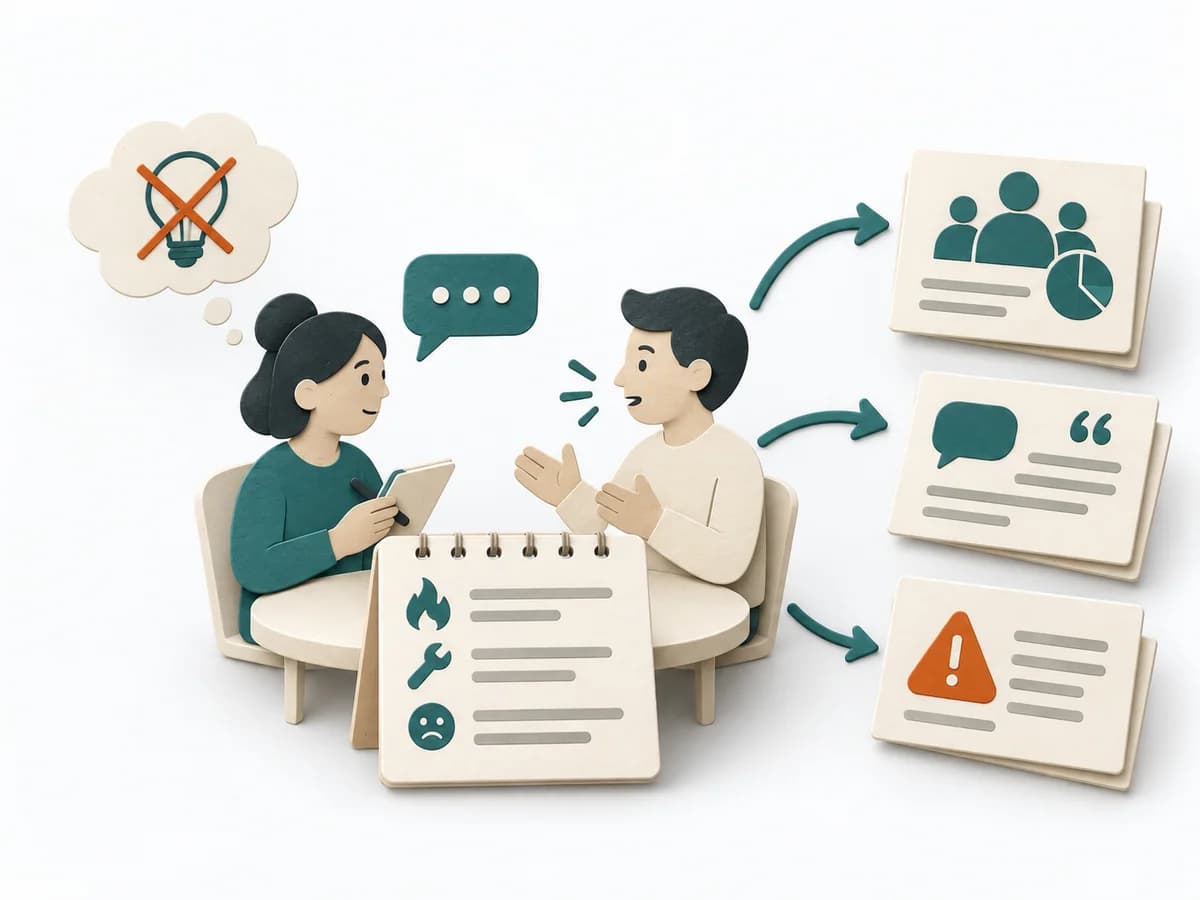 Product Discovery Problem Interview | 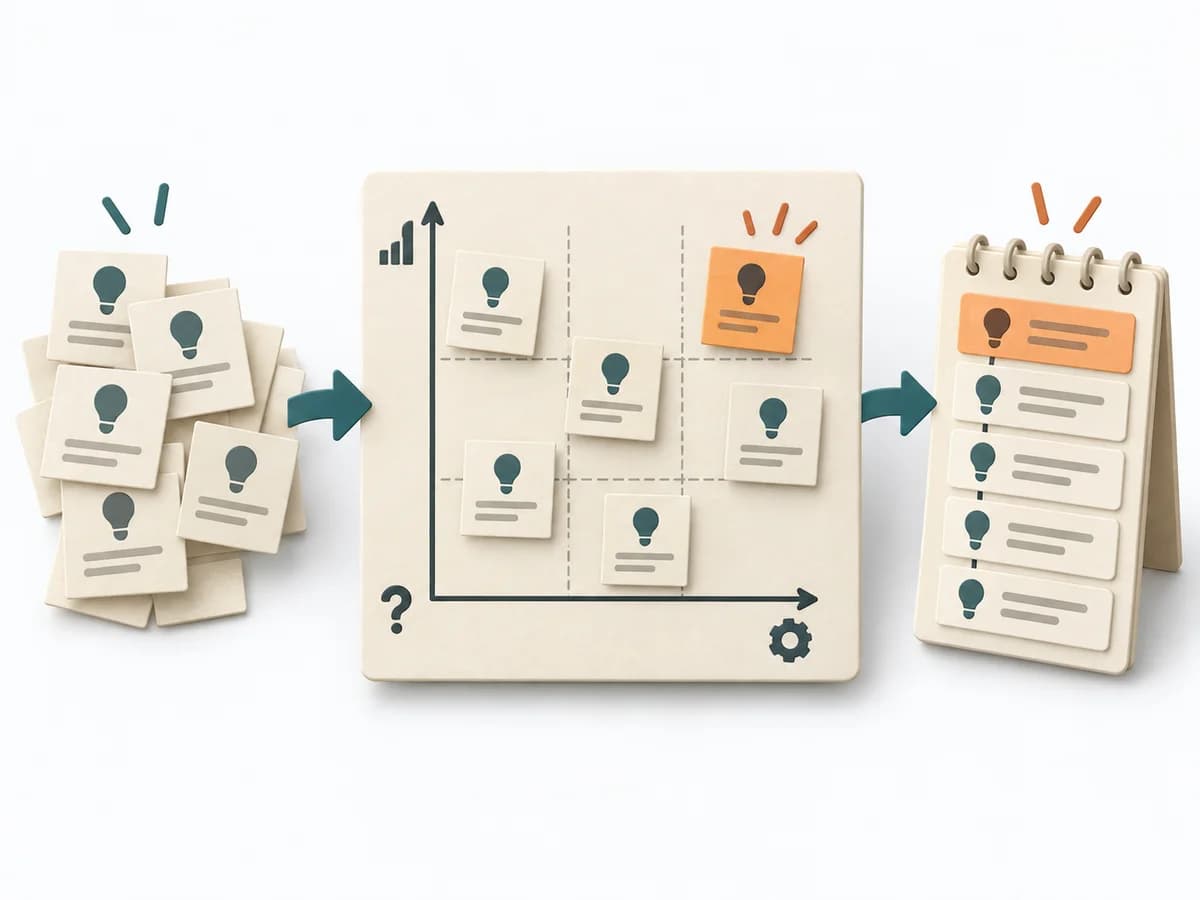 Product Discovery Hypothesis Prioritization Canvas |
|---|---|---|---|
Purposedifferent | When users immediately turn the wrong way on a screen or wireframe, first click testing checks initial orientation at high speed. The first click shows early whether expectation, labeling, and wayfinding fit together. | When the picture of the problem still needs to become solid, it asks about real situations and consequences. It separates genuine suffering from mere interest in a solution. | When many hypotheses compete for attention, it brings order to their learning sequence and importance. It separates problem, assumption, solution, and evidence. The result is captured as a prioritization canvas and a hypothesis backlog. |
Complexitydifferent | Low | Medium | Medium |
Timedifferent | 1-2 Tage | 30-60 min je Interview | 60-90 min |
Participantsdifferent | 10-30 | 5-12 Interviews | 3-8 |
Formatdifferent | Async | Workshop + async | Workshop |
Outputdifferent | Click Heatmap, Success Rate, Design Recommendations | Problem Evidence, Risk Notes, Customer Segments | Prioritization Canvas, Hypothesis Backlog |
Tagsno overlap | UXNavigationFindabilityValidation | DiscoveryInterviewsValidation | ExperimentsPrioritizationDiscoveryHypothesis |
Often compared together
Methods with strong topical overlap with the current selection, not yet in the comparison.