View methods side by side.
Choose up to four methods. Add them using the search and share the comparison by copying its link.
| Criterion |  Operations Fault Tree Analysis | 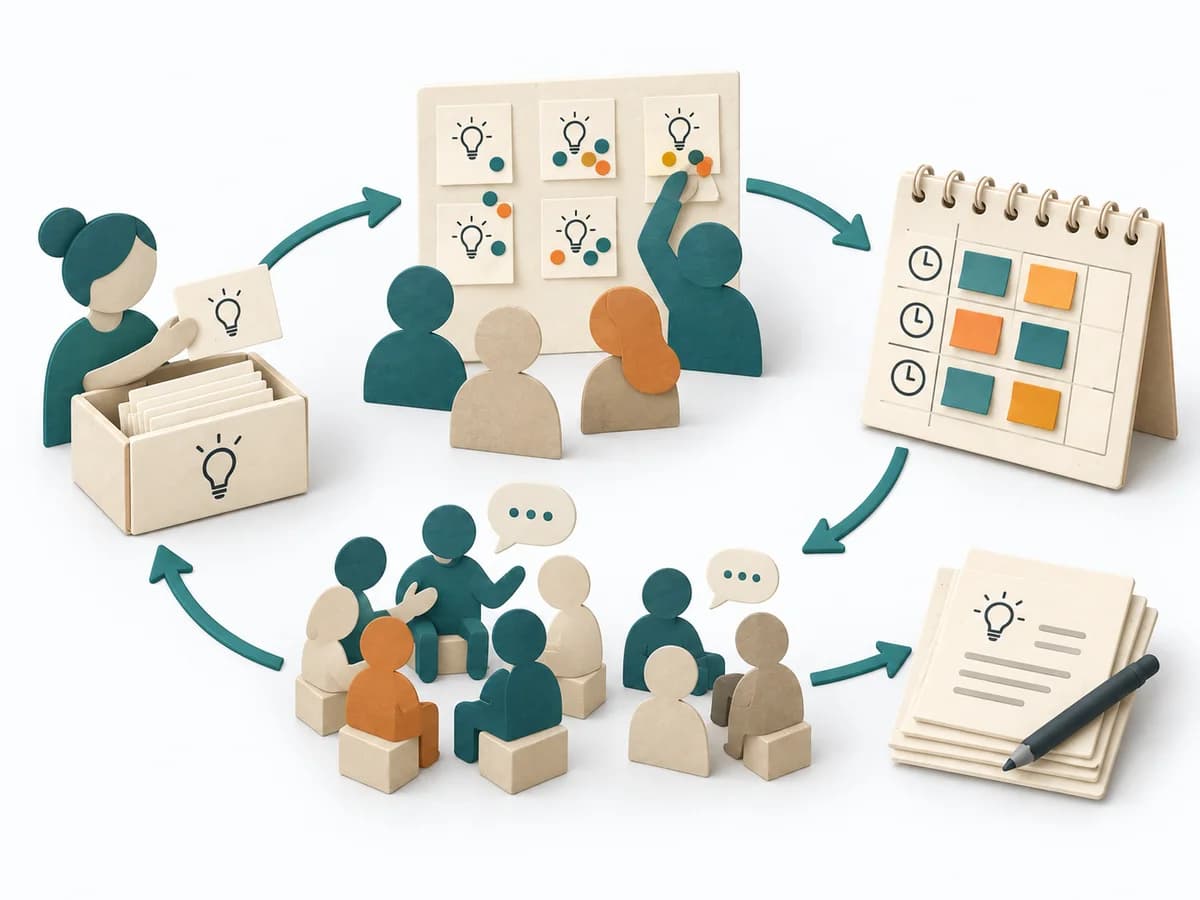 Facilitation Barcamp |  Facilitation Stakeholder Salience Model |
|---|---|---|---|
Purposedifferent | For a critical top event with several possible triggers, the method logically models failure paths. It makes visible which combinations of conditions can lead to damage. | When many people can contribute knowledge and the flow should stay open, Barcamp provides a framework for self-organized sessions. The format channels energy without defining the content too narrowly in advance. | When stakeholders appear to matter very differently, the Stakeholder Salience Model rates their actual priority through power, legitimacy, and urgency. It turns individual contributions into a visible selection. The result is captured as a Salience diagram and a class-based strategy. |
Complexitydifferent | High | Medium | Medium |
Timedifferent | 2-6 h | Halber Tag bis 2 Tage | 60-90 min |
Participantsdifferent | 3-8 | 15-200 | 3-6 |
Formatdifferent | Workshop + async | Workshop | Workshop |
Outputdifferent | Fault Tree, Critical Paths, Cause Hypotheses, Control Actions | Session Board, Session Notes, Community Learnings | Salience Diagram, Strategy per Class |
Tagsno overlap | RiskRoot causeSafety | FacilitationLarge groupLearning | StakeholdersFacilitationAlignmentGovernance |
Often compared together
Methods with strong topical overlap with the current selection, not yet in the comparison.



