View methods side by side.
Choose up to four methods. Add them using the search and share the comparison by copying its link.
| Criterion |  Facilitation Expectation Mapping | 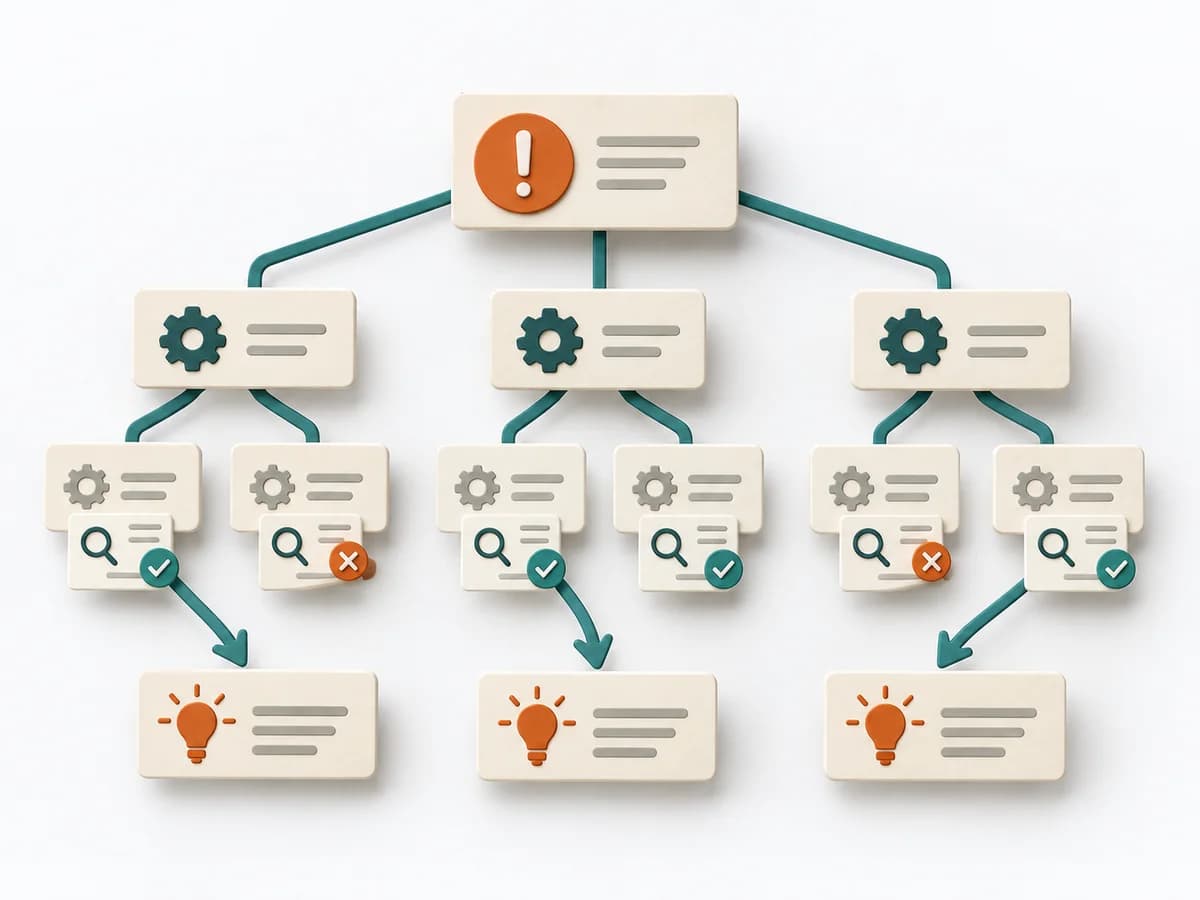 Operations Root Cause Tree Analysis |  Facilitation Stakeholder Mapping |
|---|---|---|---|
Purposedifferent | When roles, interfaces, or projects fail because of differing expectations, Expectation Mapping surfaces these differences. It shows what each side takes for granted and where the pictures diverge. | For a problem with several suspected causes, the method builds a causal structure instead of a mere list. It makes visible how causes connect and where the strongest points of leverage lie. | When an initiative depends on many people, interests, and power dynamics, Stakeholder Mapping systematically orders the environment. It shows who influences, who is affected, and where relationship management or safeguarding matters first. |
Complexitydifferent | Low | Medium | Low |
Timedifferent | 45-90 min | 1-3 h | 60–90 min |
Participantsdifferent | 3-12 | 2-8 | 2-8 |
Formatdifferent | Workshop | Workshop | Workshop + async |
Outputdifferent | Expectation Map, Alignment Notes, Agreements | Cause Tree, Evidence Notes, Countermeasures | Stakeholder Map, Engagement Plan, Risk Notes |
Tagsno overlap | AlignmentStakeholdersTeam | Root causeTreeIncidentQuality | StakeholdersAlignmentFacilitationChange |
Often compared together
Methods with strong topical overlap with the current selection, not yet in the comparison.



