View methods side by side.
Choose up to four methods. Add them using the search and share the comparison by copying its link.
| Criterion |  Facilitation Expectation Mapping |  Decision Making Decision Rights Mapping | 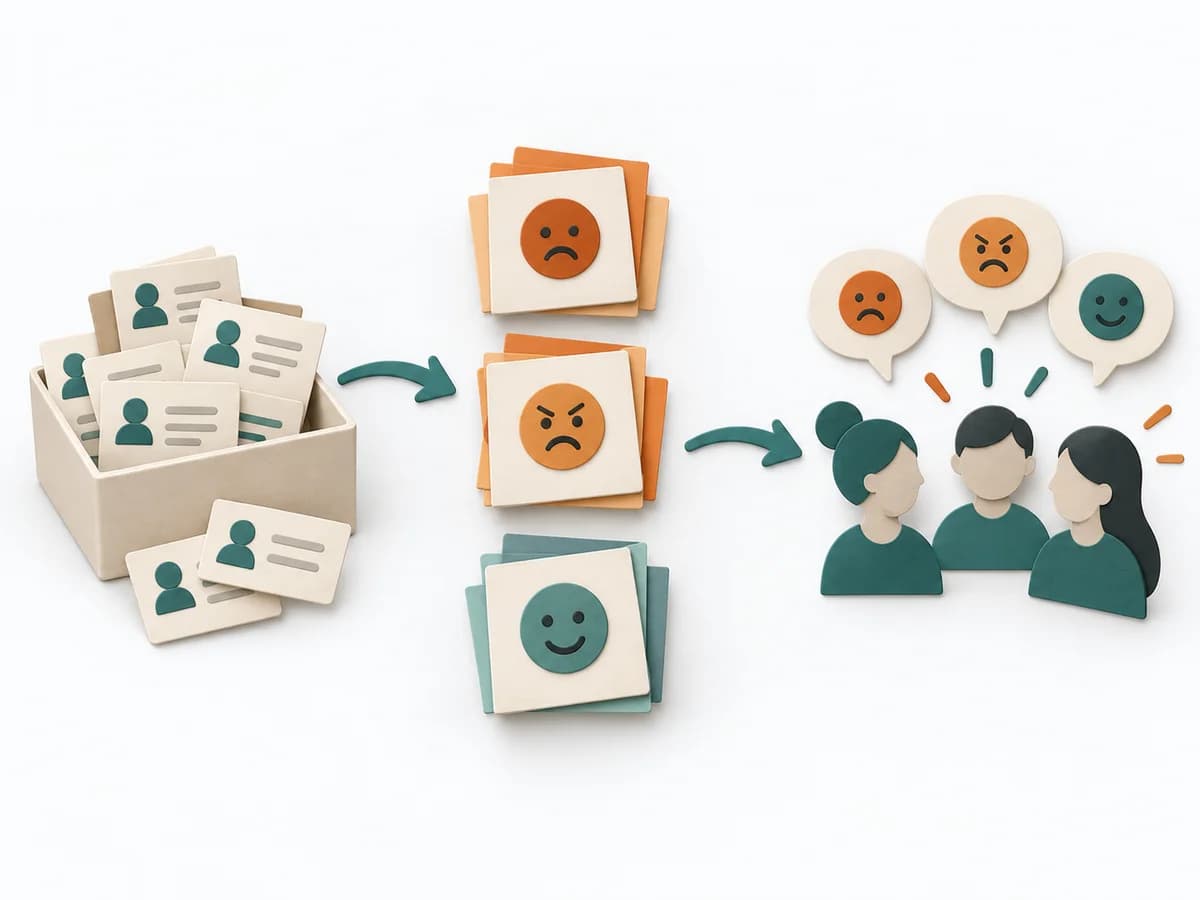 Agile Mad Sad Glad |
|---|---|---|---|
Purposedifferent | When roles, interfaces, or projects fail because of differing expectations, Expectation Mapping surfaces these differences. It shows what each side takes for granted and where the pictures diverge. | In organizations with many stakeholders, it often blurs who actually decides and who is merely consulted. It separates options, evaluation criteria, and open risks. The result is captured as a Decision Rights matrix and an agreement. | When a team's or workshop's mood needs to become readable, it structures emotional signals with little setup. It makes strain, relief, and sources of energy tangible. |
Complexitydifferent | Low | Medium | Low |
Timedifferent | 45-90 min | 90-180 min | 30-60 min |
Participantsdifferent | 3-12 | 4-12 | 3-10 |
Formatsame | Workshop | Workshop | Workshop |
Outputdifferent | Expectation Map, Alignment Notes, Agreements | Decision Rights Matrix, Agreement | Emotion Board, Themes, Action Items |
Tagsno overlap | AlignmentStakeholdersTeam | DecisionGovernanceAlignmentResponsibility | RetrospectiveTeamReflection |
Often compared together
Methods with strong topical overlap with the current selection, not yet in the comparison.