View methods side by side.
Choose up to four methods. Add them using the search and share the comparison by copying its link.
| Criterion | 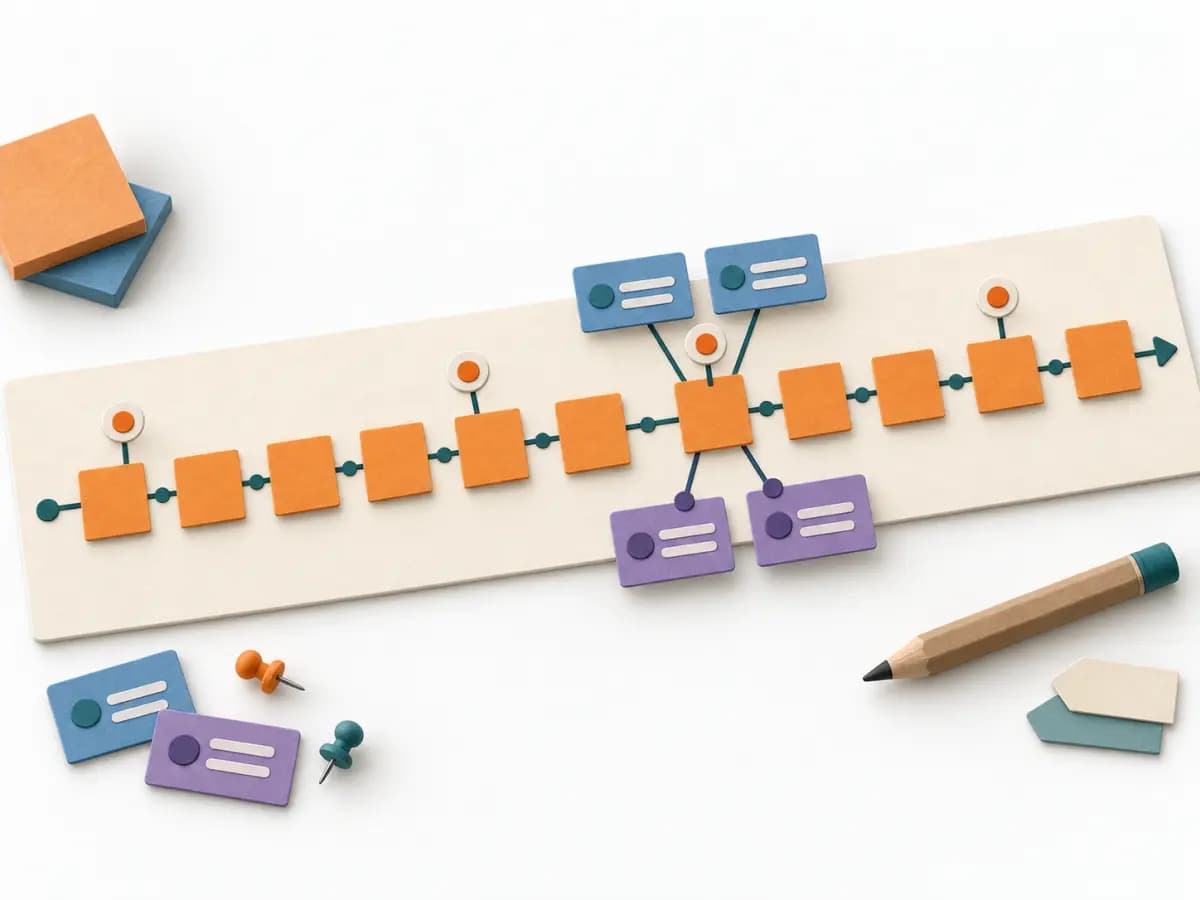 Domain Modeling EventStorming |  Facilitation Dot Voting |  Facilitation Nominal Group Technique |
|---|---|---|---|
Purposedifferent | When a domain consists of many events, rules, and states, it creates a shared modeling space for the team. It bundles language, flows, and boundaries before domain knowledge fragments into siloed views. | When a workshop has produced too many options and the group needs to condense quickly, dot voting makes preferences visible in a short time. It bundles individual votes into a solid signal for the next selection. | When loud voices could dominate a round, Nominal Group Technique protects individual thinking time from group effects. It collects ideas separately first and only then enables shared weighting. |
Complexitydifferent | Medium | Low | Medium |
Timedifferent | 2-8 h | 5-15 min | 60-120 min |
Participantsdifferent | 5-12 | 3-20 | 5-12 |
Formatsame | Workshop | Workshop | Workshop |
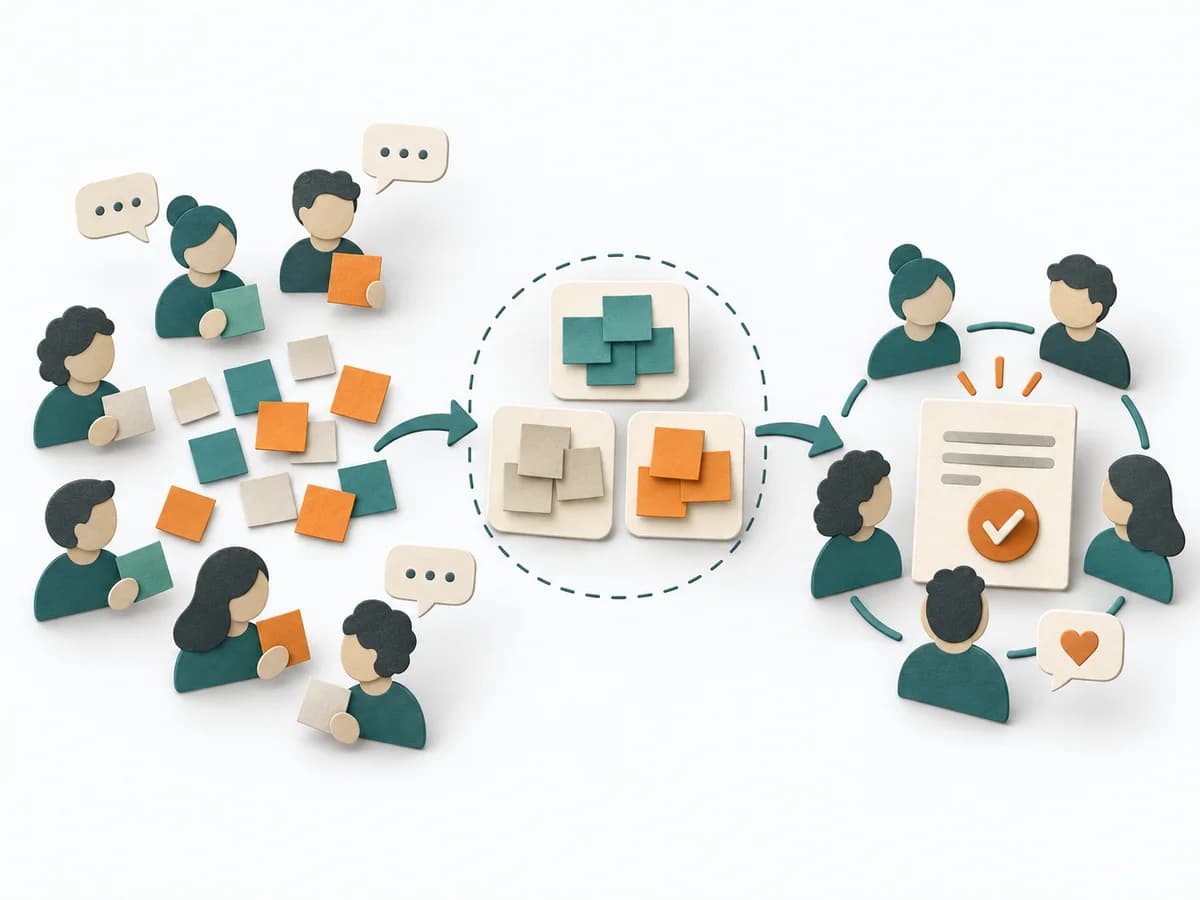
Outputdifferent | Event Timeline, Ubiquitous Language, Boundaries, Open Questions | Ranked list, Consensus signal, Shortlist | Ranked Ideas, Clarified Options, Group Priority |
Tagsno overlap | Domain-Driven DesignEventsDiscoveryWorkshop | FacilitationVotingConsensusPrioritization | FacilitationPrioritizationVotingInclusion |
Often compared together
Methods with strong topical overlap with the current selection, not yet in the comparison.