View methods side by side.
Choose up to four methods. Add them using the search and share the comparison by copying its link.
| Criterion |  Knowledge Modeling Event Modeling | 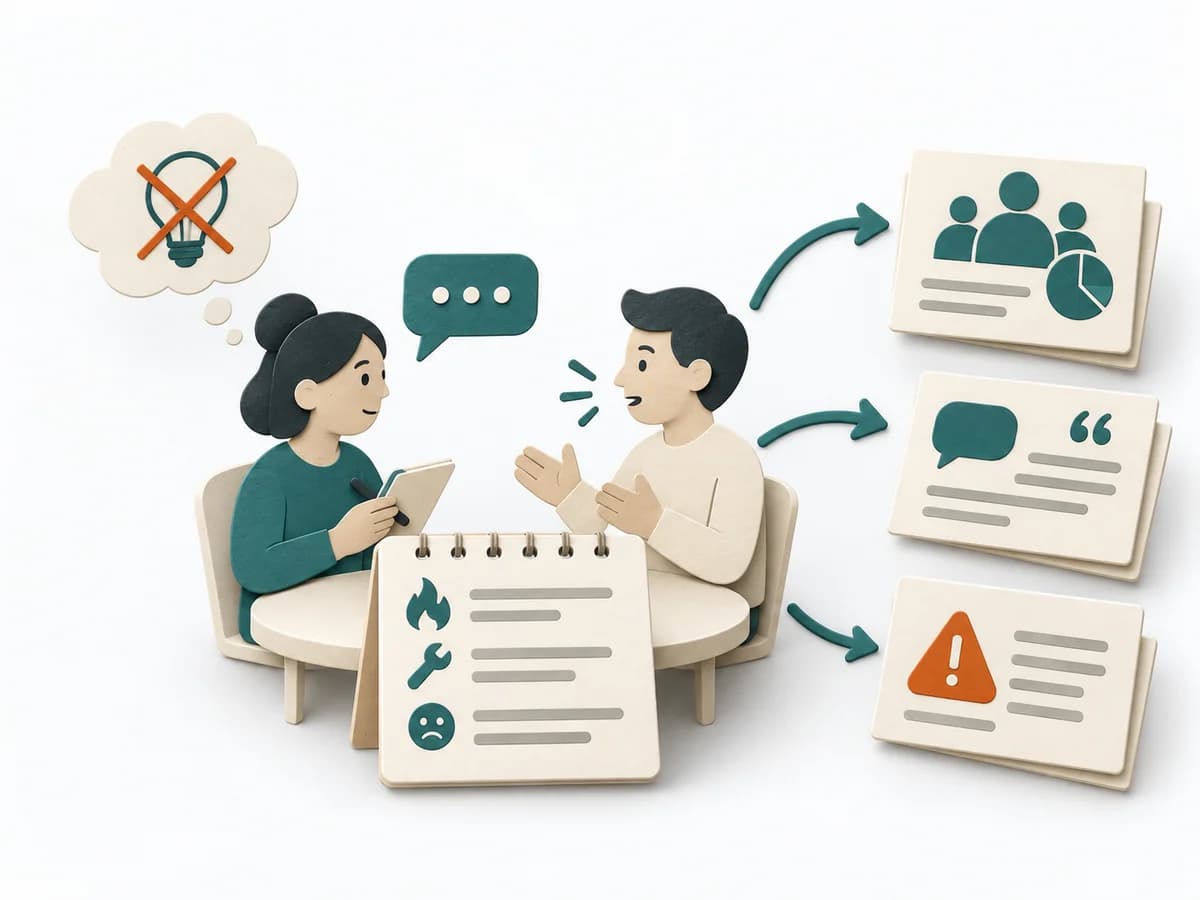 Product Discovery Problem Interview | 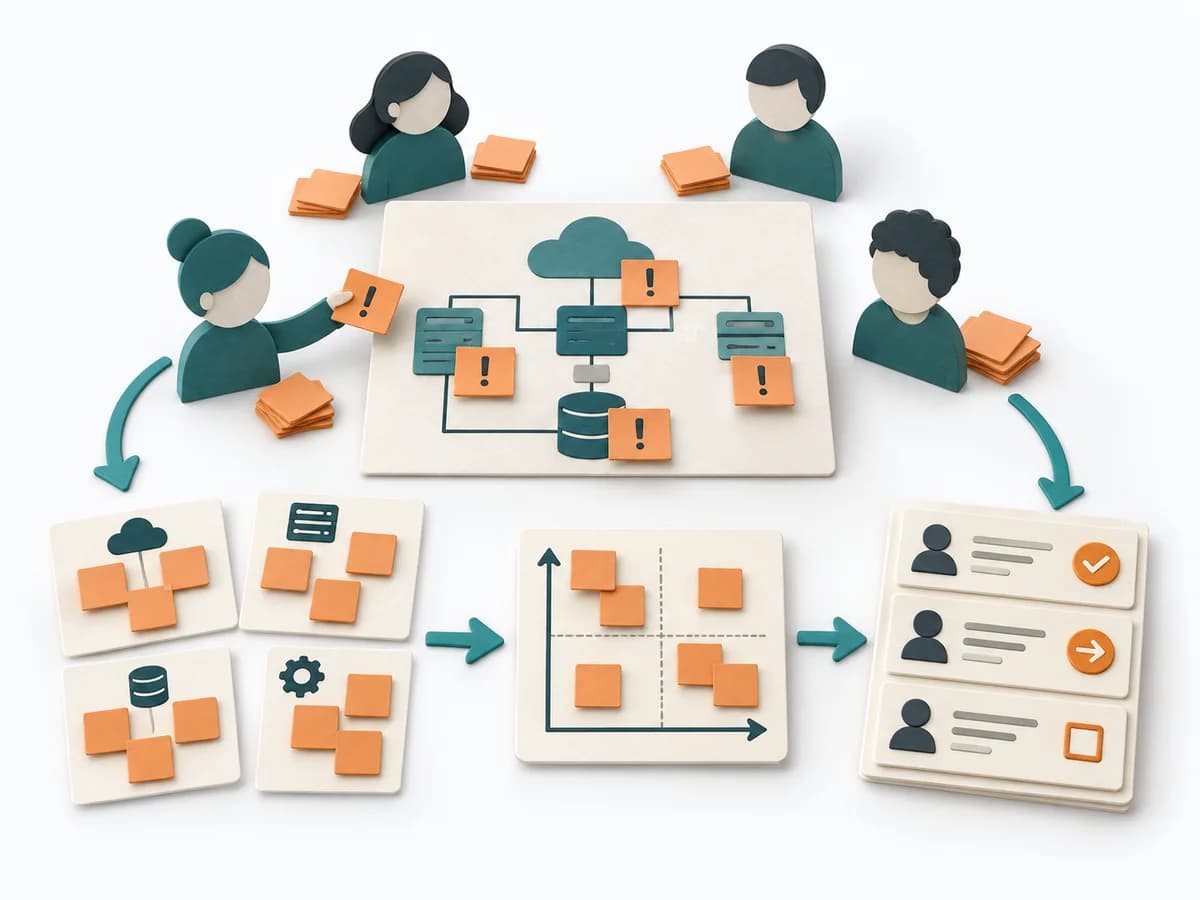 Architecture Risk Storming |
|---|---|---|---|
Purposedifferent | Event Modeling connects business workflows with commands, events, and views into one coherent mental model. It helps design behavior, UI, and technical slices from the same underlying logic. | When the picture of the problem still needs to become solid, it asks about real situations and consequences. It separates genuine suffering from mere interest in a solution. | Helps clarify architecture context, options, and consequences in concrete terms. It organizes technical context, alternatives, and consequences. The result is captured as an Annotated Diagram, a Prioritized Risk List, and an Action Backlog. |
Complexitydifferent | Medium | Medium | Low |
Timedifferent | 2-6 h | 30-60 min je Interview | 60-90 min |
Participantsdifferent | 2-8 | 5-12 Interviews | 4-12 |
Formatdifferent | Workshop + async | Workshop + async | Workshop |
Outputdifferent | Event Model, UI Flow, Commands, Read Models | Problem Evidence, Risk Notes, Customer Segments | Annotated Diagram, Prioritized Risk List, Action Backlog |
Tagsno overlap | EventsBlueprintDomain-Driven DesignBehavior | DiscoveryInterviewsValidation | RiskArchitectureWorkshopValidation |
Often compared together
Methods with strong topical overlap with the current selection, not yet in the comparison.



