View methods side by side.
Choose up to four methods. Add them using the search and share the comparison by copying its link.
| Criterion | 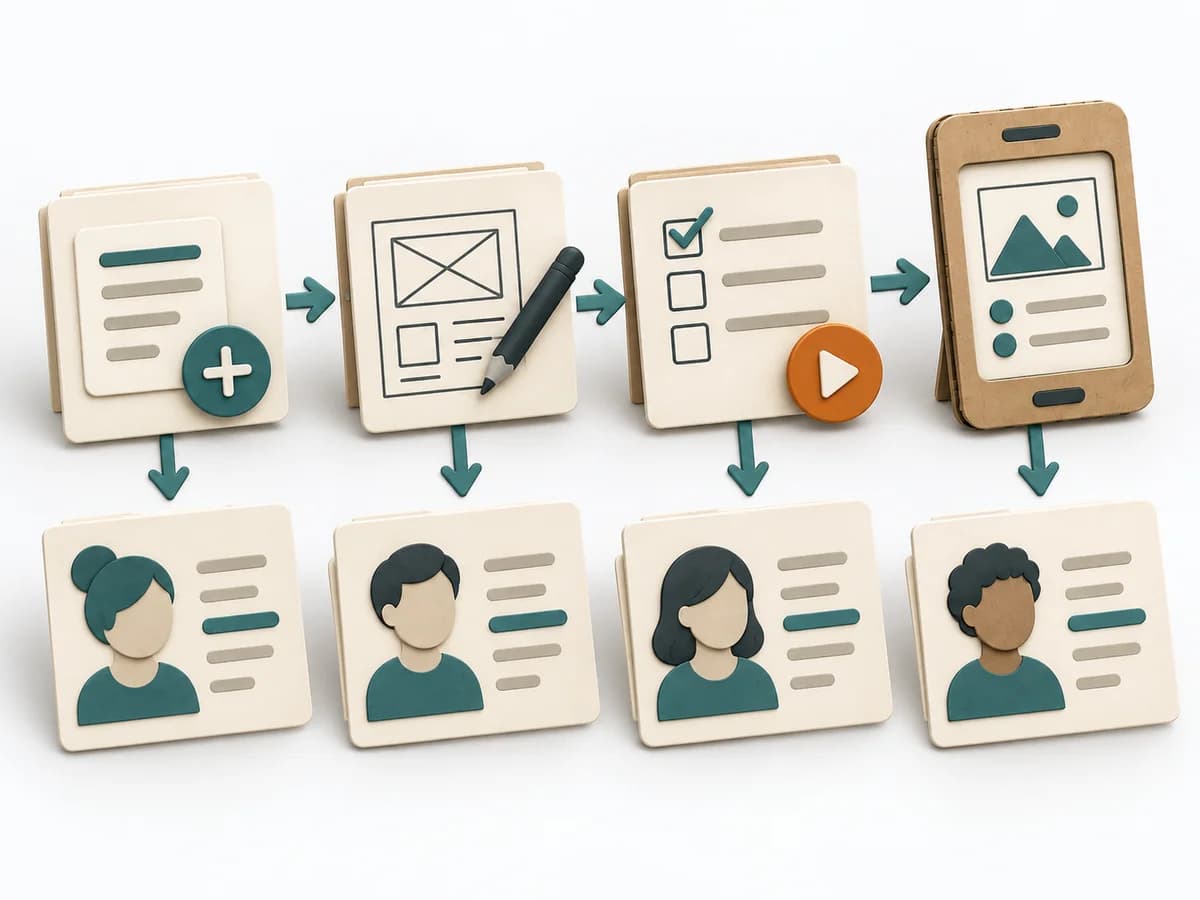 Knowledge Modeling Event Modeling |  DevOps Incident Command |  Domain Modeling EventStorming |
|---|---|---|---|
Purposedifferent | Event Modeling connects business workflows with commands, events, and views into one coherent mental model. It helps design behavior, UI, and technical slices from the same underlying logic. | During an acute incident with several people involved, the method creates a clear leadership and communication structure. It reduces chaos when fast coordination and clean situational awareness are both needed at once. | When a domain consists of many events, rules, and states, it creates a shared modeling space for the team. It bundles language, flows, and boundaries before domain knowledge fragments into siloed views. |
Complexitysame | Medium | Medium | Medium |
Timedifferent | 2-6 h | As needed | 2-8 h |
Participantsdifferent | 2-8 | 4-15 | 5-12 |
Formatdifferent | Workshop + async | Workshop + async | Workshop |
Outputdifferent | Event Model, UI Flow, Commands, Read Models | Incident Log, Action Tracker, Stakeholder Updates | Event Timeline, Ubiquitous Language, Boundaries, Open Questions |
Tagsno overlap | EventsBlueprintDomain-Driven DesignBehavior | IncidentOperationsReliability | Domain-Driven DesignEventsDiscoveryWorkshop |
Often compared together
Methods with strong topical overlap with the current selection, not yet in the comparison.