View methods side by side.
Choose up to four methods. Add them using the search and share the comparison by copying its link.
| Criterion |  UX Research Empathy Mapping |  Product Discovery Jobs to Be Done |  Facilitation Alignment Mapping |
|---|---|---|---|
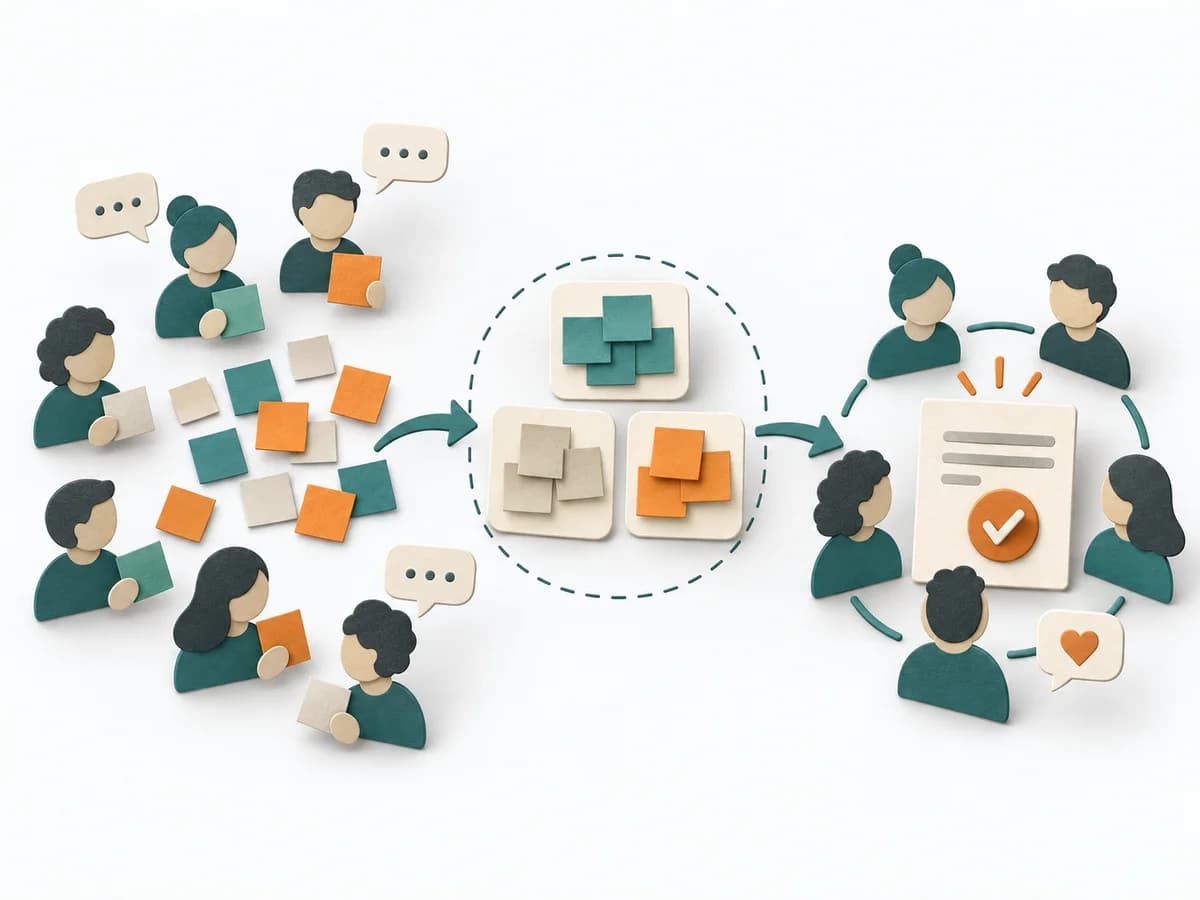
Purposedifferent | When a lot is assumed about a target group but little is seen jointly, empathy mapping makes knowledge and gaps directly comparable. The picture also shows which assumptions hold up and where evidence is missing. | When switching motives and progress are unclear, it reconstructs the situation from real customer circumstances. It shows why a switch happens and what kind of progress is being sought. | When several people work toward one goal but hold different mental maps, Alignment Mapping makes the discrepancies visible. It arranges goals, assumptions, and priorities so shared direction becomes verifiable. |
Complexitydifferent | Low | Medium | Medium |
Timedifferent | 30–60 min | 1-3 Wochen | 1-2 h |
Participantsdifferent | 4-8 | 5-12 Interviews | 4-12 |
Formatdifferent | Workshop | Workshop + async | Workshop |
Outputdifferent | Empathy Map, Assumptions List, Research Gaps | Job Stories, Outcome Statements, Opportunity List | Alignment Map, Open Issues, Decision Questions |
Tagsno overlap | SynthesisQualitativeWorkshop | CustomerOutcomesNeeds | AlignmentStakeholdersStrategyFacilitation |
Often compared together
Methods with strong topical overlap with the current selection, not yet in the comparison.