View methods side by side.
Choose up to four methods. Add them using the search and share the comparison by copying its link.
| Criterion | 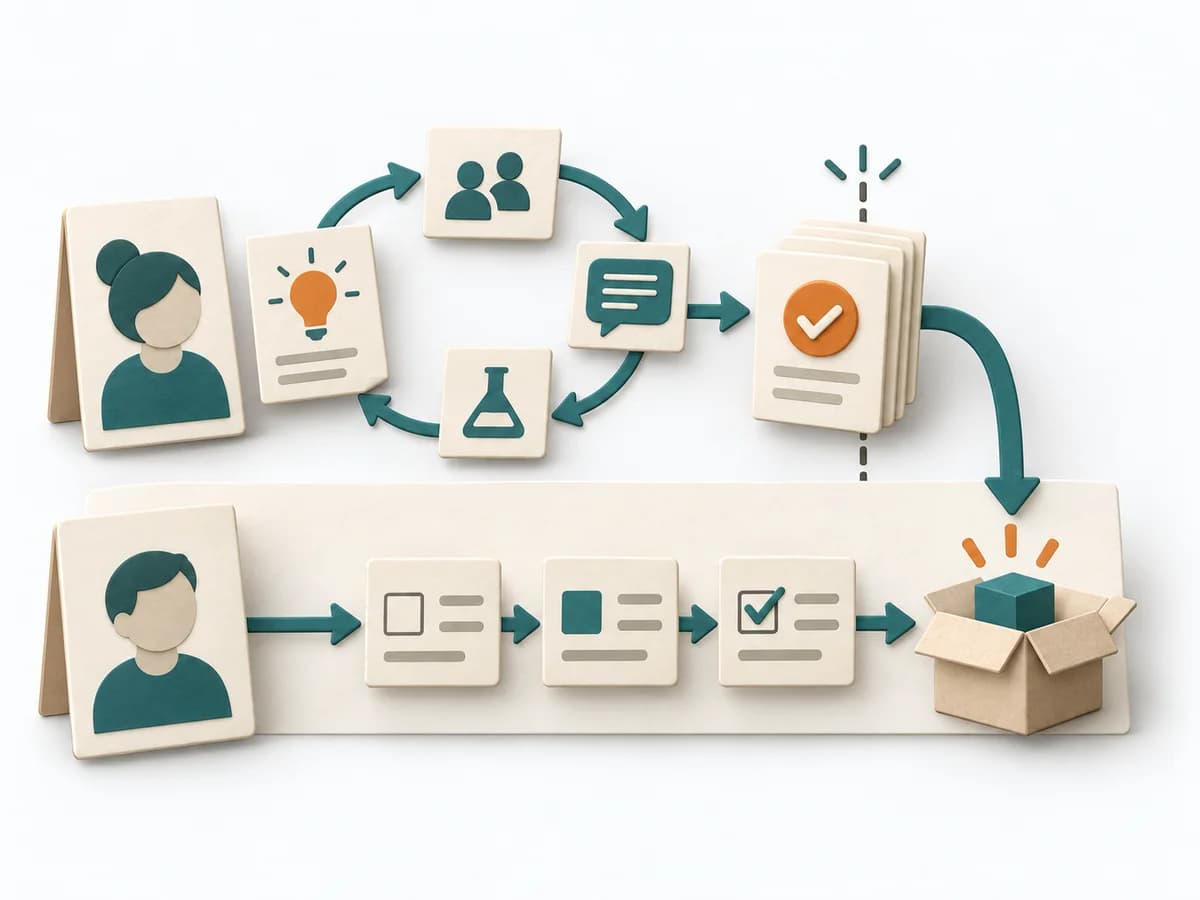 Product Discovery Dual-Track Agile | 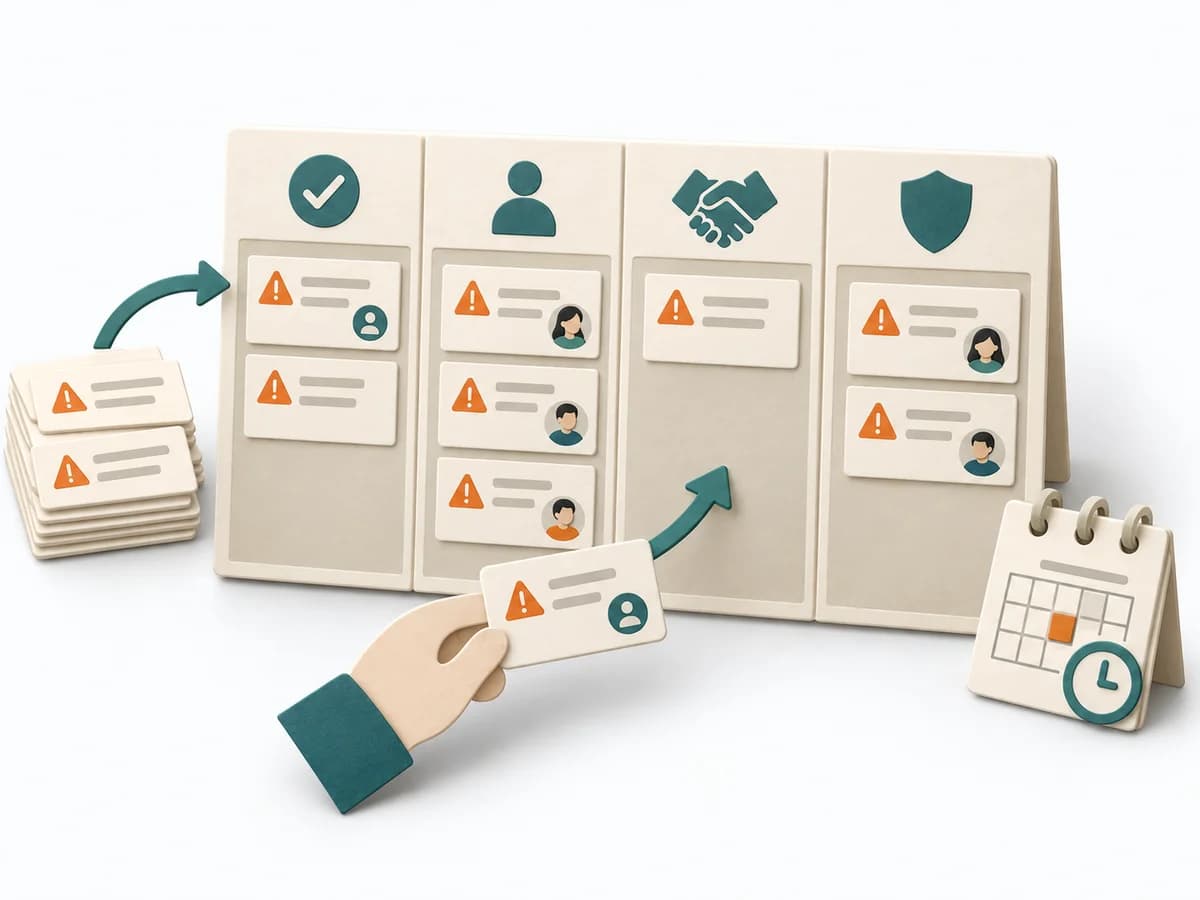 Agile ROAM Board |  Facilitation Stakeholder Salience Model |
|---|---|---|---|
Purposedifferent | When uncertainty and delivery run in parallel, it separates learning work from implementation while keeping both connected. It prevents unvalidated ideas from falling directly into the delivery stream. | When work needs to move between different states or columns, it makes that movement and its handoffs legible. It sorts work by value, risk, and delivery ability. The result is captured as a ROAM Board and an Owner List. | When stakeholders appear to matter very differently, the Stakeholder Salience Model rates their actual priority through power, legitimacy, and urgency. It turns individual contributions into a visible selection. The result is captured as a Salience diagram and a class-based strategy. |
Complexitydifferent | Medium | Low | Medium |
Timedifferent | Laufend, Wochen bis Monate | 20-40 min initial, dann laufend | 60-90 min |
Participantsdifferent | 4-10 | 3-15 | 3-6 |
Formatdifferent | Workshop + async | Workshop + async | Workshop |
Outputdifferent | Discovery Backlog, Delivery Backlog, Experiment-Ergebnisse, Validierte Stories | ROAM Board, Owner List | Salience Diagram, Strategy per Class |
Tagsno overlap | AgileDiscoveryDelivery | RiskAgileTrackingAlignment | StakeholdersFacilitationAlignmentGovernance |
Often compared together
Methods with strong topical overlap with the current selection, not yet in the comparison.