View methods side by side.
Choose up to four methods. Add them using the search and share the comparison by copying its link.
| Criterion |  Knowledge Modeling Domain Storytelling |  Knowledge Modeling Feynman Technique | 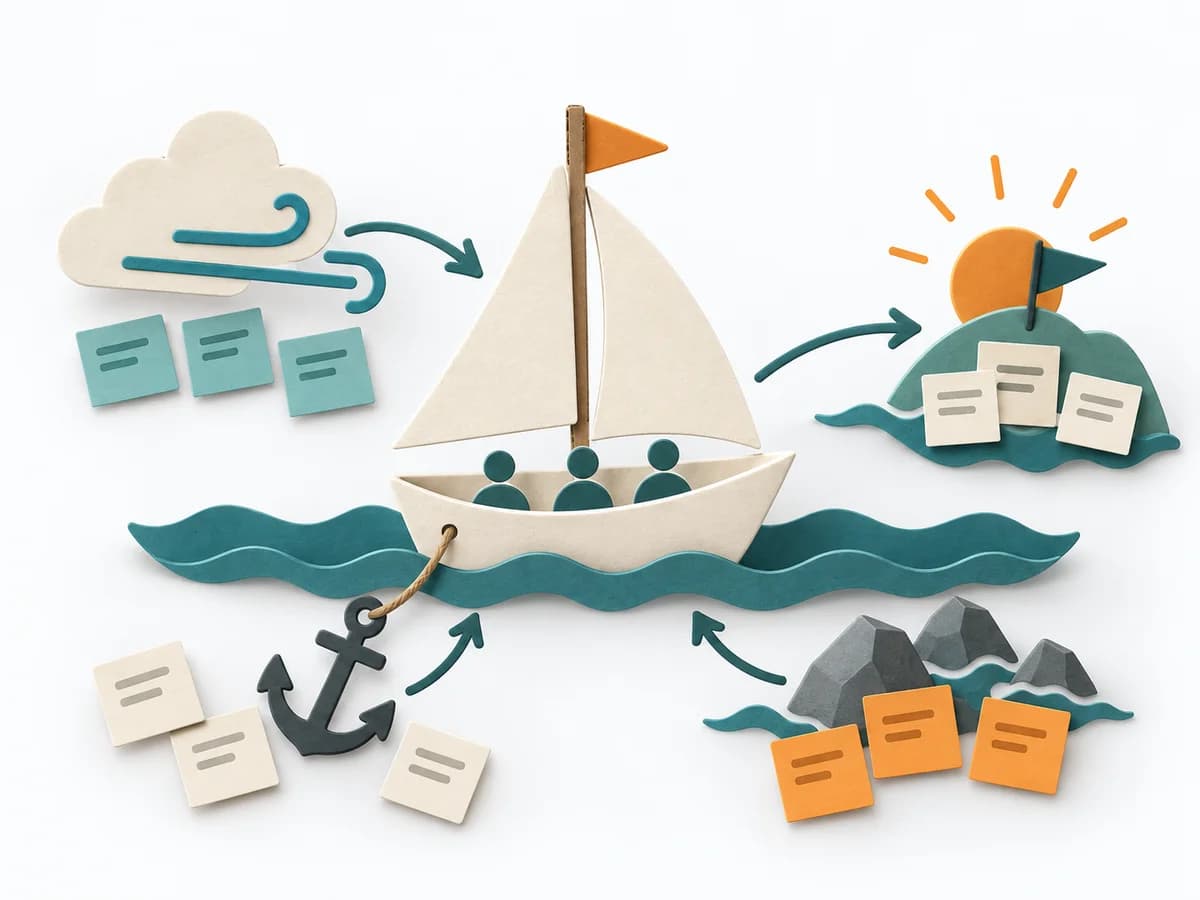 Agile Sailboat Retrospective |
|---|---|---|---|
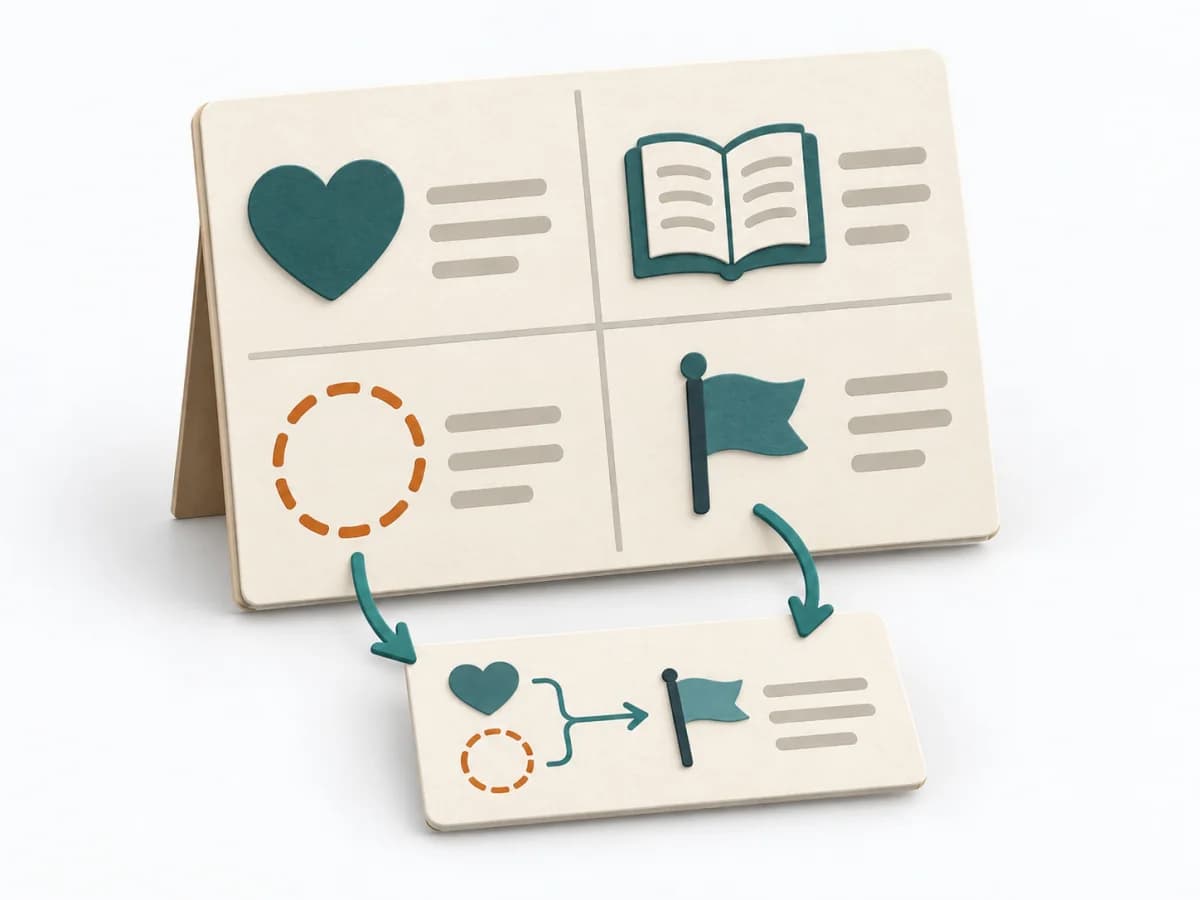
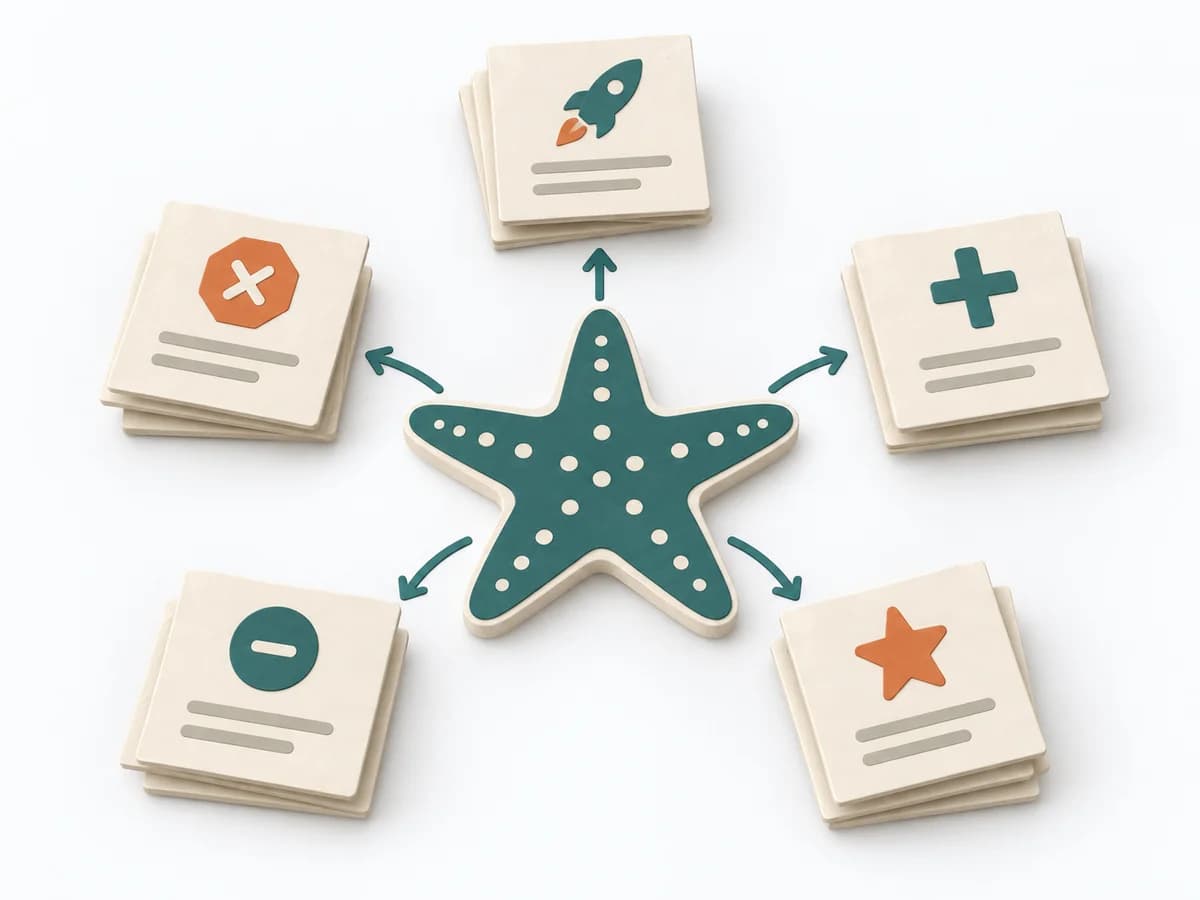
Purposedifferent | Domain Storytelling translates domain knowledge into a shared narrative of actors, objects, and workflows. It is especially useful when language, rules, and process understanding must be tightly connected. | The Feynman Technique checks understanding by explaining a topic so that it stays easy for others to understand. It makes knowledge gaps visible before they become costly in everyday work. | When a team wants to read momentum, brakes, and risks together, it offers an easily understandable picture of the situation. It makes drive, obstacles, and headwind visible in the same picture. |
Complexitysame | Low | Low | Low |
Timedifferent | 1-2 h | 20-60 min | 45-90 min |
Participantsdifferent | 2-8 | 1 | 4-12 |
Formatdifferent | Workshop | Async | Workshop |
Outputdifferent | Domain Story, Glossary Notes, Process Narrative | Plain-language Explanation, Knowledge Gaps, Study Notes | Sailboat Board, Risks, Improvement Actions |
Tagsno overlap | KnowledgeDomain-Driven DesignProcess | LearningKnowledgeUnderstanding | RetrospectiveTeamImprovement |
Often compared together
Methods with strong topical overlap with the current selection, not yet in the comparison.