View methods side by side.
Choose up to four methods. Add them using the search and share the comparison by copying its link.
| Criterion | 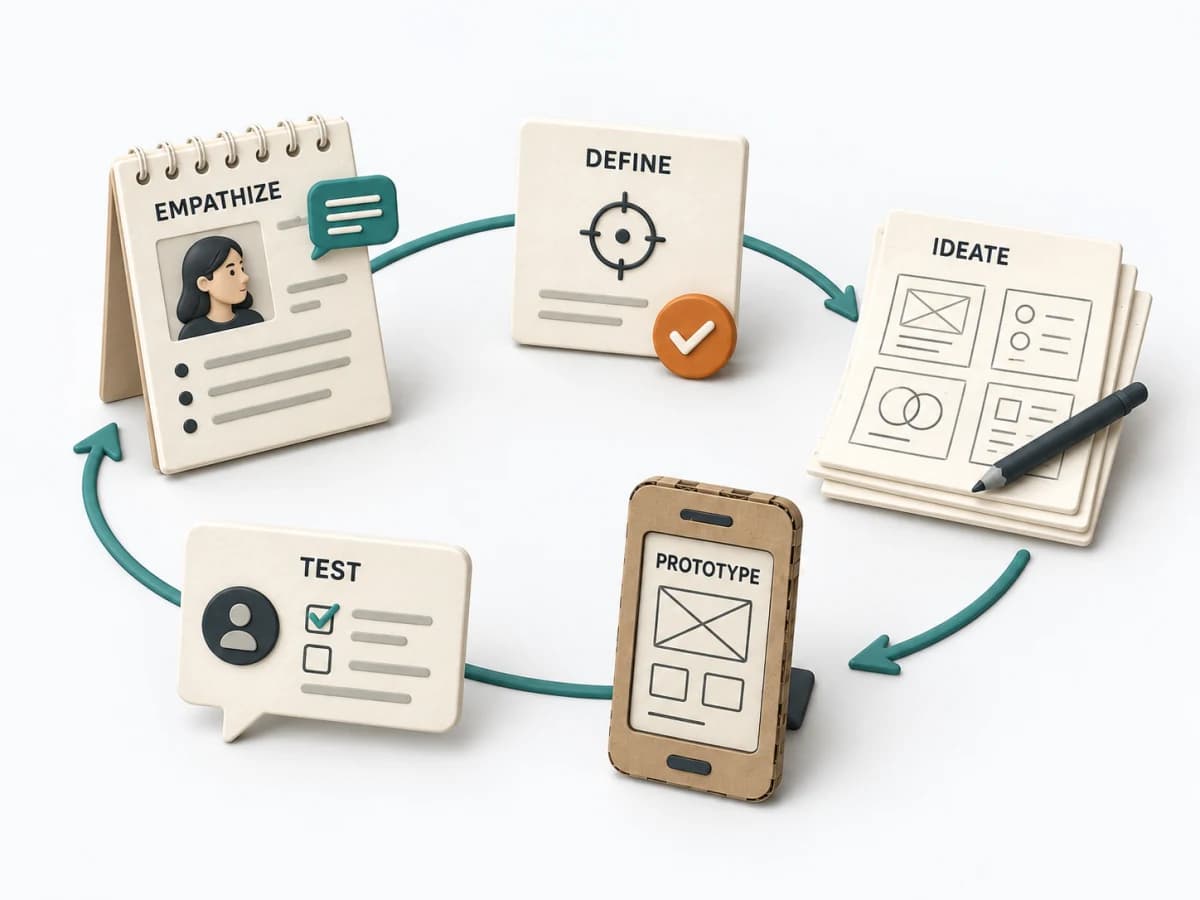 Innovation Design Thinking |  Product Strategy Lean Canvas |  Product Strategy DIBB |
|---|---|---|---|
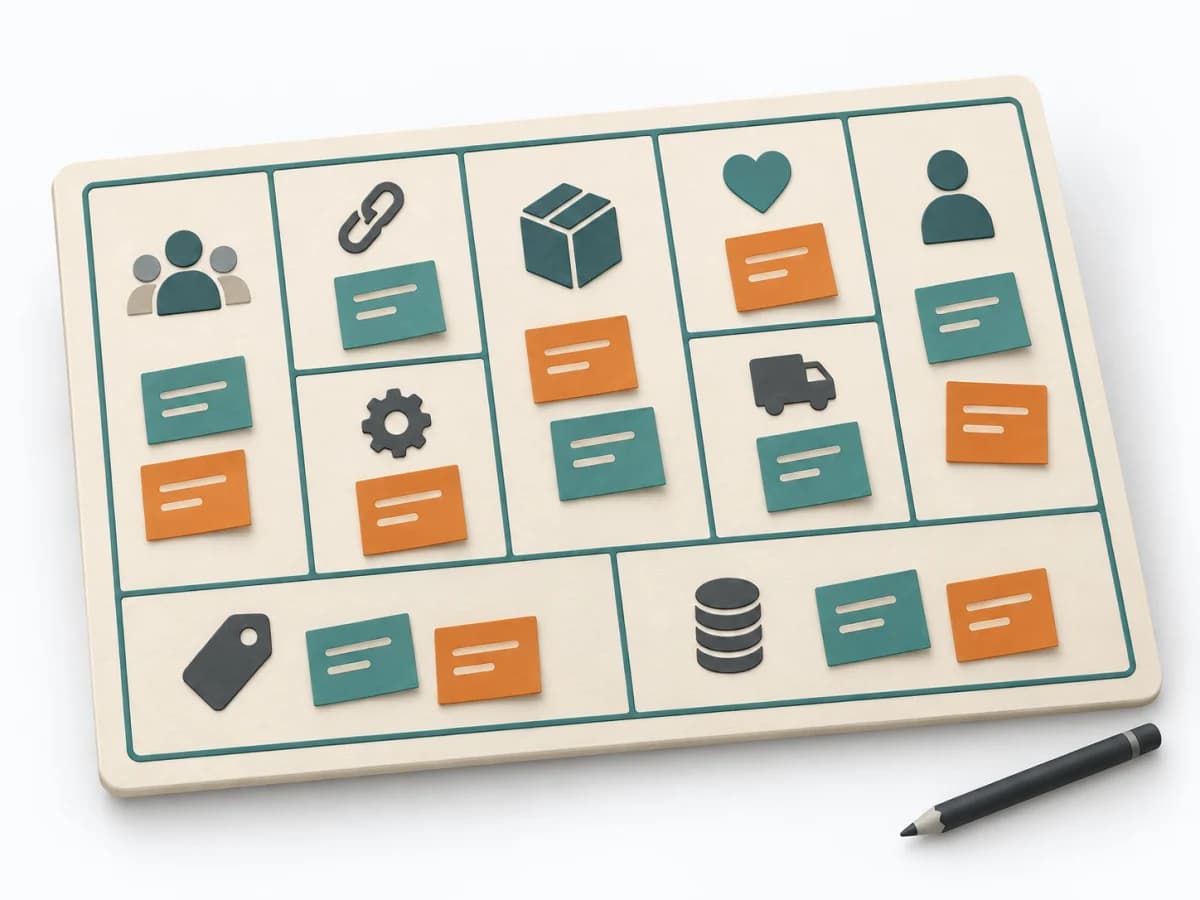
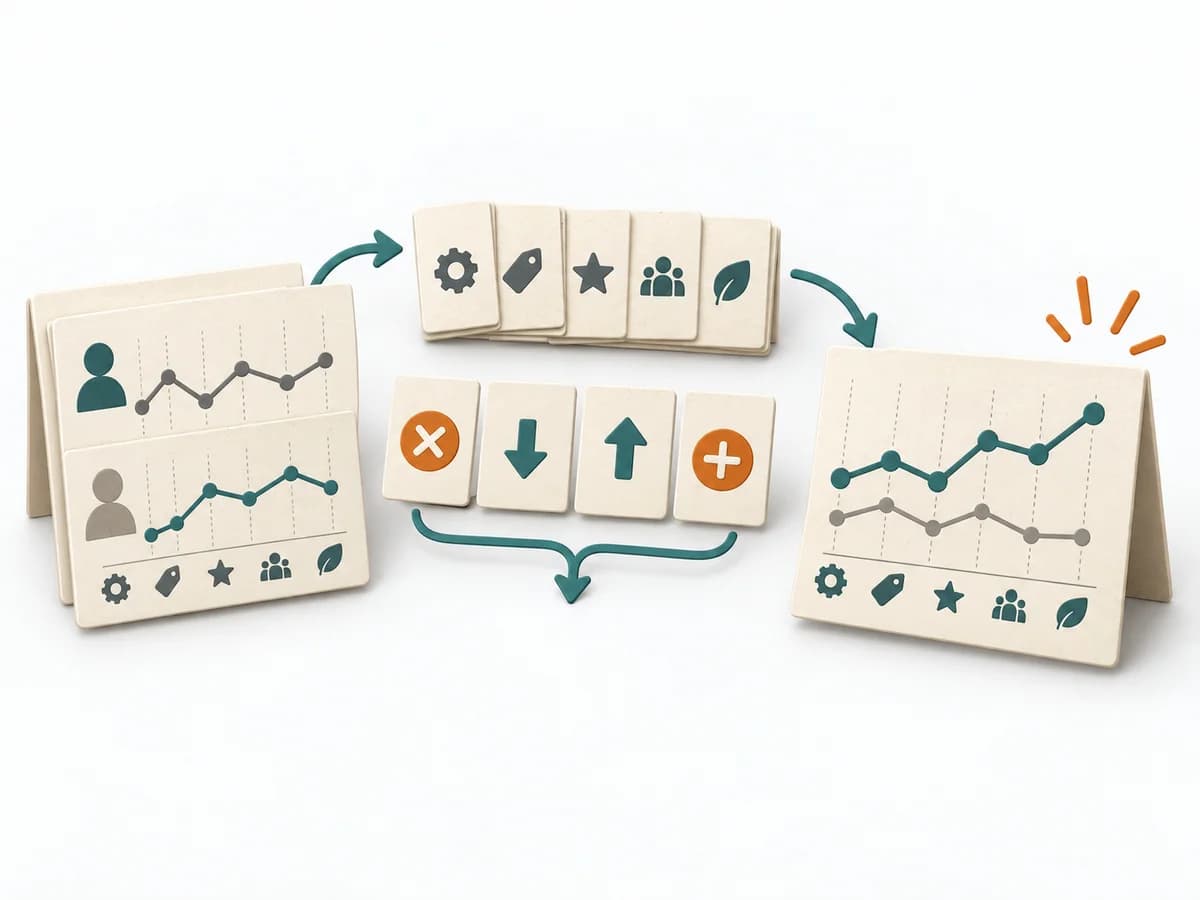
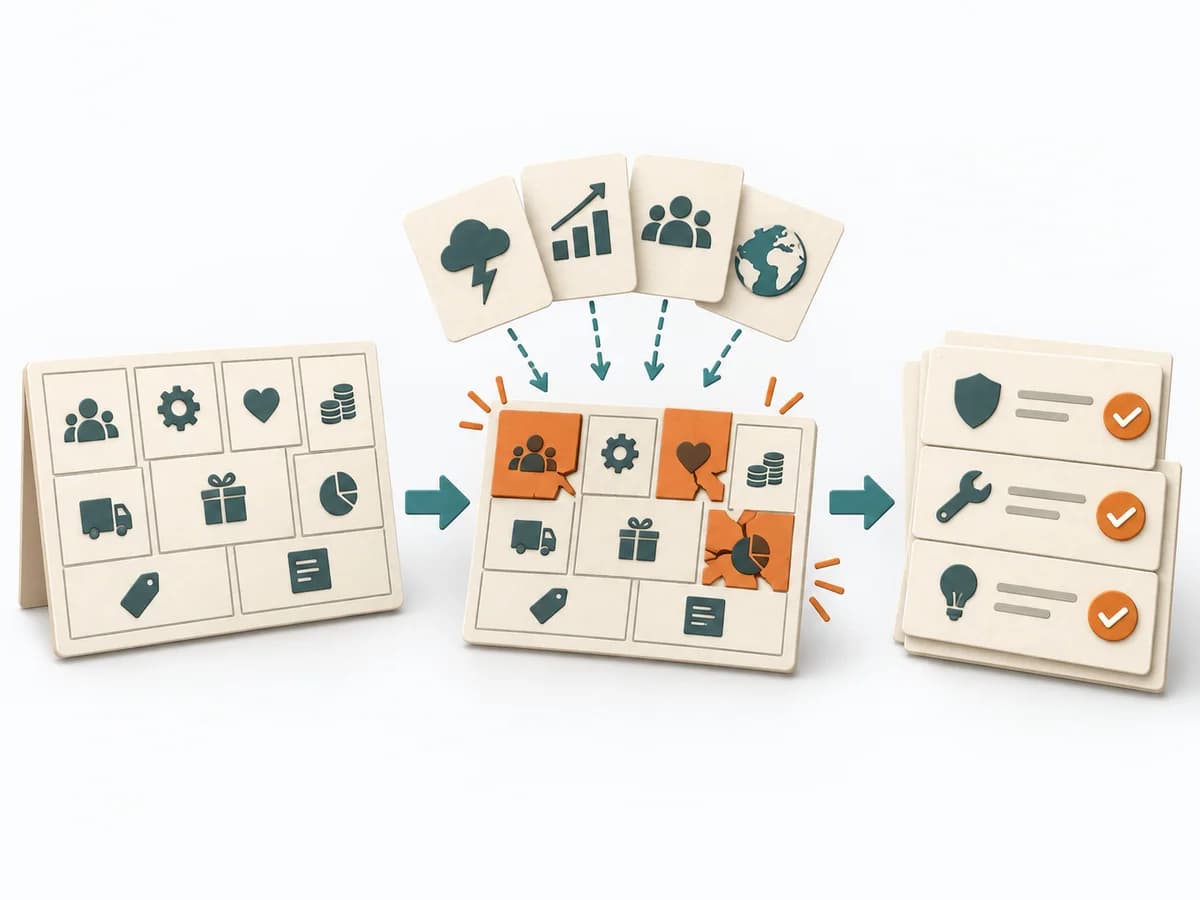
Purposedifferent | For complex user problems with an uncertain cause, the method connects observation, interpretation, and experiment into a learning cycle. It keeps the focus on real needs and avoids premature solution language. This produces robust decisions for product and service. | When an early product bet still has too many open points, it brings target group, problem, and assumptions into a single view. It condenses the idea so core risks become nameable. | DIBB helps clarify target groups, value, goals, and priorities by making the logic behind a decision explicit. It captures results as a DIBB document, belief list, bet list, and learning report. |
Complexitydifferent | High | Medium | Low |
Timedifferent | 1 Tag bis mehrere Wochen | 45-90 min | 1-2 h |
Participantsdifferent | 4-10 | 1-6 | 2-8 |
Formatdifferent | Workshop | Workshop + async | Workshop + async |
Outputdifferent | Problem Statement, Prototype, Test Learnings | Lean Canvas, Core Assumptions, Experiment Backlog | DIBB document, Belief list, Bet list, Learning report |
Tagsno overlap | InnovationPrototypeResearch | StartupLeanAssumptionsBusiness model | StrategyDecisionAssumptionsHypothesis |
Often compared together
Methods with strong topical overlap with the current selection, not yet in the comparison.