View methods side by side.
Choose up to four methods. Add them using the search and share the comparison by copying its link.
| Criterion |  UX Design Design Studio |  Facilitation Stakeholder Salience Model |  Facilitation Consensus Workshop |
|---|---|---|---|
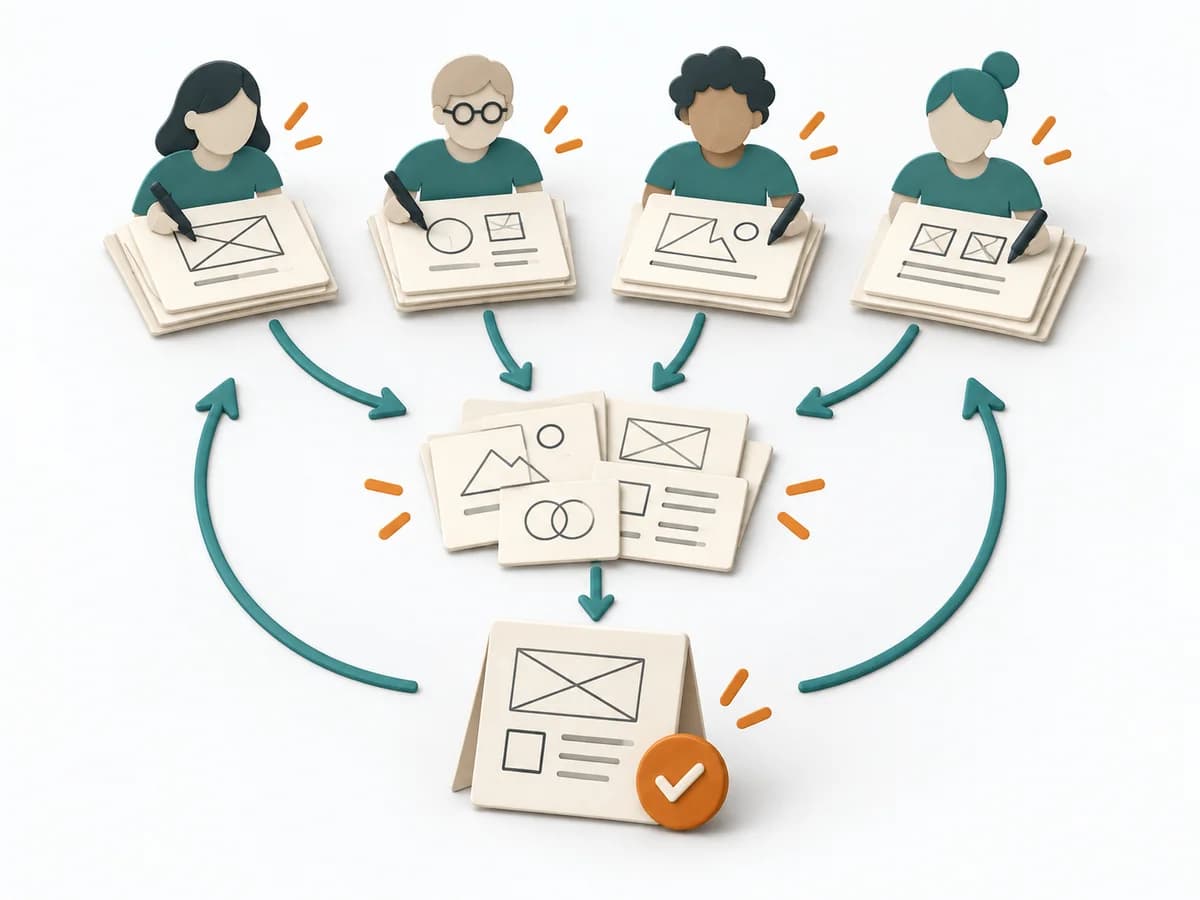
Purposedifferent | When several designs need to be quickly put in relation to each other, it makes ideas visible and comparable. It encourages early variants instead of long upfront debates. | When stakeholders appear to matter very differently, the Stakeholder Salience Model rates their actual priority through power, legitimacy, and urgency. It turns individual contributions into a visible selection. The result is captured as a Salience diagram and a class-based strategy. | When a group needs a solid decision without outvoting individual factions, a Consensus Workshop creates a negotiable common ground. It makes agreement, reservations, and open tensions discussable at the same time. |
Complexitysame | Medium | Medium | Medium |
Timedifferent | 1-3 h | 60-90 min | 1-3 h |
Participantsdifferent | 3-8 | 3-6 | 5-30 |
Formatsame | Workshop | Workshop | Workshop |
Outputdifferent | Sketches, Concept Directions, Design Decisions | Salience Diagram, Strategy per Class | Consensus Clusters, Theme Titles, Priority Areas |
Tagsno overlap | SketchingCollaborationIdeation | StakeholdersFacilitationAlignmentGovernance | FacilitationConsensusWorkshopAlignment |
Often compared together
Methods with strong topical overlap with the current selection, not yet in the comparison.