View methods side by side.
Choose up to four methods. Add them using the search and share the comparison by copying its link.
| Criterion | 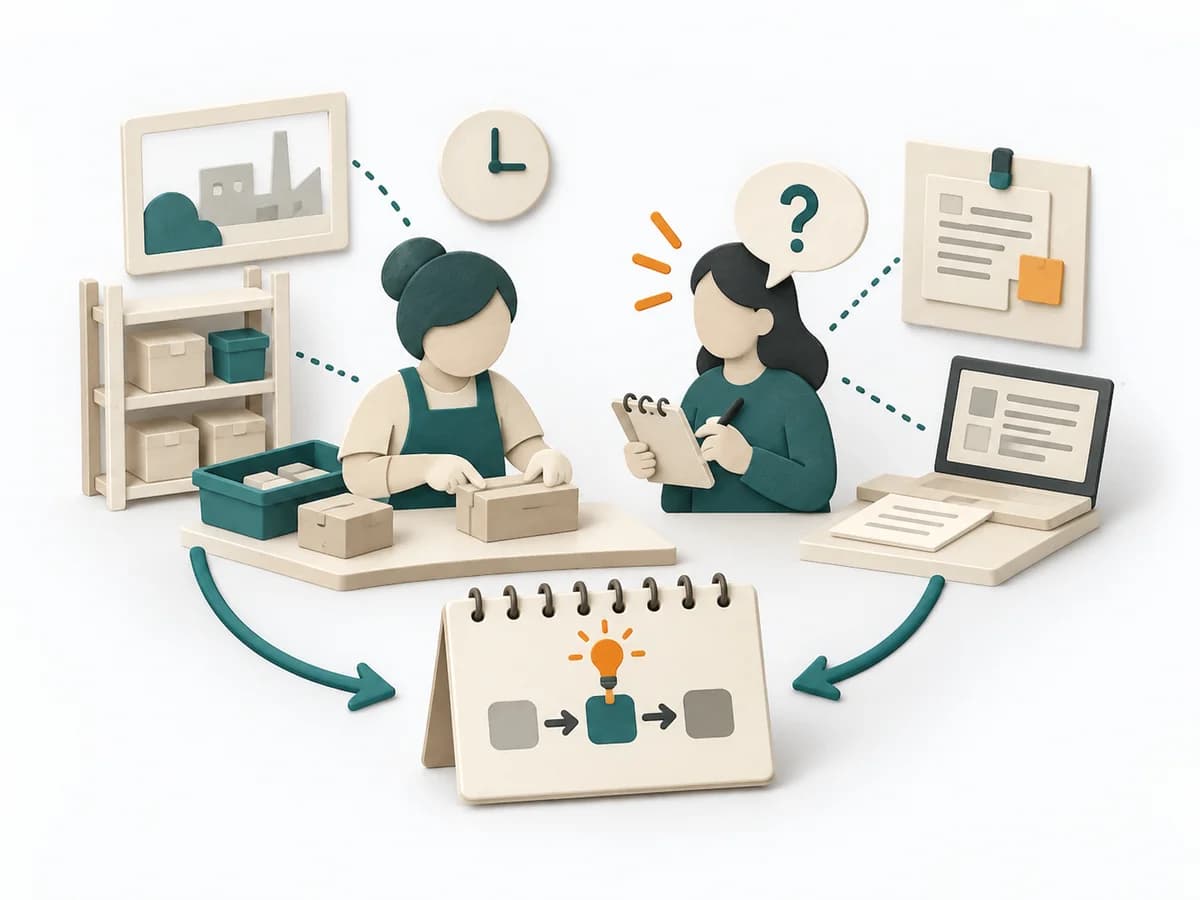 UX Research Contextual Inquiry | 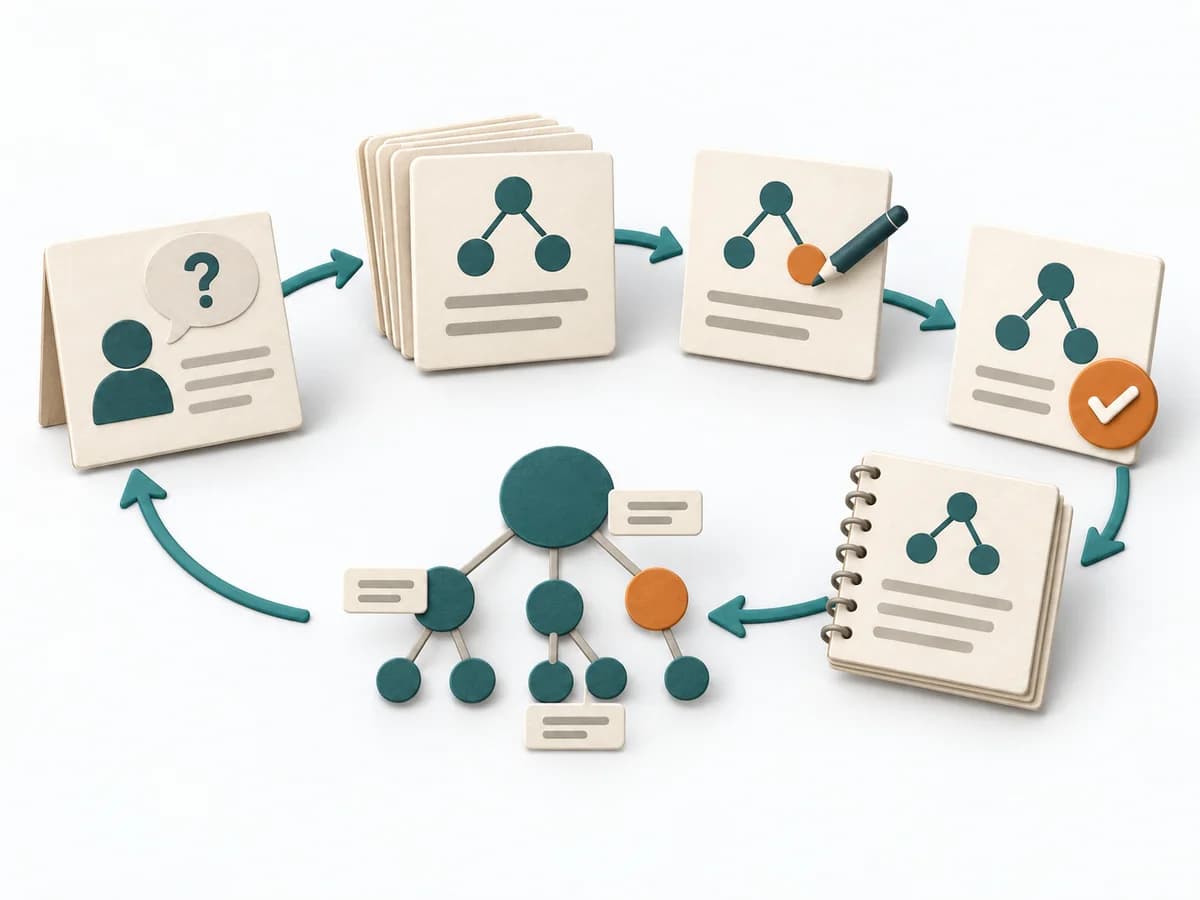 Knowledge Modeling Ontology Design Patterns | 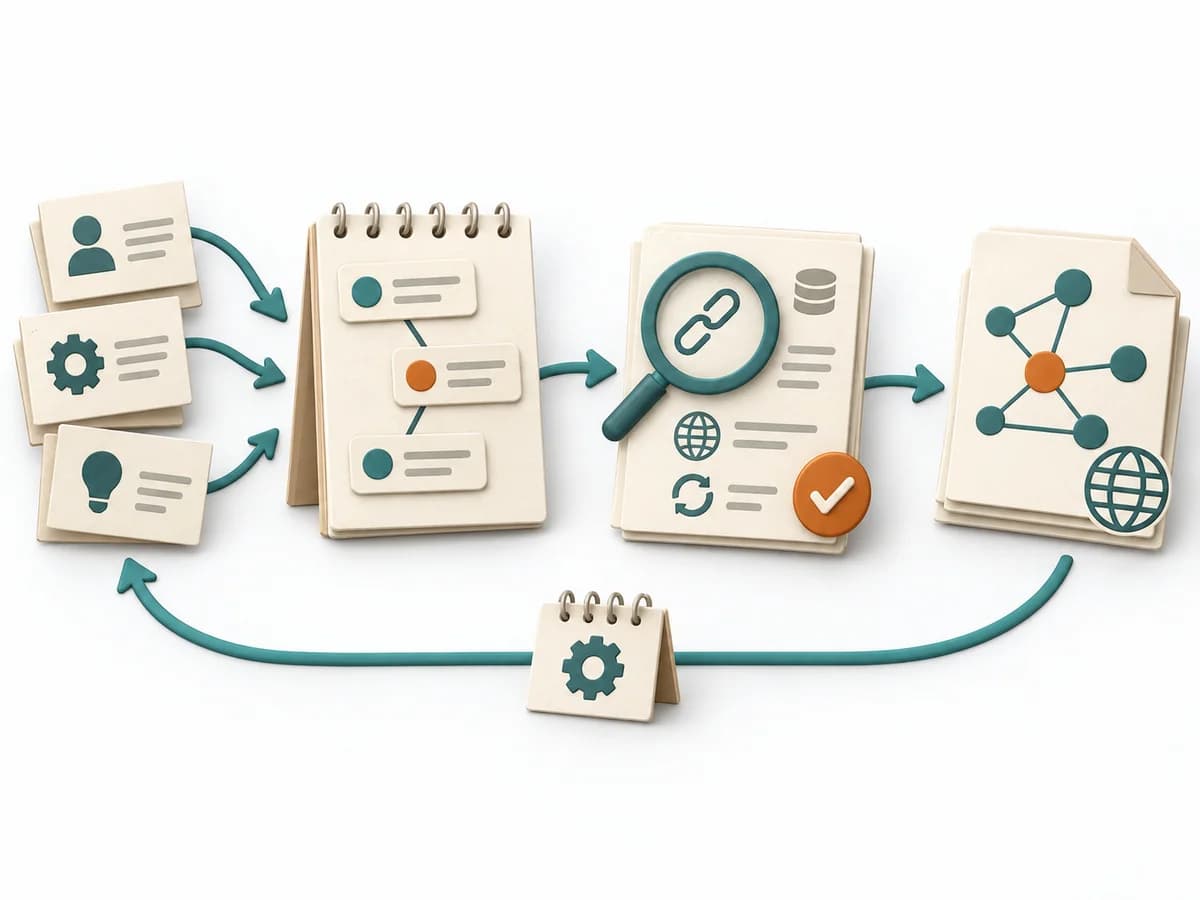 Knowledge Modeling Linked Open Terms |
|---|---|---|---|
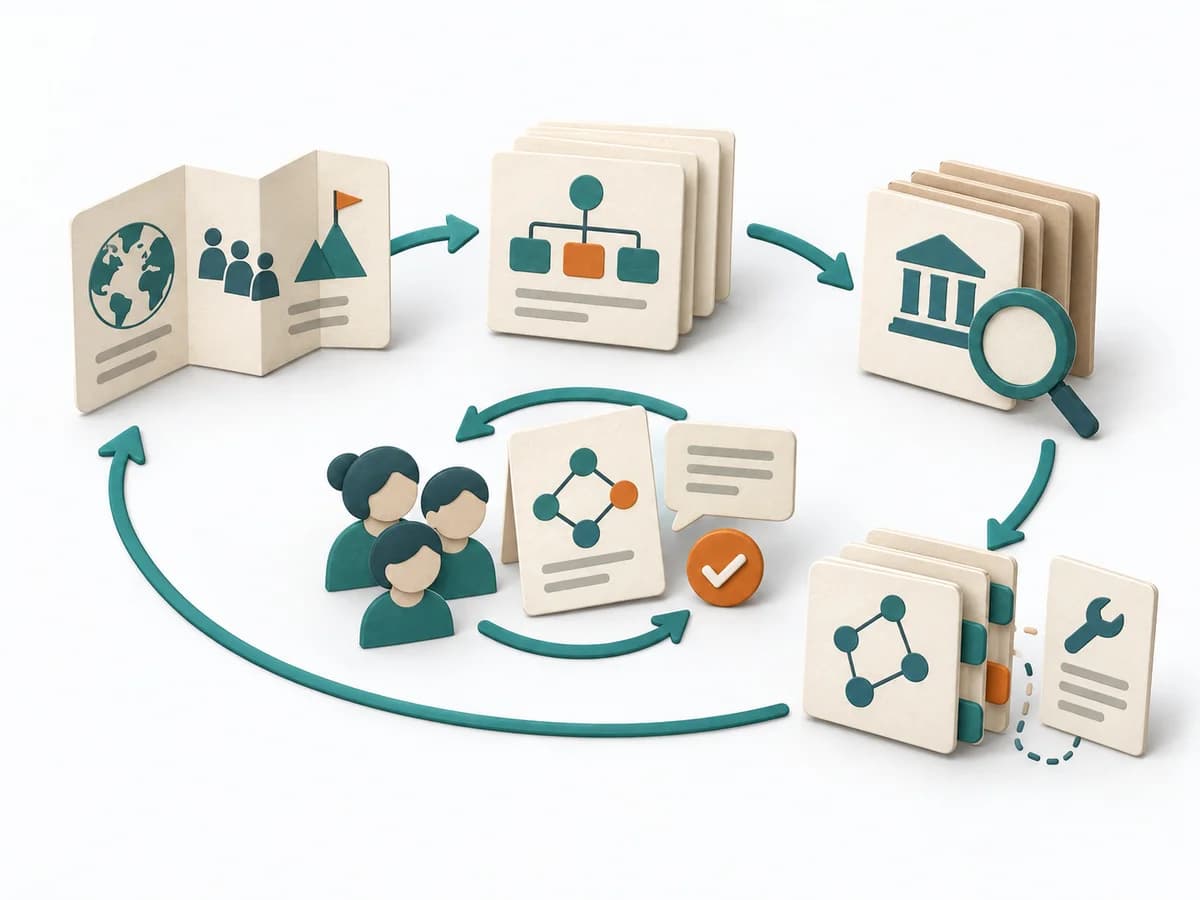
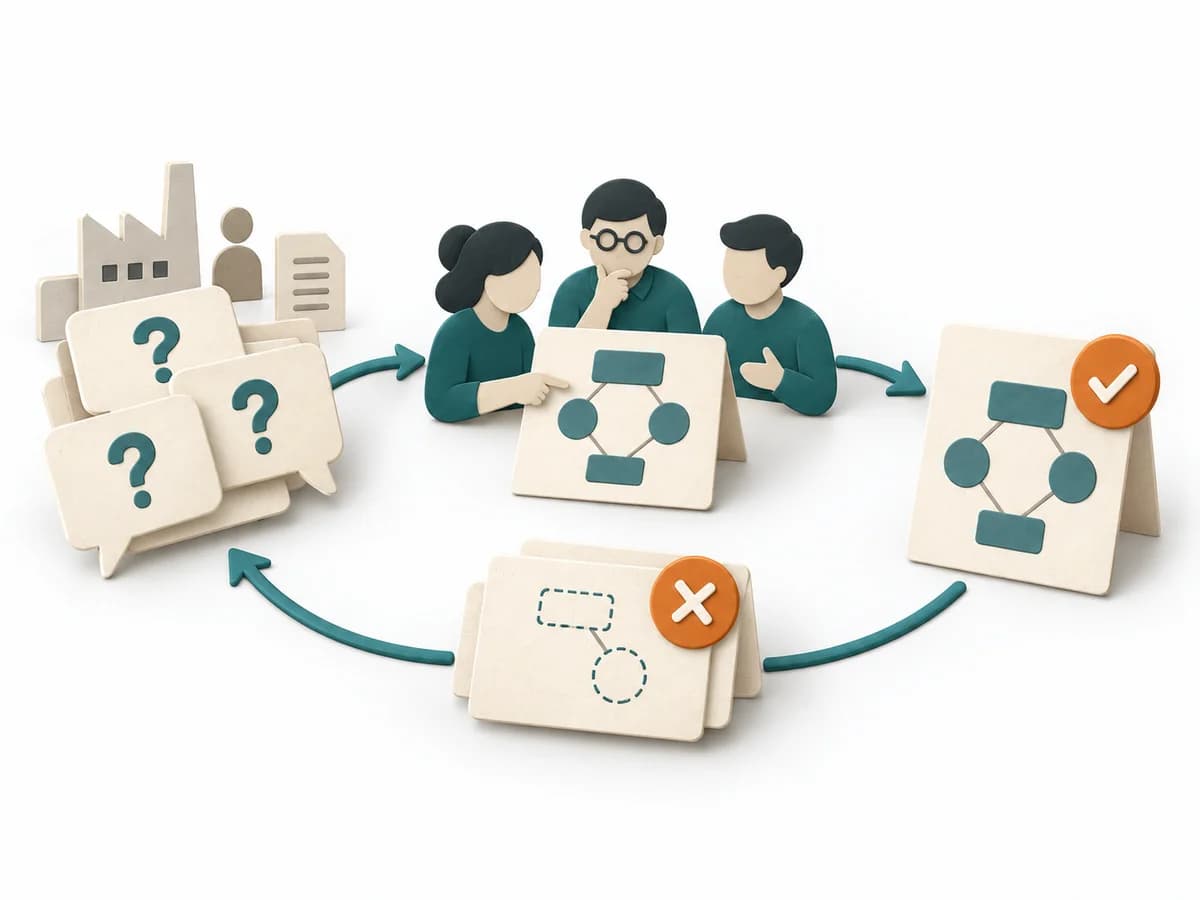
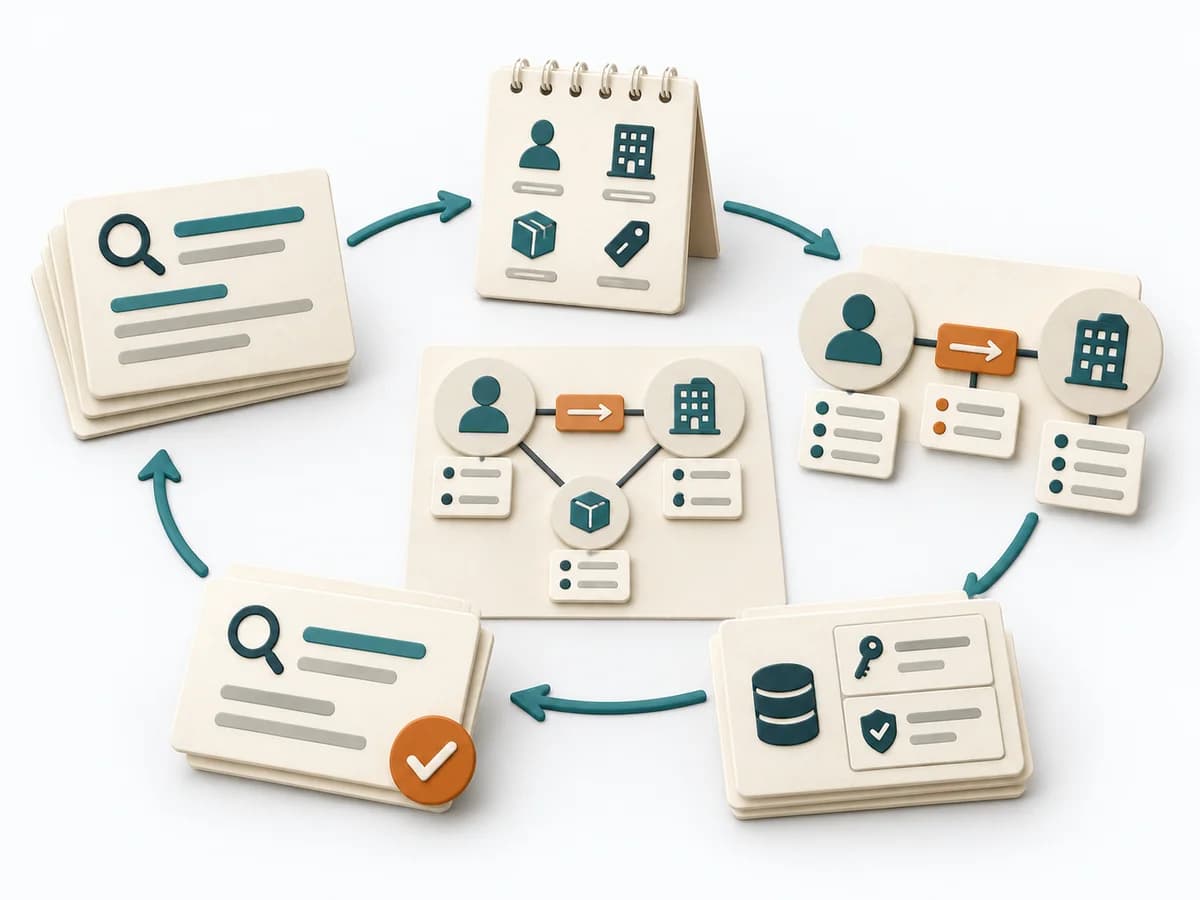
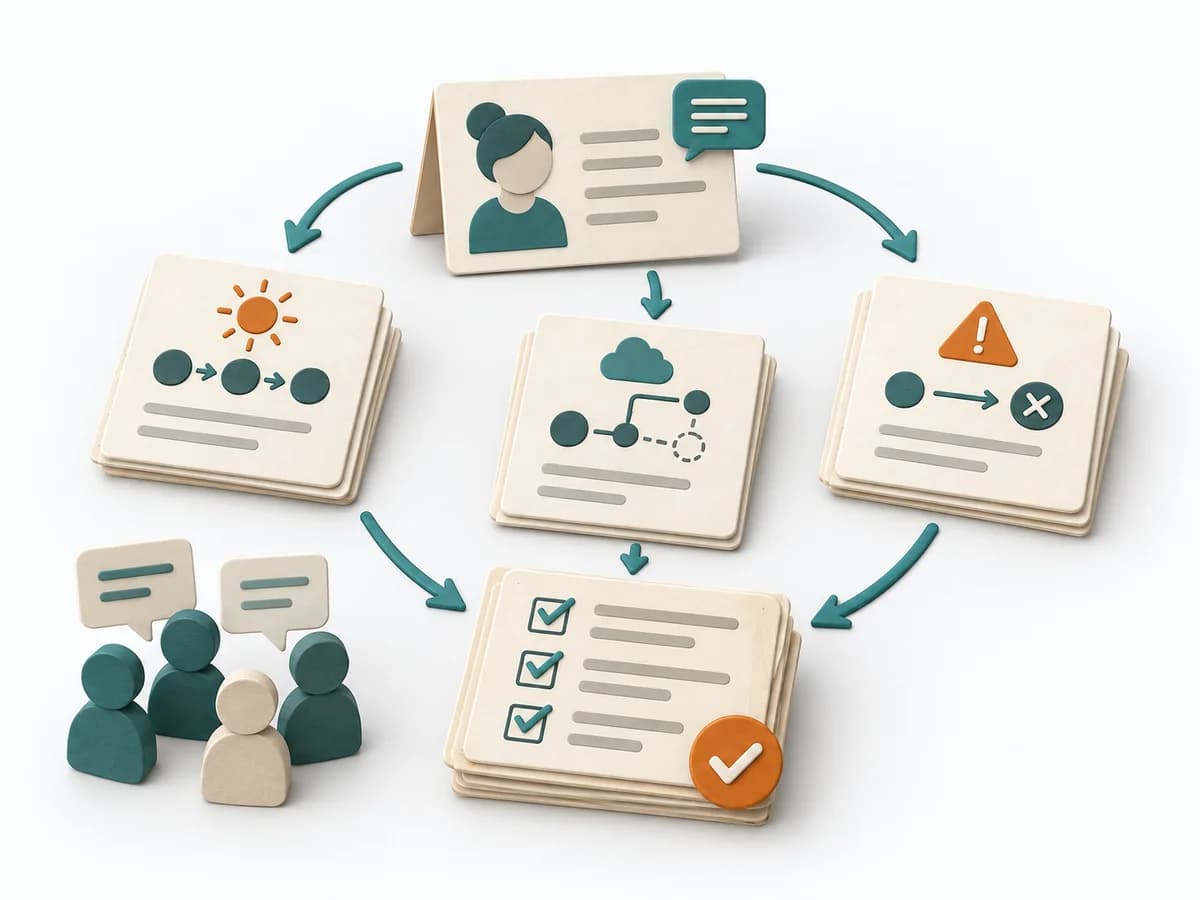
Purposedifferent | When work processes are known only from accounts and the real context stays hidden, Contextual Inquiry makes behavior at the workplace visible. Observation and follow-up questions together show how people actually work, get interrupted, and improvise. | Ontology Design Patterns provide reusable building blocks for recurring modeling problems. The method brings structure to the search for clean concepts, relationships, and roles. | Linked Open Terms connects terminology work with linked-data thinking and makes terminology technically connectable. Vocabulary, meanings, and references can thereby be maintained consistently. |
Complexitysame | Medium | Medium | Medium |
Timedifferent | 1-3 Wochen | 1-3 h pro Pattern | Wochen bis Monate |
Participantsdifferent | 4-12 Beobachtungen | 1-6 | 2-8 |
Formatsame | Workshop + async | Workshop + async | Workshop + async |
Outputdifferent | Field Notes, Workflow Insights, Pain Points | Selected Patterns, Adapted Schema Fragments, Pattern Documentation | Ontology Requirements, Conceptual Model, Published Ontology, Documentation, Maintenance Plan |
Tagsno overlap | UX researchObservationContext | OntologyPatternsReuseSemanticModeling | OntologyMethodologyAgileSemantic |
Often compared together
Methods with strong topical overlap with the current selection, not yet in the comparison.