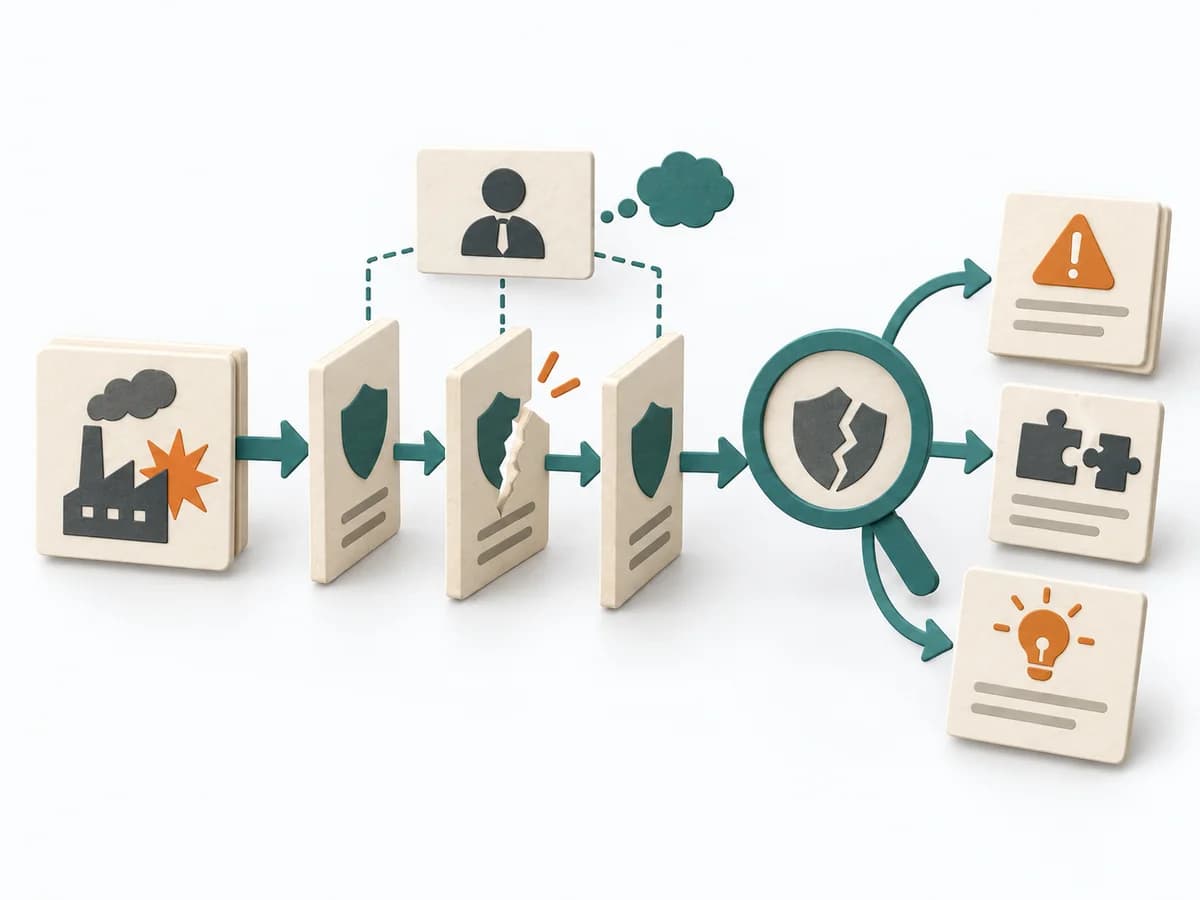
View methods side by side.
Choose up to four methods. Add them using the search and share the comparison by copying its link.
| Criterion | 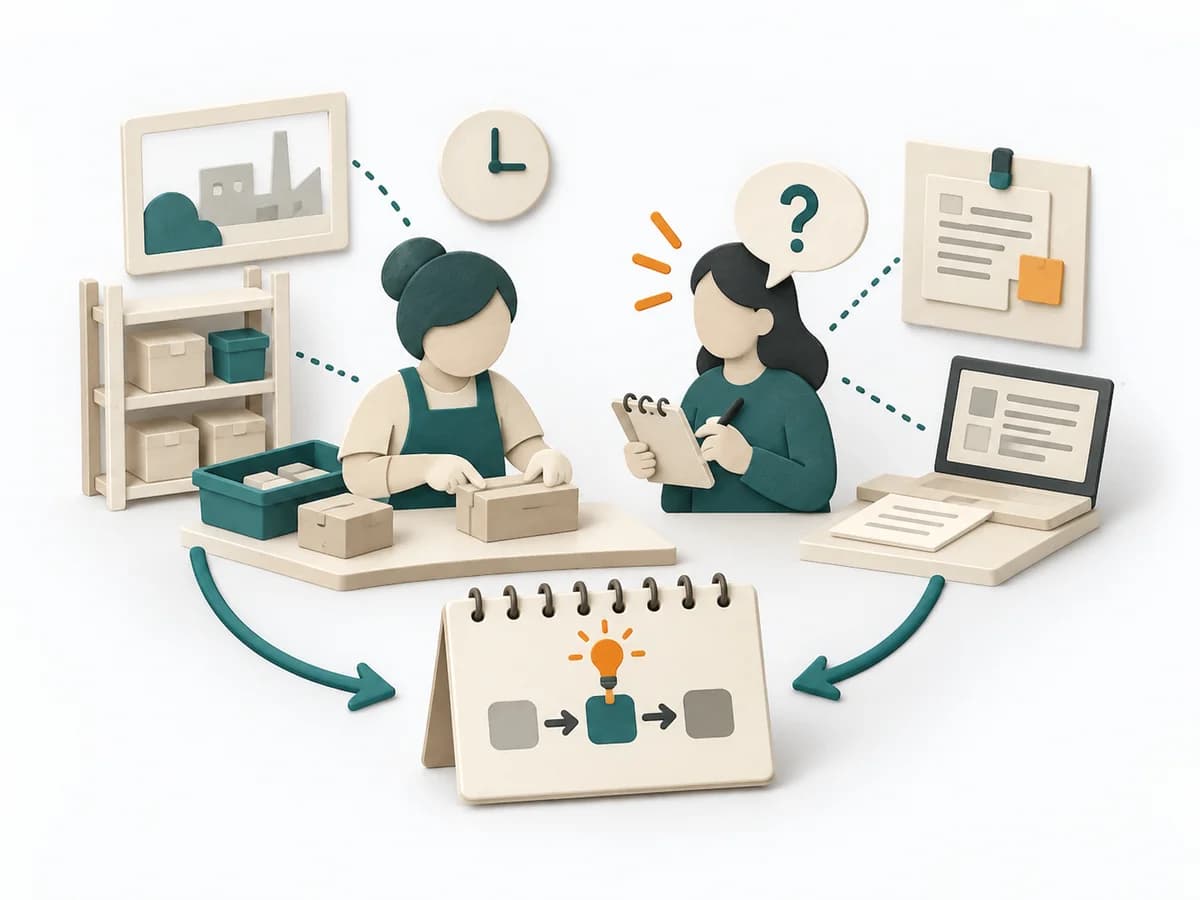 UX Research Contextual Inquiry | 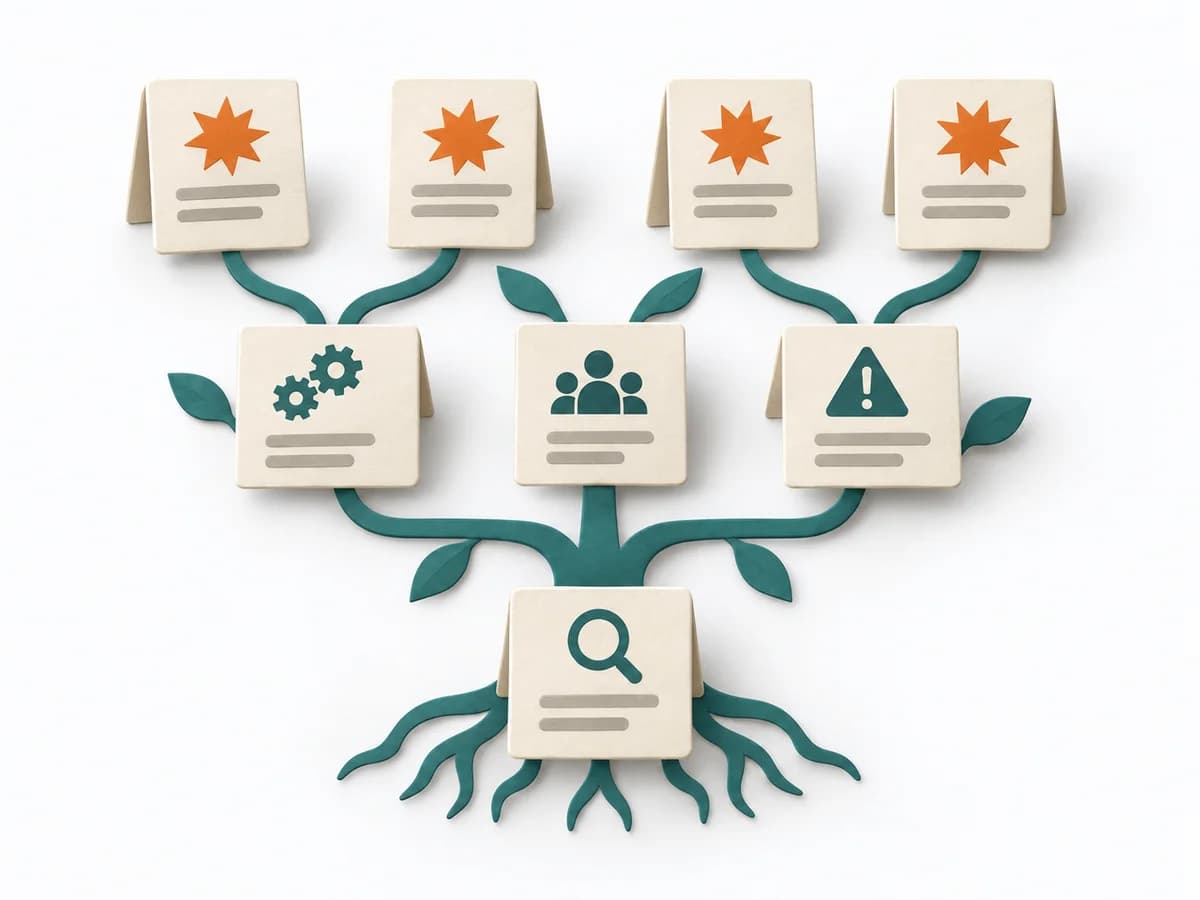 Operations Family Tree Analysis |  Operations A3 Problem Solving |
|---|---|---|---|
Purposedifferent | When work processes are known only from accounts and the real context stays hidden, Contextual Inquiry makes behavior at the workplace visible. Observation and follow-up questions together show how people actually work, get interrupted, and improvise. | For a series of incidents with a similar pattern, the method arranges individual events as branches of a common origin. It makes visible which conditions keep recurring. | For a complex deviation with several people involved, the method bundles problem, analysis, and decision onto one page. It creates a shared working space where causes, countermeasures, and follow-up fit together. |
Complexitysame | Medium | Medium | Medium |
Timedifferent | 1-3 Wochen | 2-4 h | 45-90 min |
Participantsdifferent | 4-12 Beobachtungen | 2-6 | 2-5 |
Formatsame | Workshop + async | Workshop + async | Workshop + async |
Outputdifferent | Field Notes, Workflow Insights, Pain Points | Family Tree Diagram, Pattern Notes, Systemic Measures | A3 Report, Action Plan, Root Cause Analysis |
Tagsno overlap | UX researchObservationContext | Root causePatternsIncidentSystemic | LeanProblem solvingCoachingOperations |
Often compared together
Methods with strong topical overlap with the current selection, not yet in the comparison.