View methods side by side.
Choose up to four methods. Add them using the search and share the comparison by copying its link.
| Criterion | 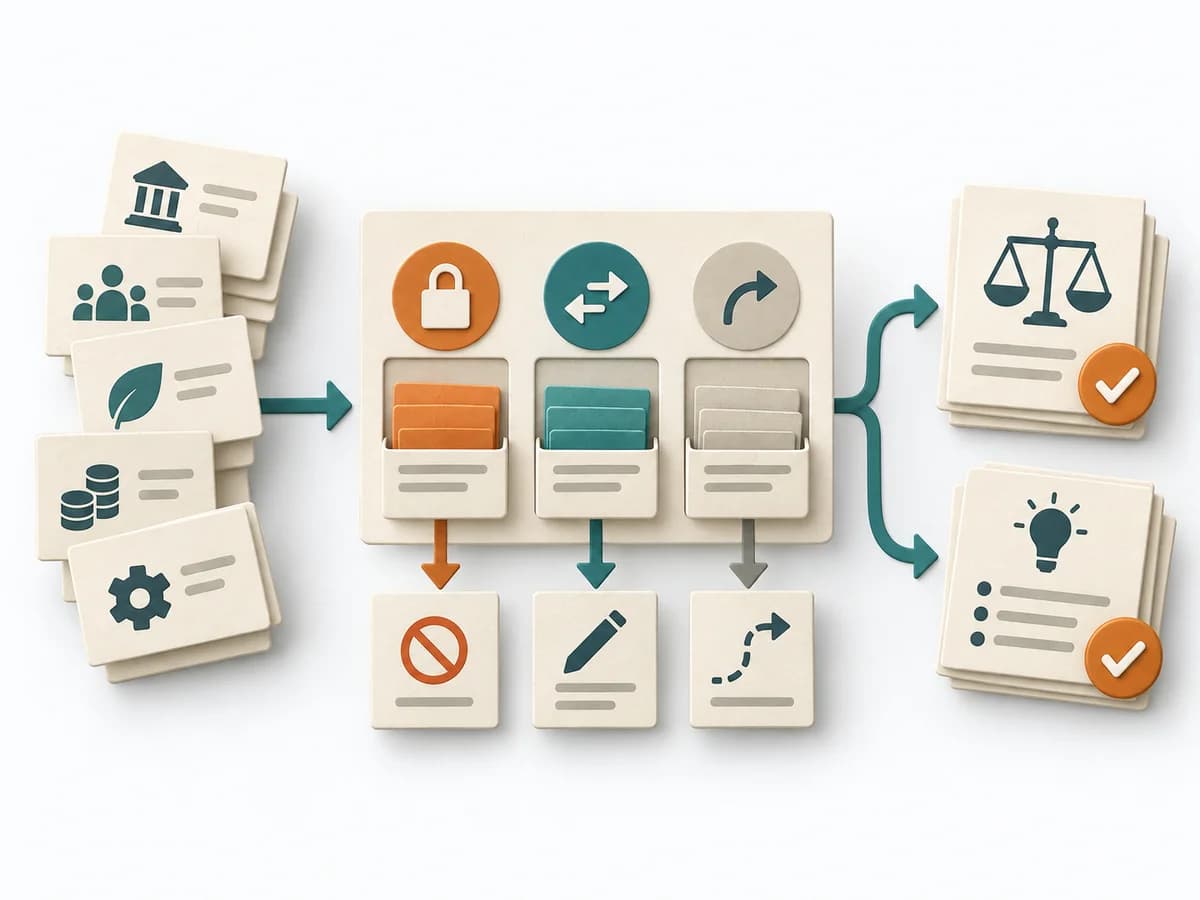 Decision Making Constraint Analysis |  Facilitation Stakeholder Mapping |  Decision Making Decision Rights Mapping |
|---|---|---|---|
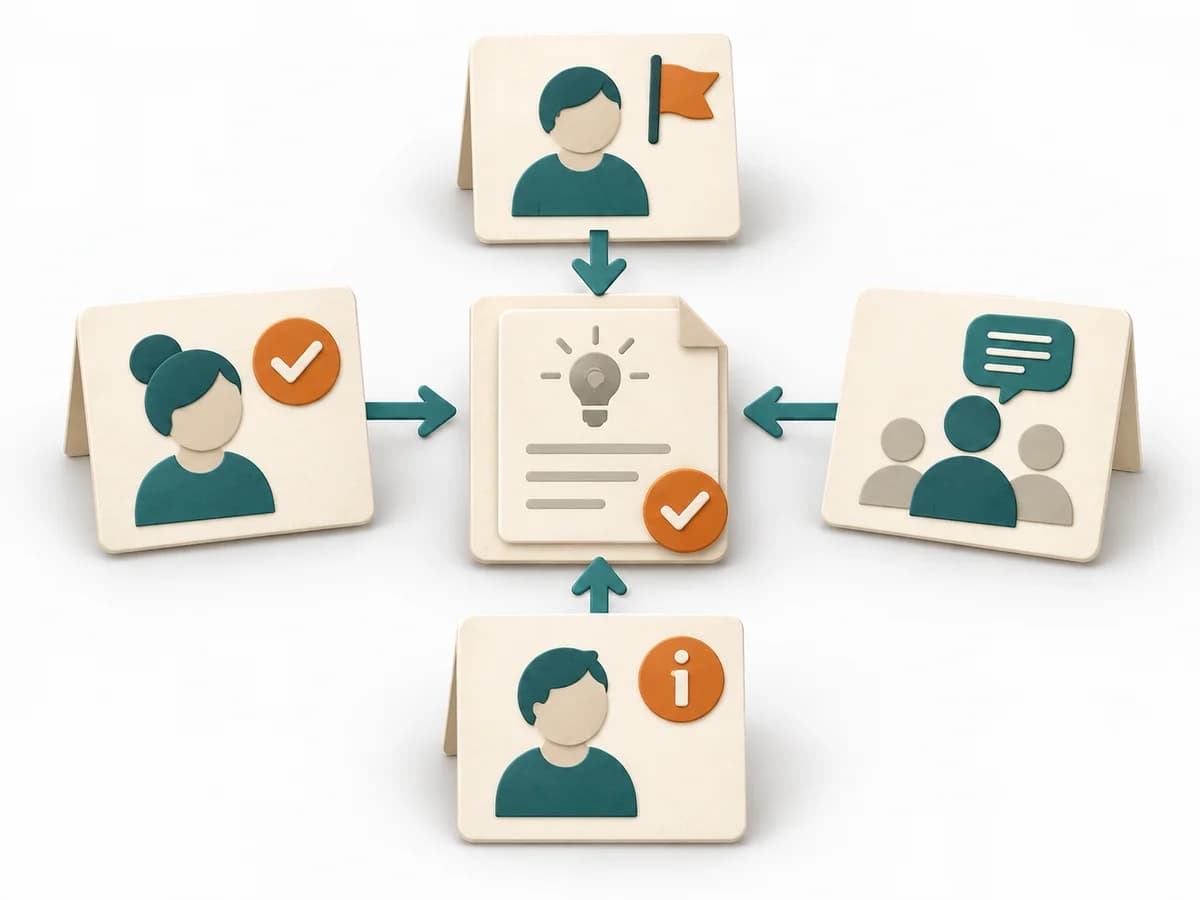
Purposedifferent | When an initiative stalls, the limit often lies not in the idea but in hard or soft boundary conditions. Constraint Analysis separates these limits and shows which of them can actually be shaped. | When an initiative depends on many people, interests, and power dynamics, Stakeholder Mapping systematically orders the environment. It shows who influences, who is affected, and where relationship management or safeguarding matters first. | In organizations with many stakeholders, it often blurs who actually decides and who is merely consulted. It separates options, evaluation criteria, and open risks. The result is captured as a Decision Rights matrix and an agreement. |
Complexitydifferent | Low | Low | Medium |
Timedifferent | 30-90 min | 60–90 min | 90-180 min |
Participantsdifferent | 2-8 | 2-8 | 4-12 |
Formatdifferent | Workshop + async | Workshop + async | Workshop |
Outputdifferent | Constraint List, Hard/Soft Classification, Option Impact Notes, Decision Boundaries | Stakeholder Map, Engagement Plan, Risk Notes | Decision Rights Matrix, Agreement |
Tagsno overlap | ConstraintsDecisionPlanningOptions | StakeholdersAlignmentFacilitationChange | DecisionGovernanceAlignmentResponsibility |
Often compared together
Methods with strong topical overlap with the current selection, not yet in the comparison.