View methods side by side.
Choose up to four methods. Add them using the search and share the comparison by copying its link.
| Criterion |  Knowledge Modeling Concept Mapping | 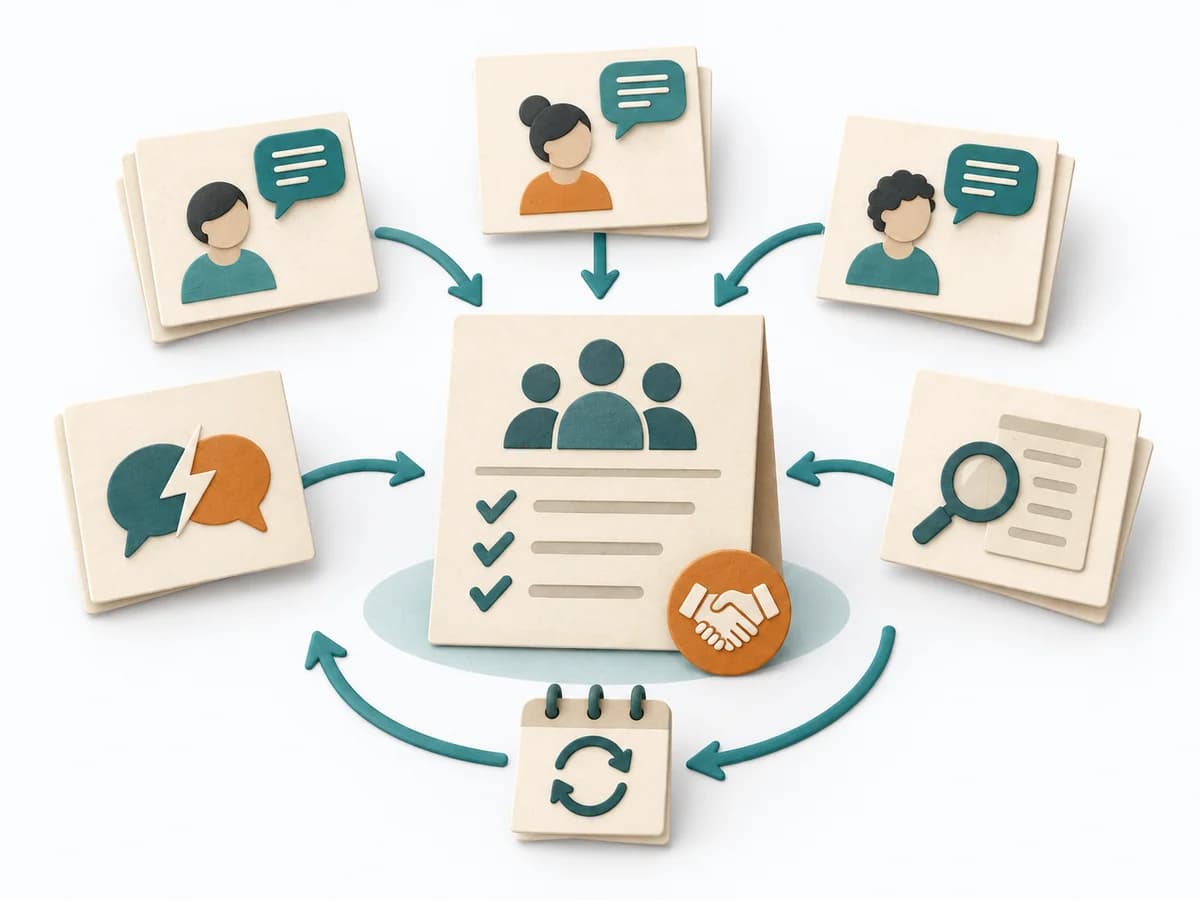 Agile Working Agreements | 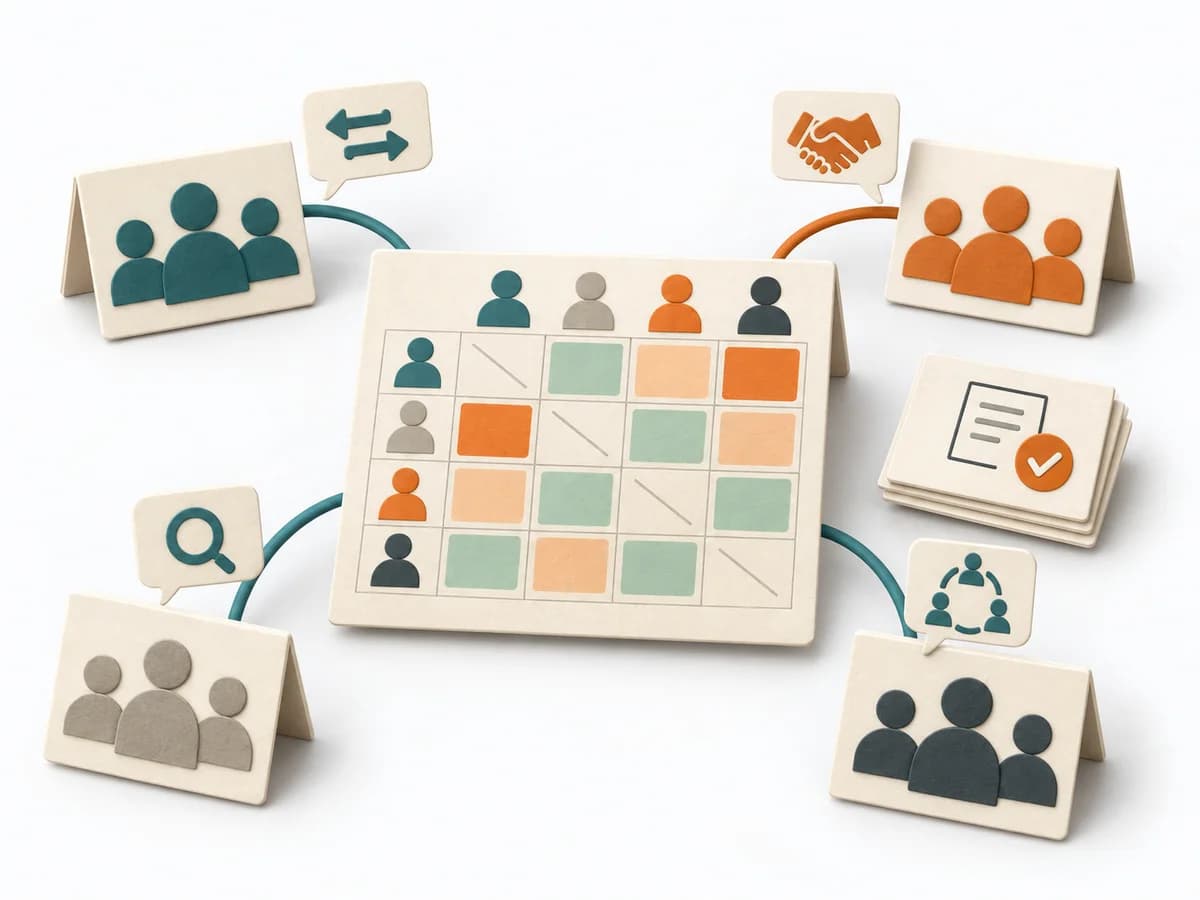 Team Design Team Topologies Interaction Modes |
|---|---|---|---|
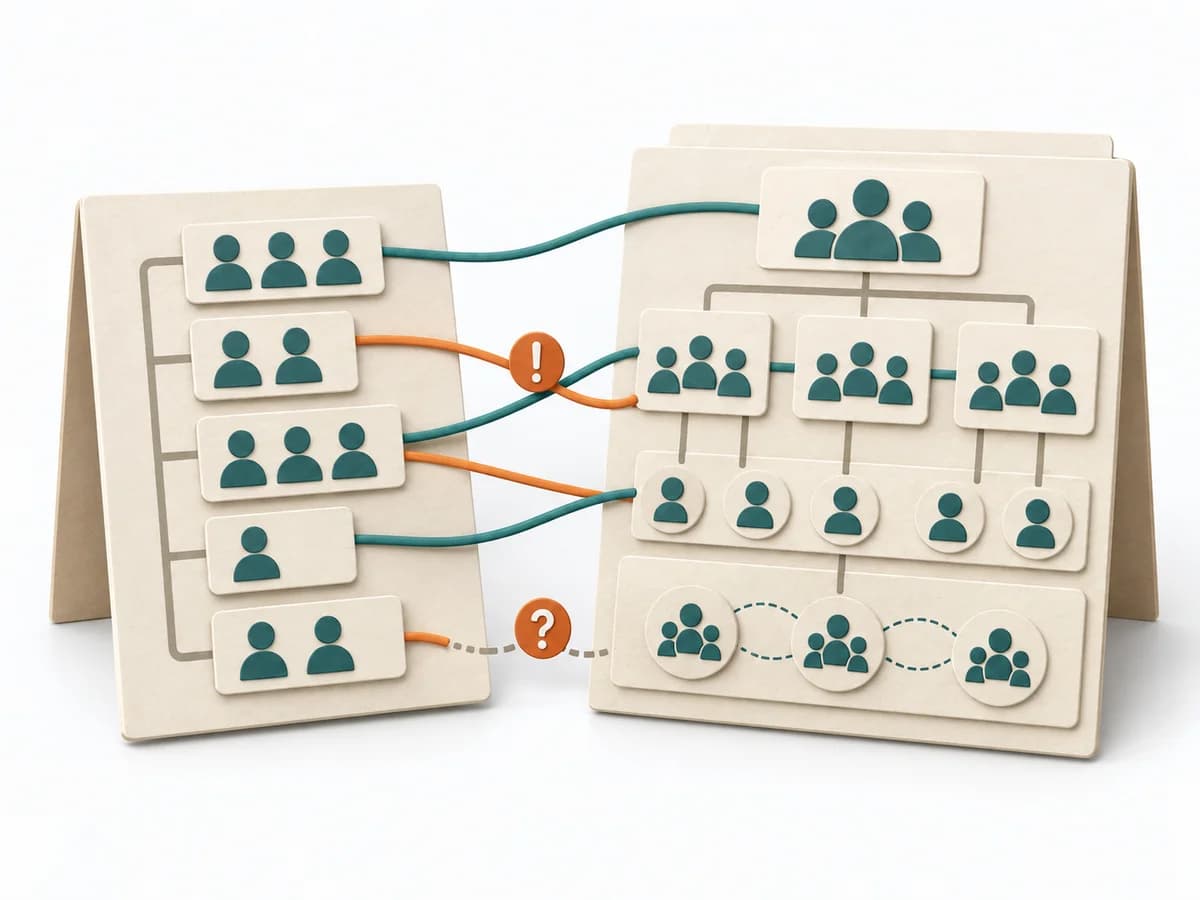
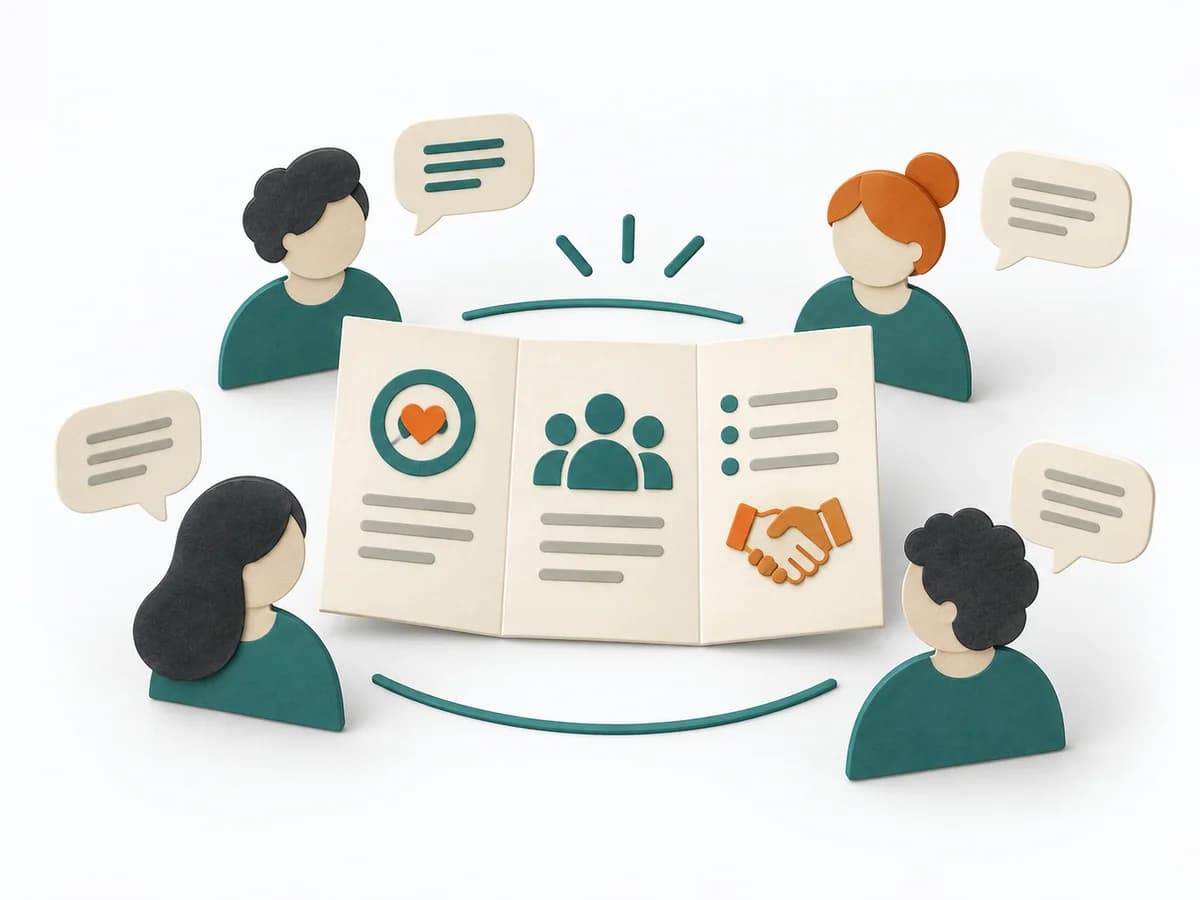
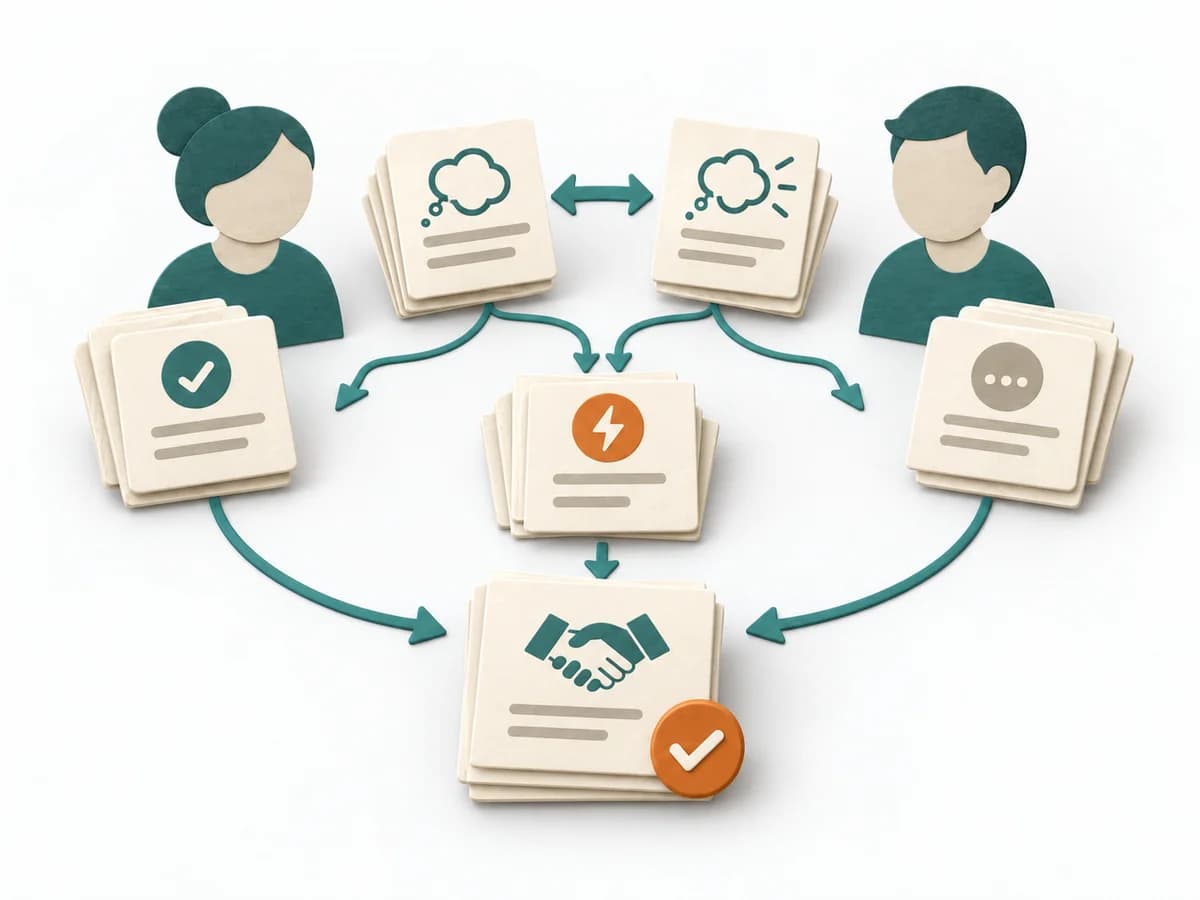
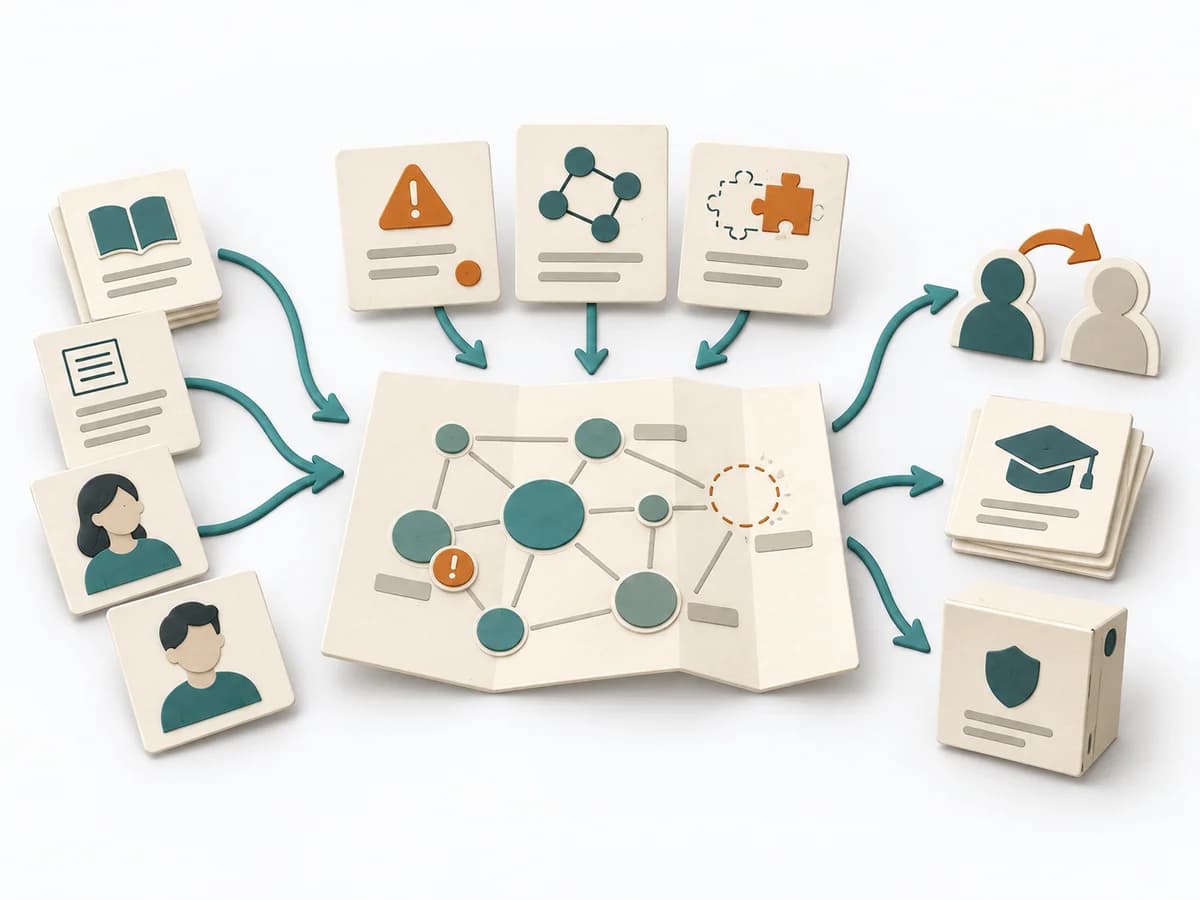
Purposedifferent | Concept Mapping arranges terms and relationships in a network that makes subject-matter connections tangible. It fits when a topic needs to be understood structurally rather than linearly. | When collaboration needs more than implicit expectations, it lays out shared ground rules openly. It creates reliability for conduct, availability, and decision paths. | When several teams collaborate repeatedly, it describes the right interaction mode for each interface between them. It clarifies responsibility, interaction, and load between teams. The result is captured as an interaction heat map and pairwise agreements. |
Complexitydifferent | Medium | Low | Medium |
Timedifferent | 1-2 h | 45-90 min | Half day |
Participantsdifferent | 1-8 | 3-12 | Team-Leads plus Architecture |
Formatdifferent | Workshop + async | Workshop | Workshop |
Outputdifferent | Concept Map, Relationship Labels, Knowledge Gaps | Working Agreements, Team Norms, Review Cadence | Interaction Heat Map, Agreements per Pair |
Tagsno overlap | KnowledgeConceptsMappingSensemaking | TeamCollaborationAgile | TeamAlignmentCollaborationOrganization |
Often compared together
Methods with strong topical overlap with the current selection, not yet in the comparison.