View methods side by side.
Choose up to four methods. Add them using the search and share the comparison by copying its link.
| Criterion | 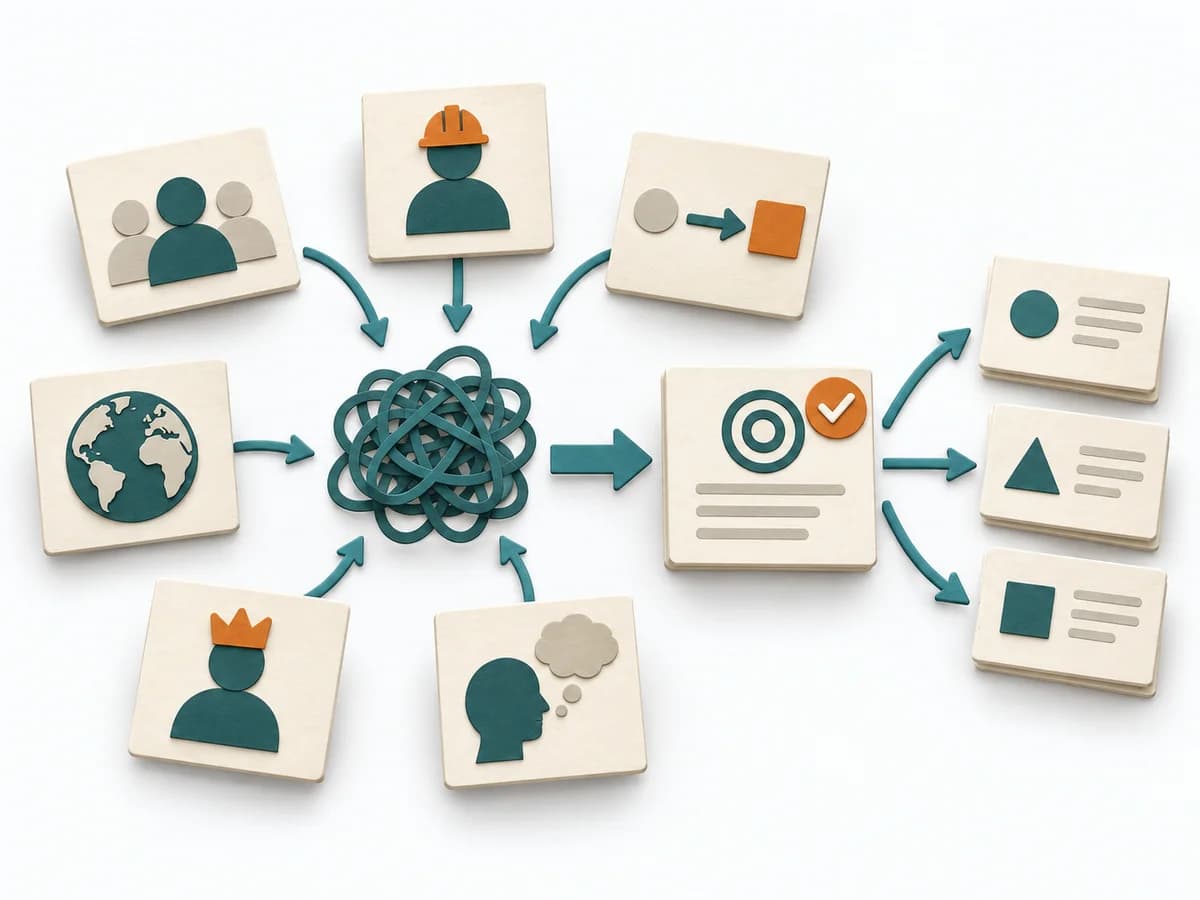 Systems Thinking CATWOE Analysis | 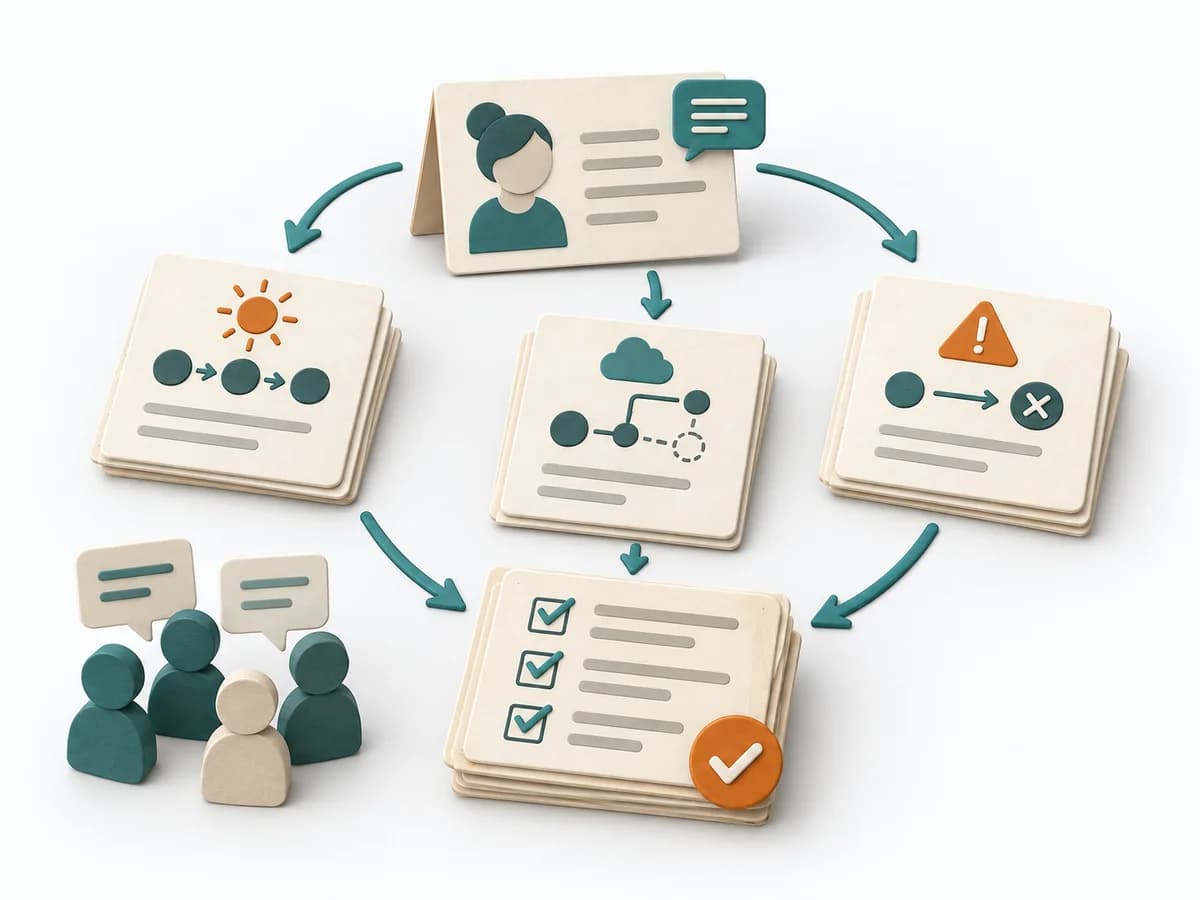 Agile Acceptance Criteria Workshop | 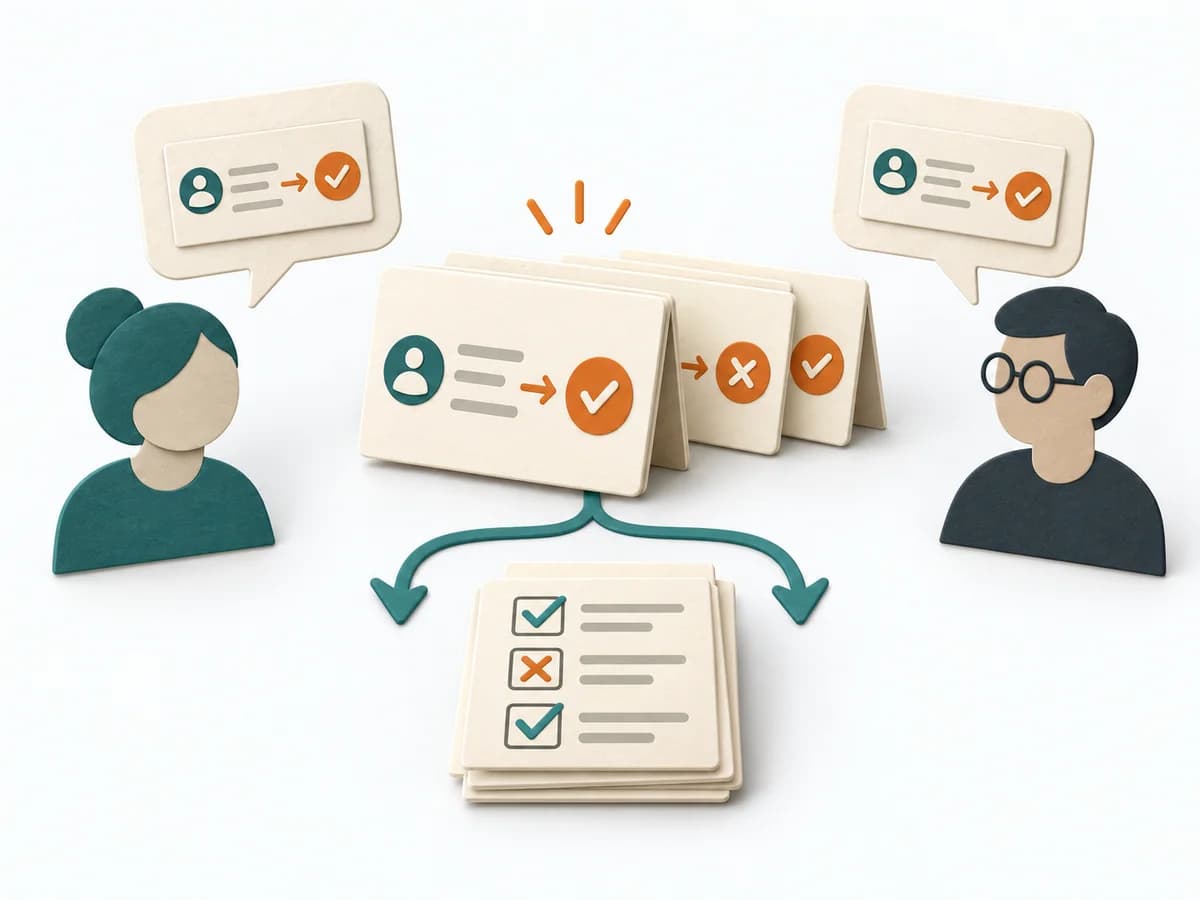 Agile Specification by Example |
|---|---|---|---|
Purposedifferent | CATWOE structures a problem from six viewpoints and prevents too narrow a view of the situation. Different experiences of the system become comparably discussable this way. | When a story needs clear checkpoints before implementation, it sharpens expectation and scope together. It sorts work by value, risk, and delivery ability. The result is captured as Acceptance Criteria and a Story Update. | When business rules need to become precise, it ties language, example, and test together. It sorts work by value, risk, and delivery ability. The result is captured as an Example Table and Acceptance Tests. |
Complexitydifferent | Medium | Low | Medium |
Timedifferent | 45-90 min | 20-40 min pro Story | 60-90 min pro Feature |
Participantsdifferent | 3-8 | 3-6 | 3-6 |
Formatdifferent | Workshop + async | Workshop | Workshop |
Outputdifferent | CATWOE Canvas, Root Definition, Stakeholder Perspectives, Constraints | Acceptance Criteria, Story Update | Example Table, Acceptance Tests |
Tagsno overlap | Systems thinkingFramingStakeholders | AgileRequirementsRefinementBehavior-Driven Development | AgileRequirementsExamplesBehavior-Driven Development |
Often compared together
Methods with strong topical overlap with the current selection, not yet in the comparison.