View methods side by side.
Choose up to four methods. Add them using the search and share the comparison by copying its link.
| Criterion | 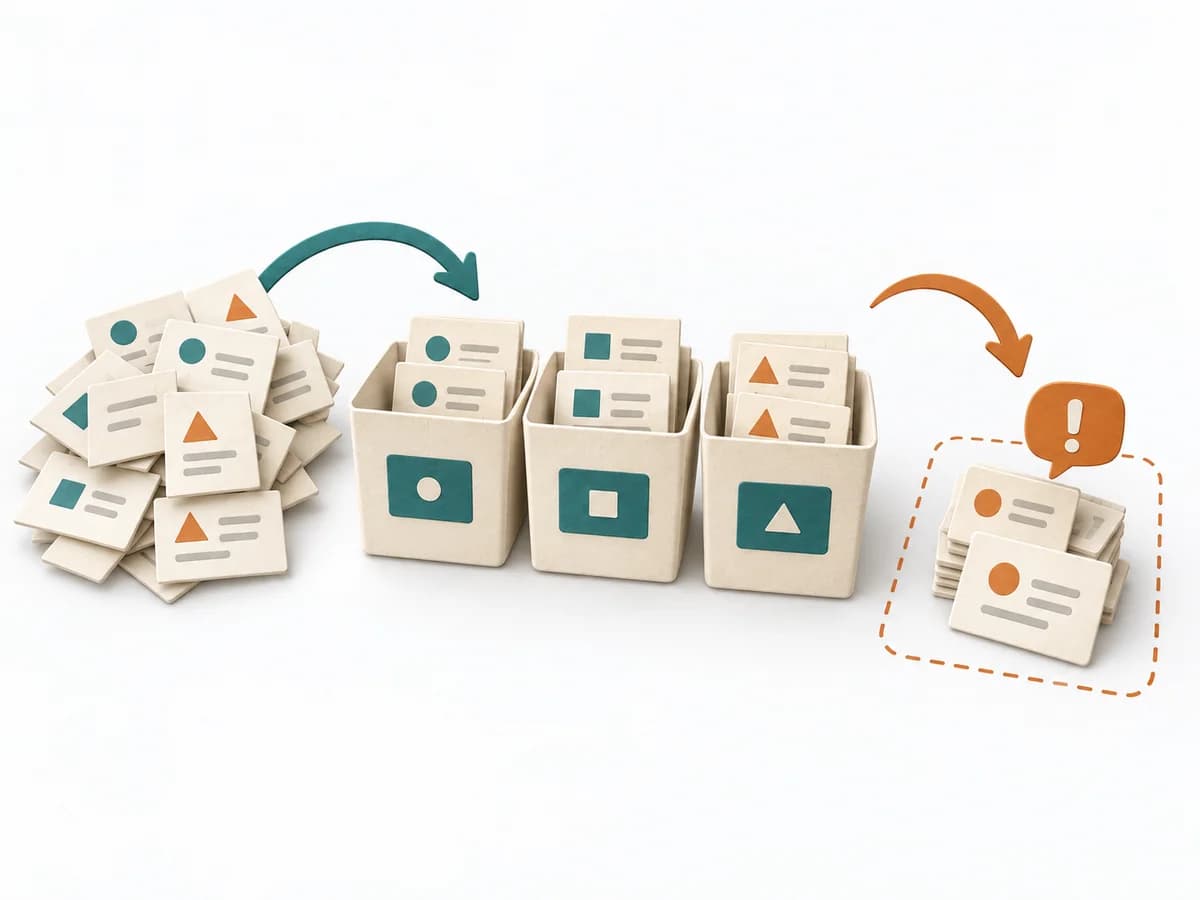 Agile Bucket System |  Agile Affinity Estimation |  Systems Thinking Systems Mapping |
|---|---|---|---|
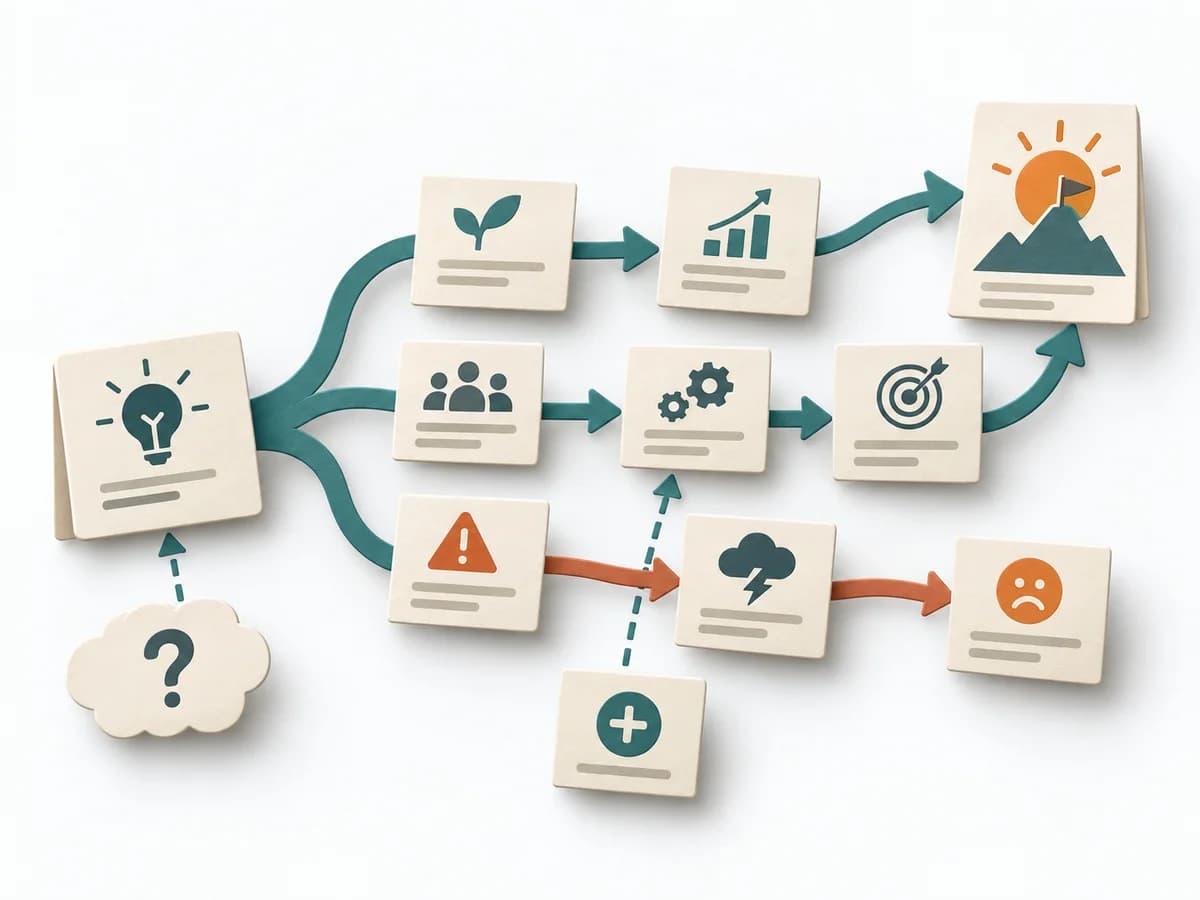
Purposedifferent | When a large batch of work needs a fast, rough estimate, it sorts items into predefined size buckets. It sorts work by value, risk, and delivery ability. The result is captured as a Bucketed Backlog, Relative Estimates, and Split Candidates. | When many tasks need to be classified quickly, it sorts them by perceived effort and similarity. It reduces the effort of fine-grained estimation for large volumes. | Systems Mapping arranges elements, relationships, and boundaries so a complex field becomes legible at a glance. The overview stabilizes the overall picture before detail work or steering begins. |
Complexitysame | Medium | Medium | Medium |
Timedifferent | 30-90 min | 30-90 min | 1-3 h |
Participantssame | 3-12 | 3-12 | 3-12 |
Formatdifferent | Workshop | Workshop | Workshop + async |
Outputdifferent | Bucketed Backlog, Relative Estimates, Split Candidates | Affinity Size Map, Grouped Estimates, Unclear Items | System Map, Dependencies, Leverage Points |
Tagsno overlap | EstimationBacklogRelative sizing | EstimationBacklogRelative sizing | Systems thinkingMappingBoundariesChange |
Often compared together
Methods with strong topical overlap with the current selection, not yet in the comparison.