View methods side by side.
Choose up to four methods. Add them using the search and share the comparison by copying its link.
| Criterion | 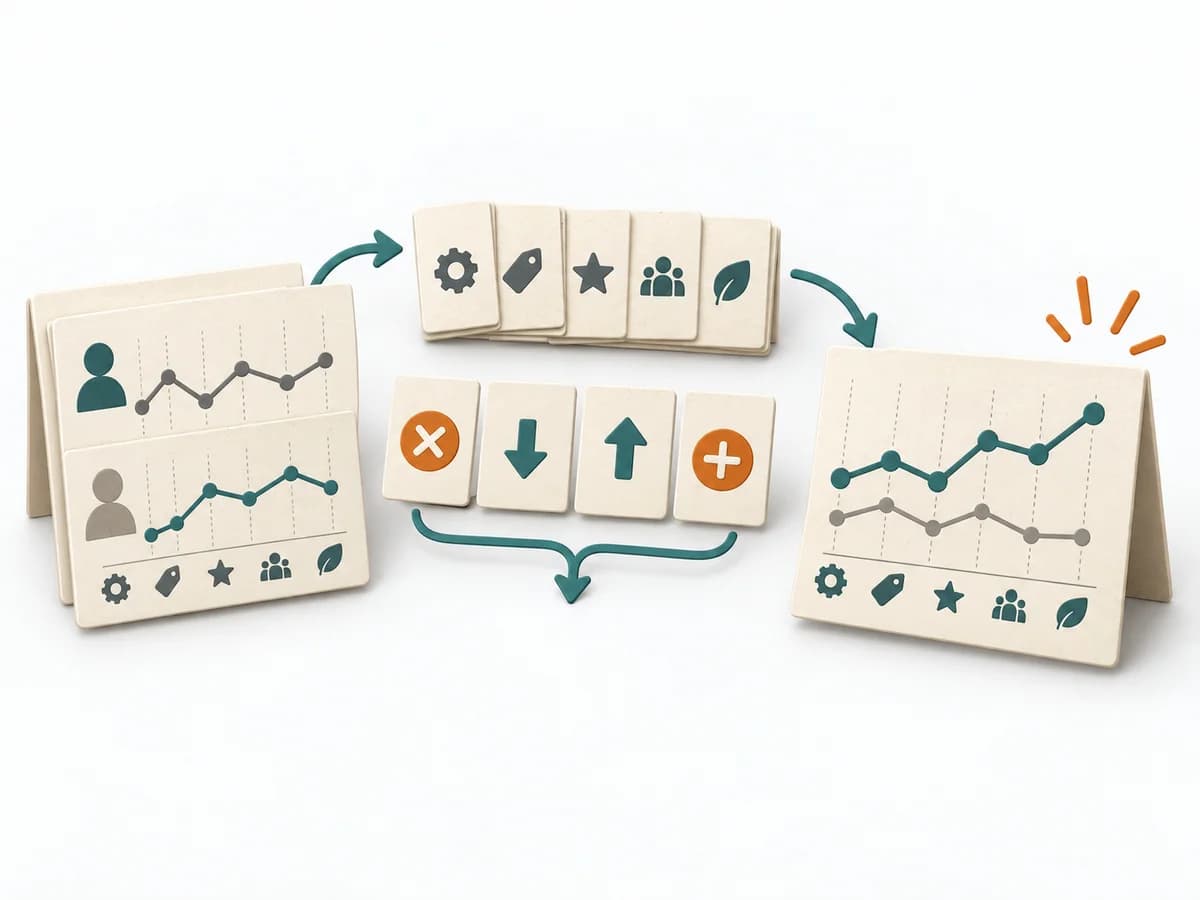 Business Strategy Blue Ocean Strategy Canvas |  Systems Thinking Leverage Points |  Facilitation Stakeholder Mapping |
|---|---|---|---|
Purposedifferent | The Blue Ocean Strategy Canvas shows how an offering is positioned relative to the market. Differentiation thereby becomes tangible in value factors instead of merely being claimed. | Leverage Points show exactly where interventions in a system produce a disproportionate effect. It draws relationships, patterns, and feedback loops. The result is captured as a leverage map and action strategy. | When an initiative depends on many people, interests, and power dynamics, Stakeholder Mapping systematically orders the environment. It shows who influences, who is affected, and where relationship management or safeguarding matters first. |
Complexitydifferent | Medium | High | Low |
Timedifferent | 2-4 h | Half day | 60–90 min |
Participantsdifferent | 3-10 | 3-12 | 2-8 |
Formatdifferent | Workshop | Workshop | Workshop + async |
Outputdifferent | Strategy Canvas, Value Curve, ERRC Actions | Leverage Map, Action Strategy | Stakeholder Map, Engagement Plan, Risk Notes |
Tagsno overlap | StrategyPositioningInnovationValue | Systems thinkingChangeStrategy | StakeholdersAlignmentFacilitationChange |
Often compared together
Methods with strong topical overlap with the current selection, not yet in the comparison.