View methods side by side.
Choose up to four methods. Add them using the search and share the comparison by copying its link.
| Criterion | 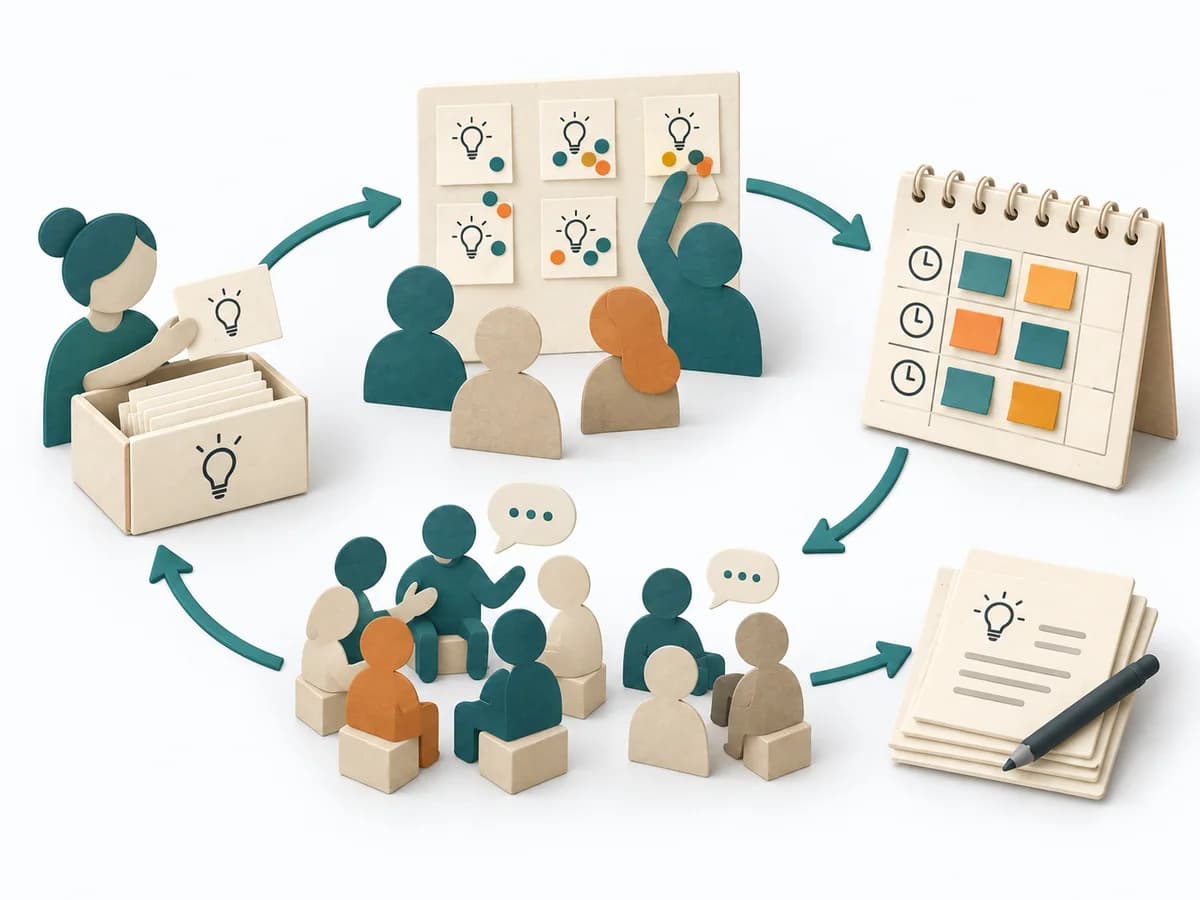 Facilitation Barcamp |  Product Strategy DIBB |  Facilitation Power Interest Grid |
|---|---|---|---|
Purposedifferent | When many people can contribute knowledge and the flow should stay open, Barcamp provides a framework for self-organized sessions. The format channels energy without defining the content too narrowly in advance. | DIBB helps clarify target groups, value, goals, and priorities by making the logic behind a decision explicit. It captures results as a DIBB document, belief list, bet list, and learning report. | When many stakeholders compete for attention at once, the Power Interest Grid sorts them by influence and stake. It turns individual contributions into a visible selection. The result is captured as a Power Interest Grid and a stakeholder-specific strategy. |
Complexitydifferent | Medium | Low | Low |
Timedifferent | Halber Tag bis 2 Tage | 1-2 h | 30-60 min |
Participantsdifferent | 15-200 | 2-8 | 2-8 |
Formatdifferent | Workshop | Workshop + async | Workshop |
Outputdifferent | Session Board, Session Notes, Community Learnings | DIBB document, Belief list, Bet list, Learning report | Power Interest Grid, Strategy per Stakeholder |
Tagsno overlap | FacilitationLarge groupLearning | StrategyDecisionAssumptionsHypothesis | StakeholdersFacilitationAlignmentPlanning |
Often compared together
Methods with strong topical overlap with the current selection, not yet in the comparison.