View methods side by side.
Choose up to four methods. Add them using the search and share the comparison by copying its link.
| Criterion |  Decision Making Assumption Surfacing | 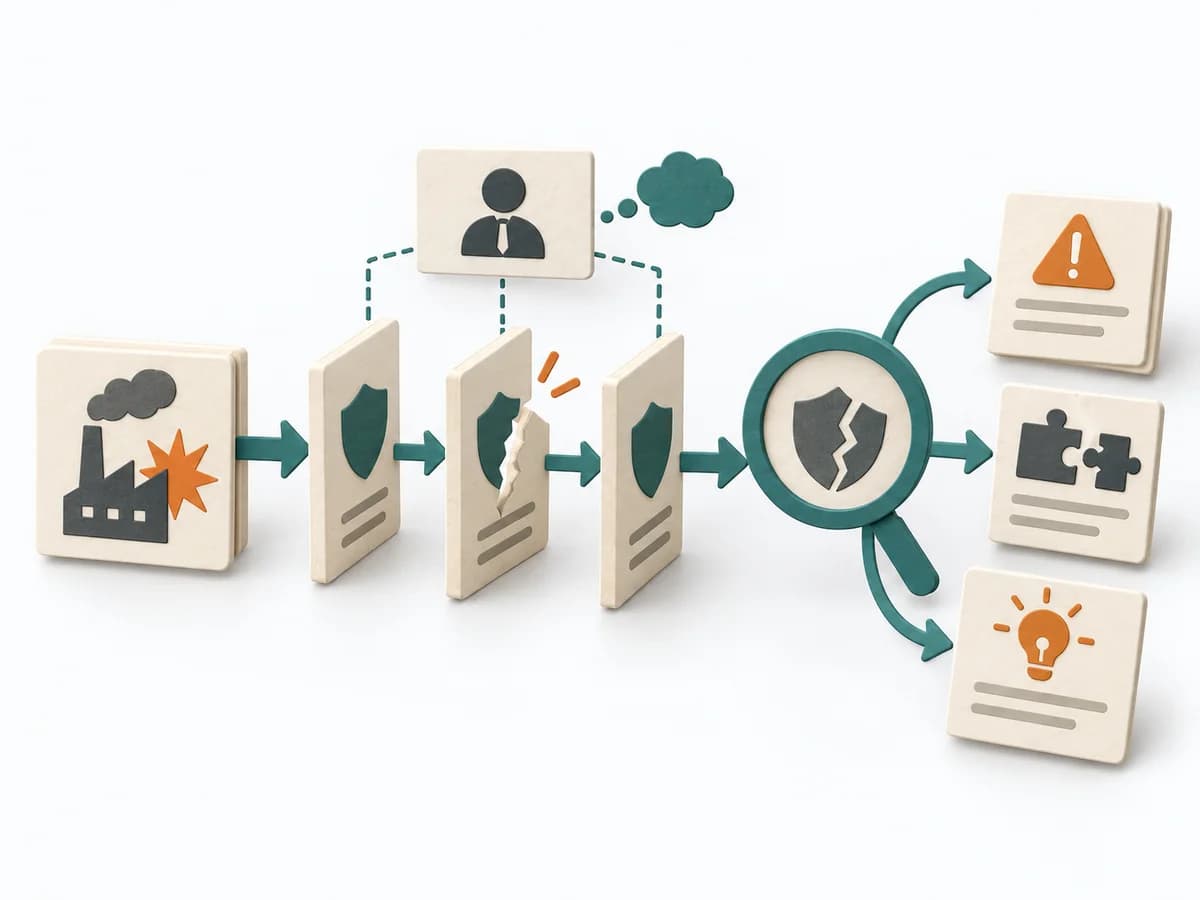 Operations MORT Analysis |  Operations 5 Whys |
|---|---|---|---|
Purposedifferent | Plans often contain assumptions that were never openly stated and remain dangerous precisely because of that. Assumption Surfacing makes these silent premises visible and prioritizes which of them carry the initiative or could sink it. | For a safety-relevant event or a system with high protection requirements, the method examines where controls failed. It exposes both technical and organizational gaps. | For a single, hard-to-explain deviation, the method exposes the causal chain behind the visible symptom. It keeps the cause open until a controllable condition emerges instead of a mere description. |
Complexitydifferent | Low | High | Low |
Timedifferent | 45-90 min | Mehrere Tage bis Wochen | 15-30 min |
Participantsdifferent | 2-8 | 2-6 | 2-6 |
Formatdifferent | Workshop + async | Workshop + async | Workshop |
Outputdifferent | Assumption List, Critical Assumptions, Learning Plan | MORT Worksheets, Findings per Branch, Corrective Actions, Systemic Recommendations | Root cause notes, Countermeasures |
Tagsno overlap | AssumptionsRiskDecisionDiscovery | Root causeSafetySystemicIncident | Root causeIncidentLeanProblem solving |
Often compared together
Methods with strong topical overlap with the current selection, not yet in the comparison.