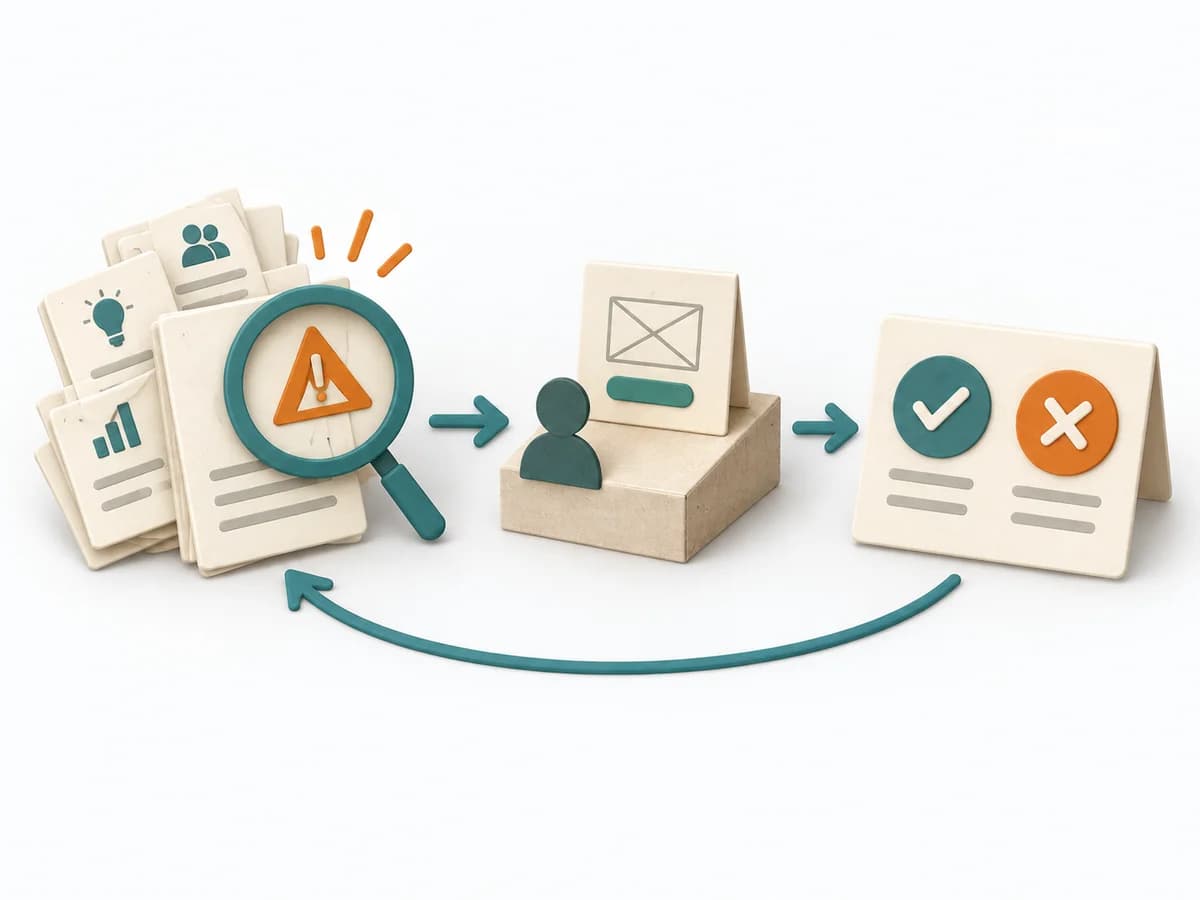
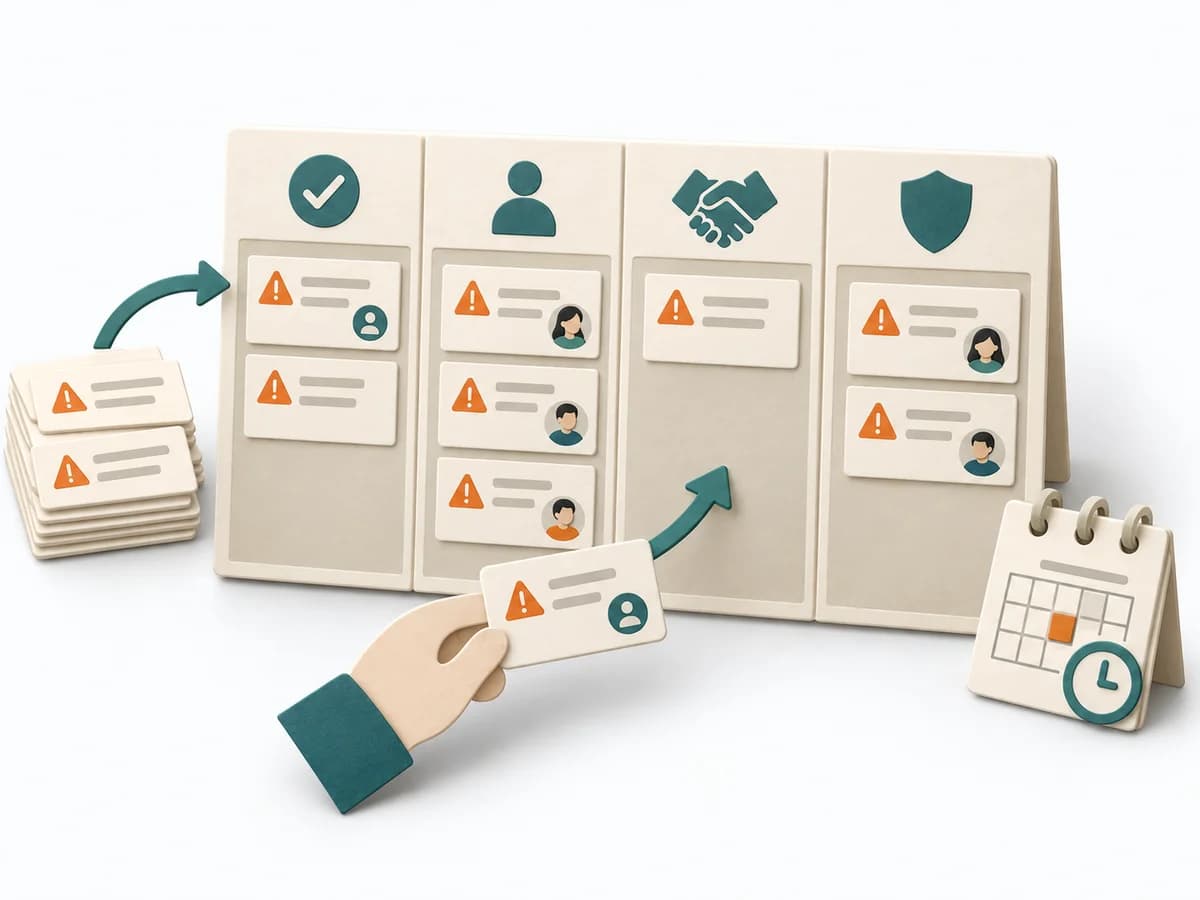
View methods side by side.
Choose up to four methods. Add them using the search and share the comparison by copying its link.
| Criterion |  Product Discovery Assumption Mapping | 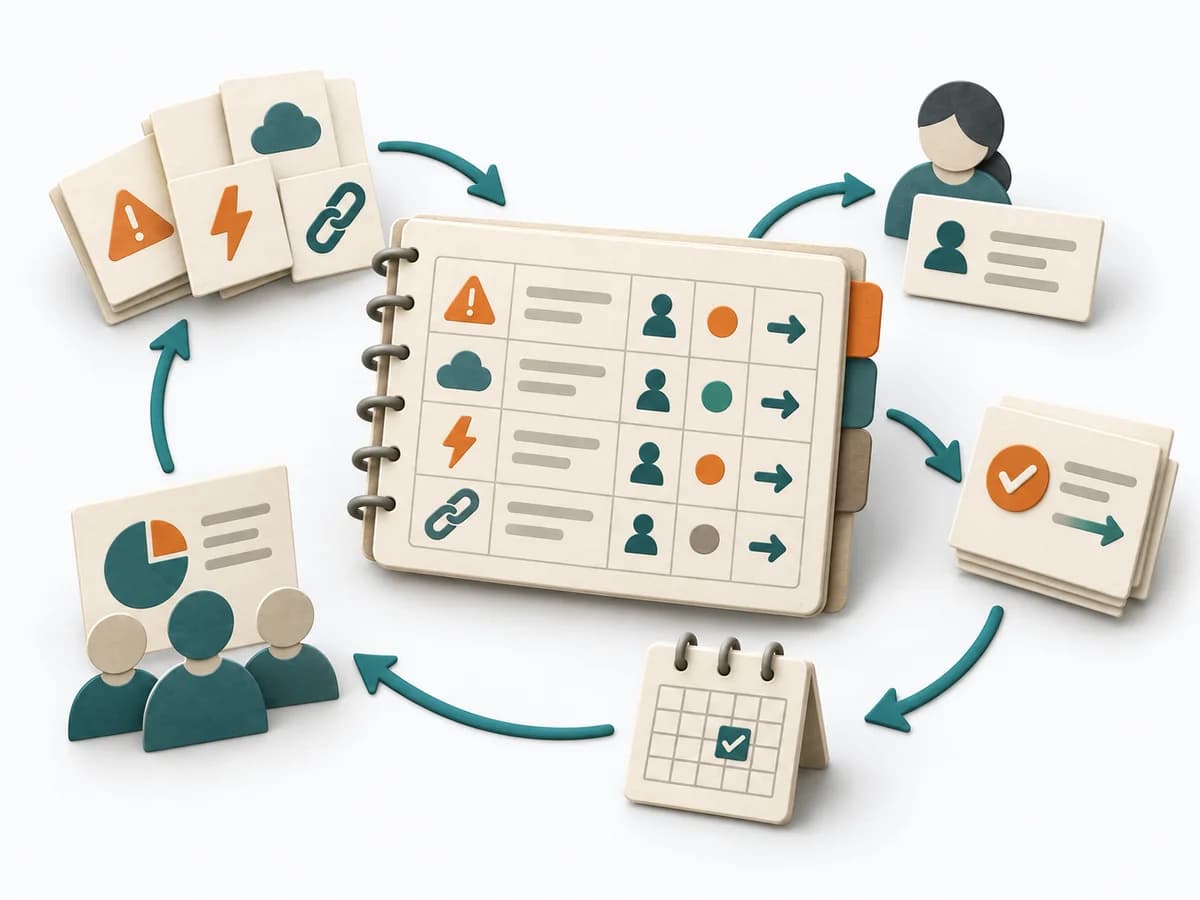 Delivery RAID Log |  Facilitation Alignment Mapping |
|---|---|---|---|
Purposedifferent | When assumptions still sit unordered in the room, it weighs uncertainty against leverage. It makes visible which hypotheses should be checked first. | Helps clarify scope, sequence, and delivery flow in concrete terms. It makes work, boundaries, and order steerable. The result is captured as a RAID Log and a source for status reporting. | When several people work toward one goal but hold different mental maps, Alignment Mapping makes the discrepancies visible. It arranges goals, assumptions, and priorities so shared direction becomes verifiable. |
Complexitydifferent | Medium | Low | Medium |
Timedifferent | 45-60 min | 30 min Setup, dann laufend | 1-2 h |
Participantsdifferent | 2-8 | 1-3 maintaining, briefing for everyone | 4-12 |
Formatdifferent | Workshop + async | Async | Workshop |
Outputdifferent | Assumption map, Test backlog, Risk ranking | RAID Log, Status Report Source | Alignment Map, Open Issues, Decision Questions |
Tagsno overlap | AssumptionsRiskExperimentsValidation | RiskTrackingStakeholdersGovernance | AlignmentStakeholdersStrategyFacilitation |
Often compared together
Methods with strong topical overlap with the current selection, not yet in the comparison.