View methods side by side.
Choose up to four methods. Add them using the search and share the comparison by copying its link.
Selected:ARID (Active Reviews for Intermediate Designs)Hypothesis-Driven TroubleshootingGetting Things Done
| Criterion |  Architecture ARID (Active Reviews for Intermediate Designs) |  Engineering Hypothesis-Driven Troubleshooting | 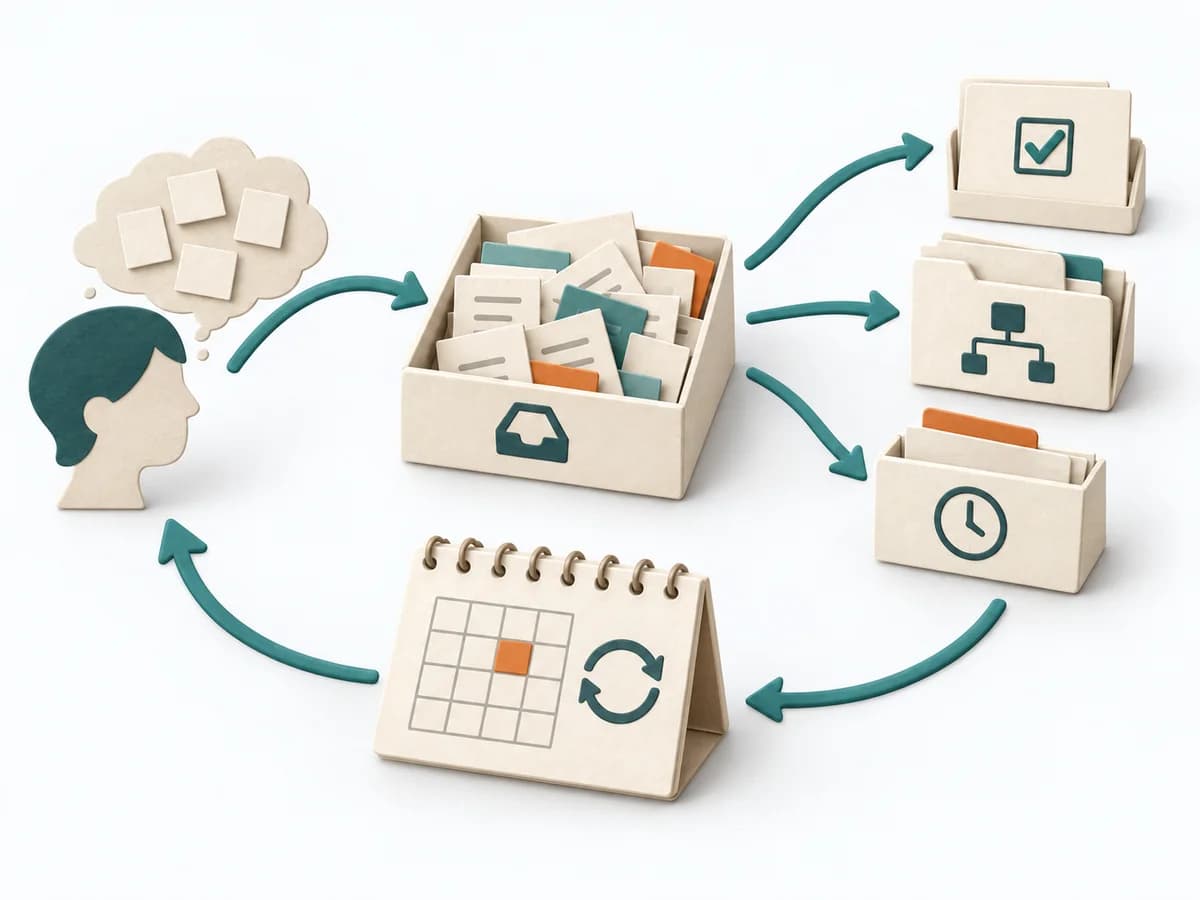 Operations Getting Things Done |
|---|---|---|---|
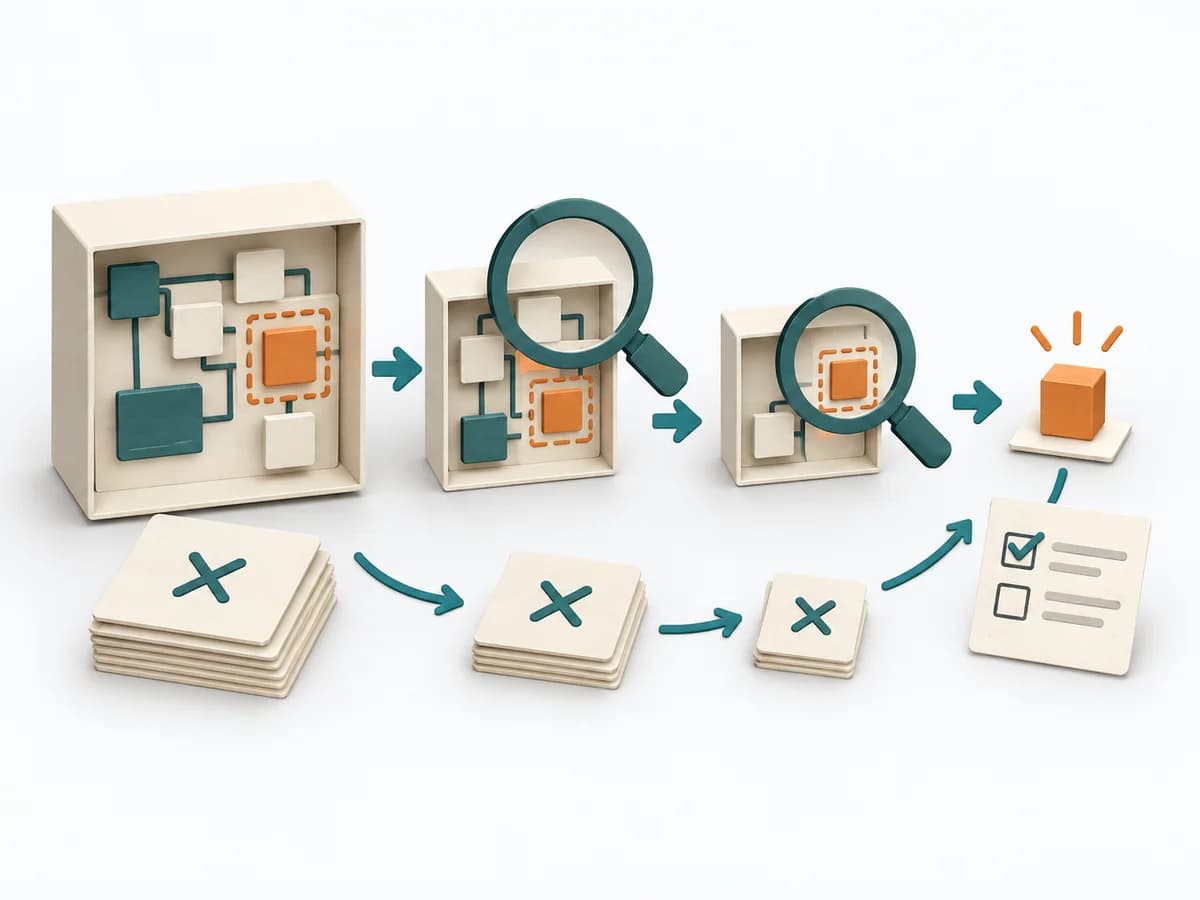
Purposedifferent | ARID examines how well developers can work with a technical design. It focuses on a part of the system that can still be revised, between the architecture overview and the detailed specification. | When systems fail unexpectedly, spontaneous attempts often produce more noise than insight. Hypothesis-driven Troubleshooting translates symptoms into testable assumptions and makes troubleshooting learnable. | With many open commitments and ideas in daily life, a reliable external storage system emerges. The method relieves the mind so priority and context don't have to compete in memory. |
Complexitysame | Medium | Medium | Medium |
Timedifferent | 2–4 h review as a planning range; preparation and evaluation additional | 30-240 min | 1-2 h Setup, laufend |
Participantsdifferent | Designers, developers as users, and facilitation | 1-6 | 1 |
Formatdifferent | Workshop + async | Workshop + async | Async |
Outputdifferent | Prioritized development tasks, Jointly produced code or pseudocode, Observed difficulties and open design questions, Proposed design revisions | Hypothesis Log, Test Plan, Evidence Notes, Diagnosis Summary | Action Lists, Project List, Review Routine |
Tagsno overlap | ArchitectureEngineeringFeedbackValidationTasks | TroubleshootingProblem solvingDiagnosis | ProductivityPlanningTasksExecution |
Often compared together
Methods with strong topical overlap with the current selection, not yet in the comparison.