View methods side by side.
Choose up to four methods. Add them using the search and share the comparison by copying its link.
| Criterion |  Operations ALPEN Method | 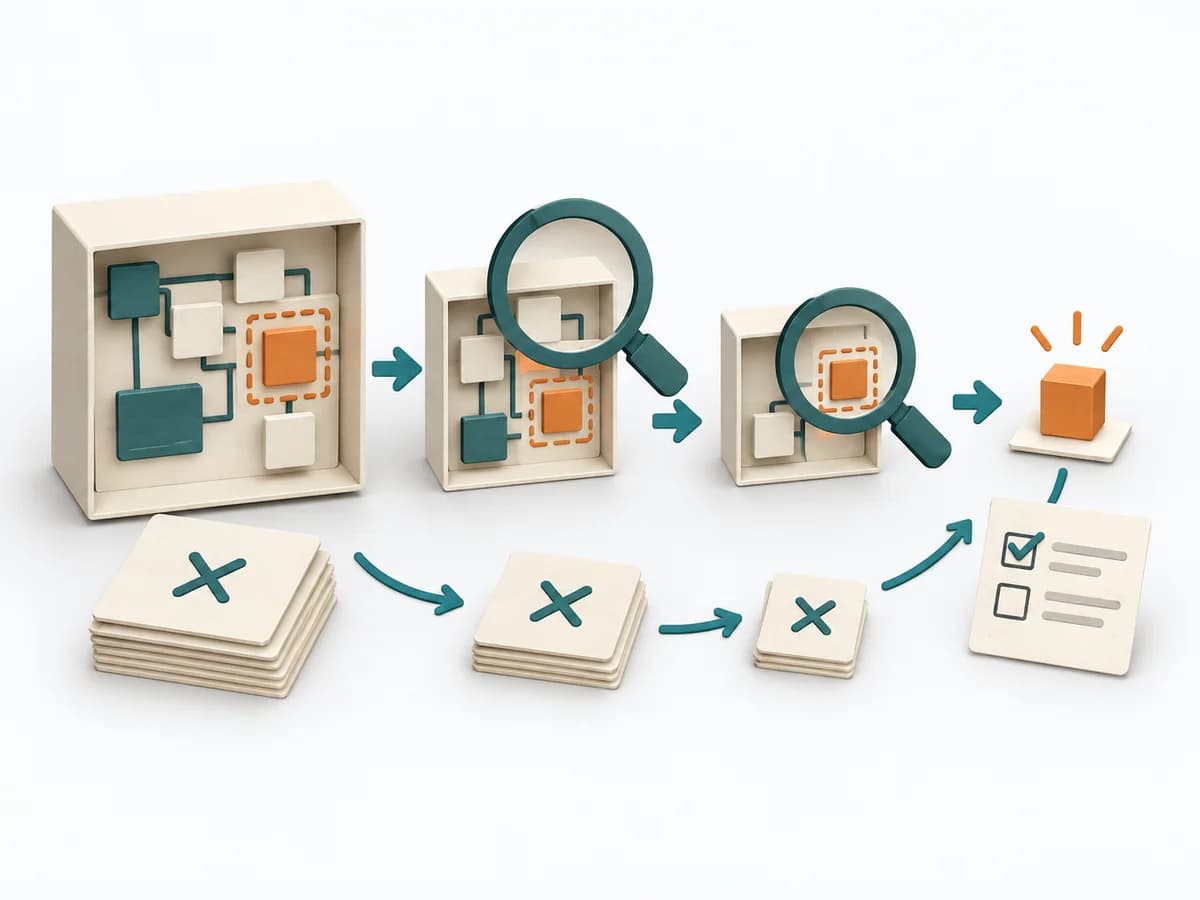 Engineering Fault Isolation |  Operations 5 Whys |
|---|---|---|---|
Purposedifferent | With an overloaded day full of too many tasks, a realistic picture of the day emerges. The method connects estimating, deciding, and buffer thinking so planning fits available energy and time. | In technical failures, the visible symptom often gets mixed up with the actual cause. Fault Isolation narrows the fault space and progressively reduces which part of the system is truly affected. | For a single, hard-to-explain deviation, the method exposes the causal chain behind the visible symptom. It keeps the cause open until a controllable condition emerges instead of a mere description. |
Complexitydifferent | Low | Medium | Low |
Timedifferent | 10-20 min daily | 30-180 min | 15-30 min |
Participantsdifferent | 1 | 1-6 | 2-6 |
Formatdifferent | Async | Workshop + async | Workshop |
Outputdifferent | Daily Plan, Time Estimates, Review Notes | Fault Isolation Map, Test Log, Excluded Hypotheses, Narrowed Fault Area | Root cause notes, Countermeasures |
Tagsno overlap | PlanningTime managementProductivityOperations | TroubleshootingDiagnosisEngineering | Root causeIncidentLeanProblem solving |
Often compared together
Methods with strong topical overlap with the current selection, not yet in the comparison.



