View methods side by side.
Choose up to four methods. Add them using the search and share the comparison by copying its link.
| Criterion | 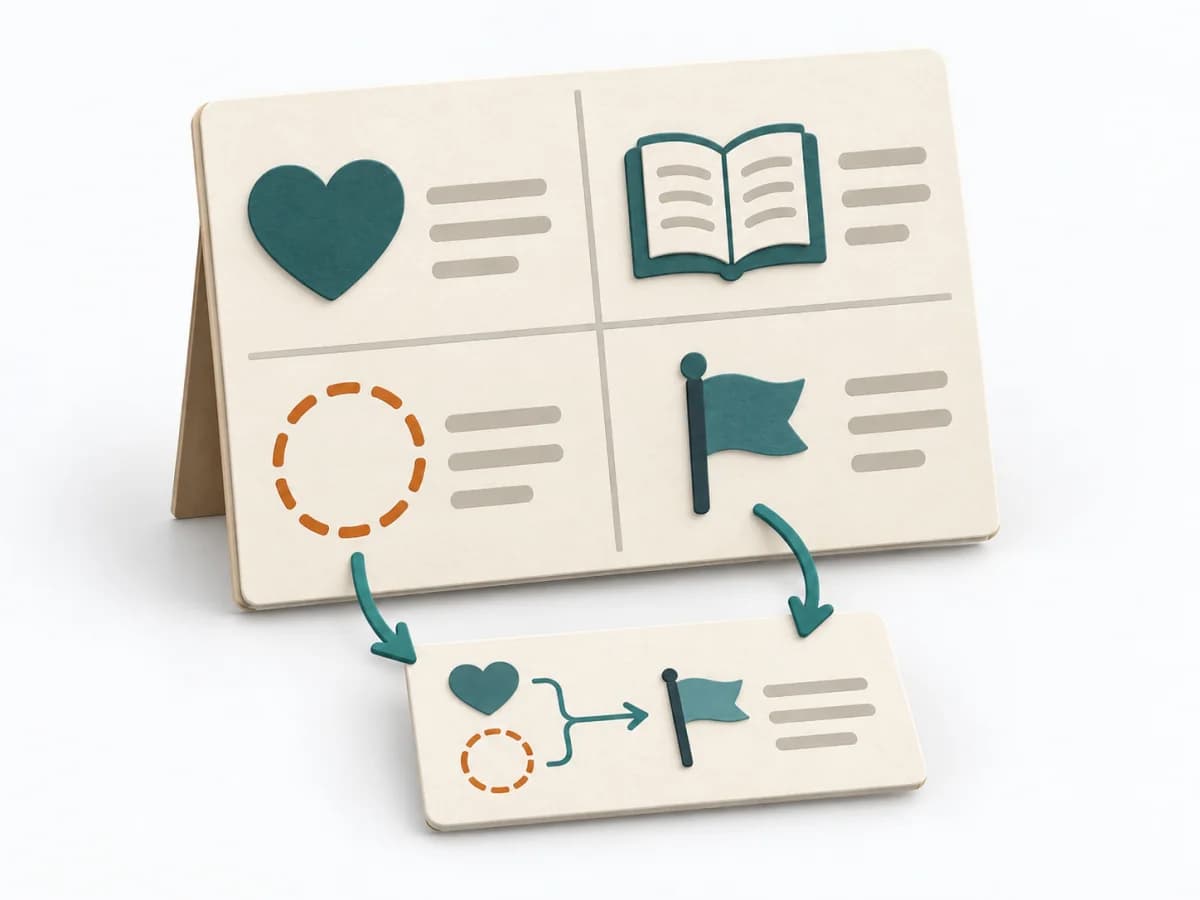 Agile 4Ls Retrospective | 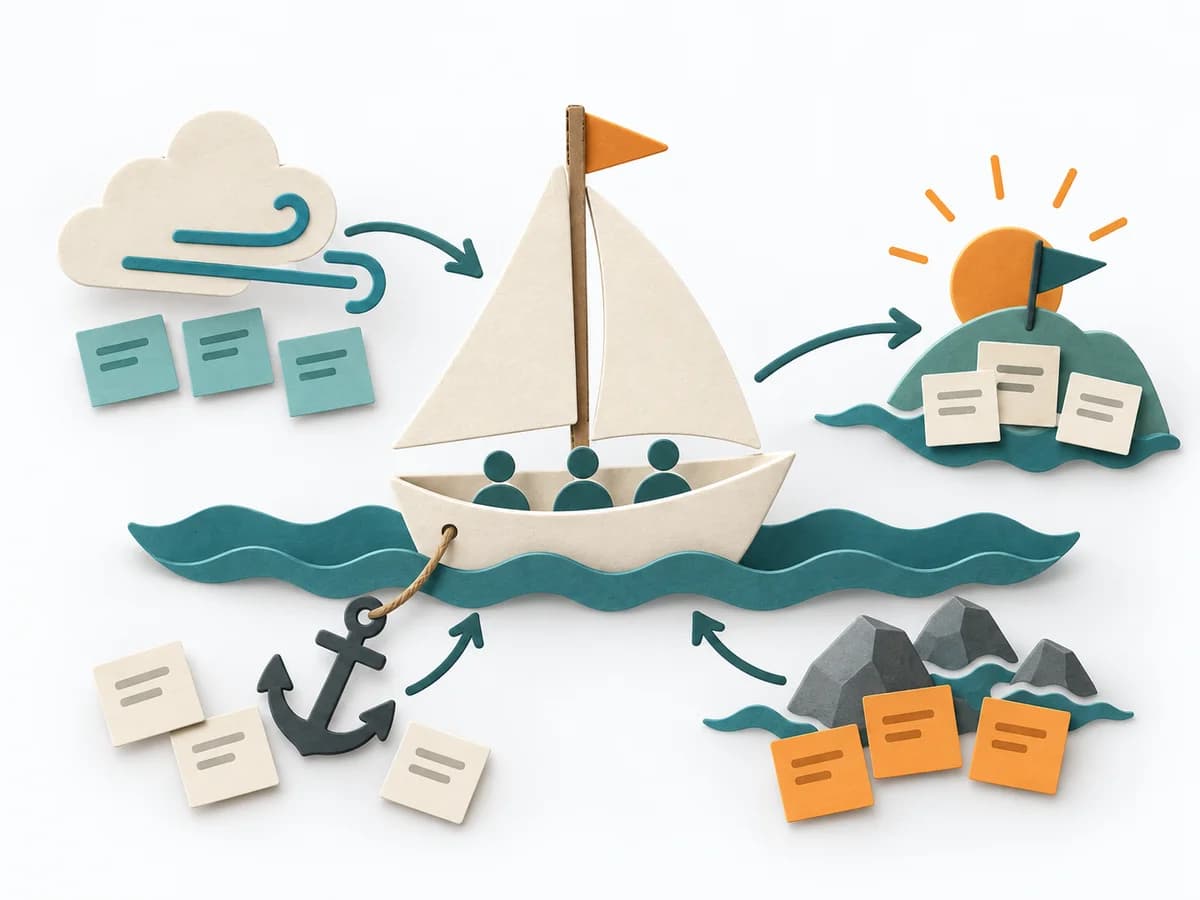 Agile Sailboat Retrospective |  Agile Sprint Retrospective |
|---|---|---|---|
Purposedifferent | When a sprint should not only be assessed but also learned from, it captures experience in clear learning categories. It records what worked, what's missing, and what should run differently next time. | When a team wants to read momentum, brakes, and risks together, it offers an easily understandable picture of the situation. It makes drive, obstacles, and headwind visible in the same picture. | When a sprint is over and friction shouldn't simply be carried forward, it opens the view onto collaboration and patterns. It creates space to see causes and changes together. |
Complexitysame | Low | Low | Low |
Timedifferent | 45–75 min | 45-90 min | Up to 3 hours for a one-month Sprint; shorter Sprints are usually shorter |
Participantsdifferent | Team members involved | 4-12 | Scrum Team |
Formatsame | Workshop | Workshop | Workshop |
Outputdifferent | 4Ls Board, Learning Themes, Improvement Actions | Sailboat Board, Risks, Improvement Actions | Improvement actions, Team agreements |
Tags1 shared | RetrospectiveLearningReflectionTeam | RetrospectiveTeamImprovement | RetrospectiveImprovementLearning |
Often compared together
Methods with strong topical overlap with the current selection, not yet in the comparison.