Complete firstOutcome-oriented goal
A clear goal and at least one potential signal are named.
A feature list does not provide a shared rationale for scope.
A practical method guide: clarify prerequisites and materials, understand the complete process, and look up outputs, pitfalls, and stop criteria.
What needs to be finished first
A clear goal and at least one potential signal are named.
Business, technical and affected-user perspectives are represented.
What needs to be ready before start
Wall space or digital mind-map board, cards for goal, actor, impact and deliverable, outcome signals and available evidence.
Business and technical owners, product team, affected user or domain perspective and one facilitator.
Gather the Why goal and current baseline. Review available indicators, influence boundaries and ongoing initiatives.
About 90–120 minutes for a focused first mapping pass; impact measurement and delivery review happen later.
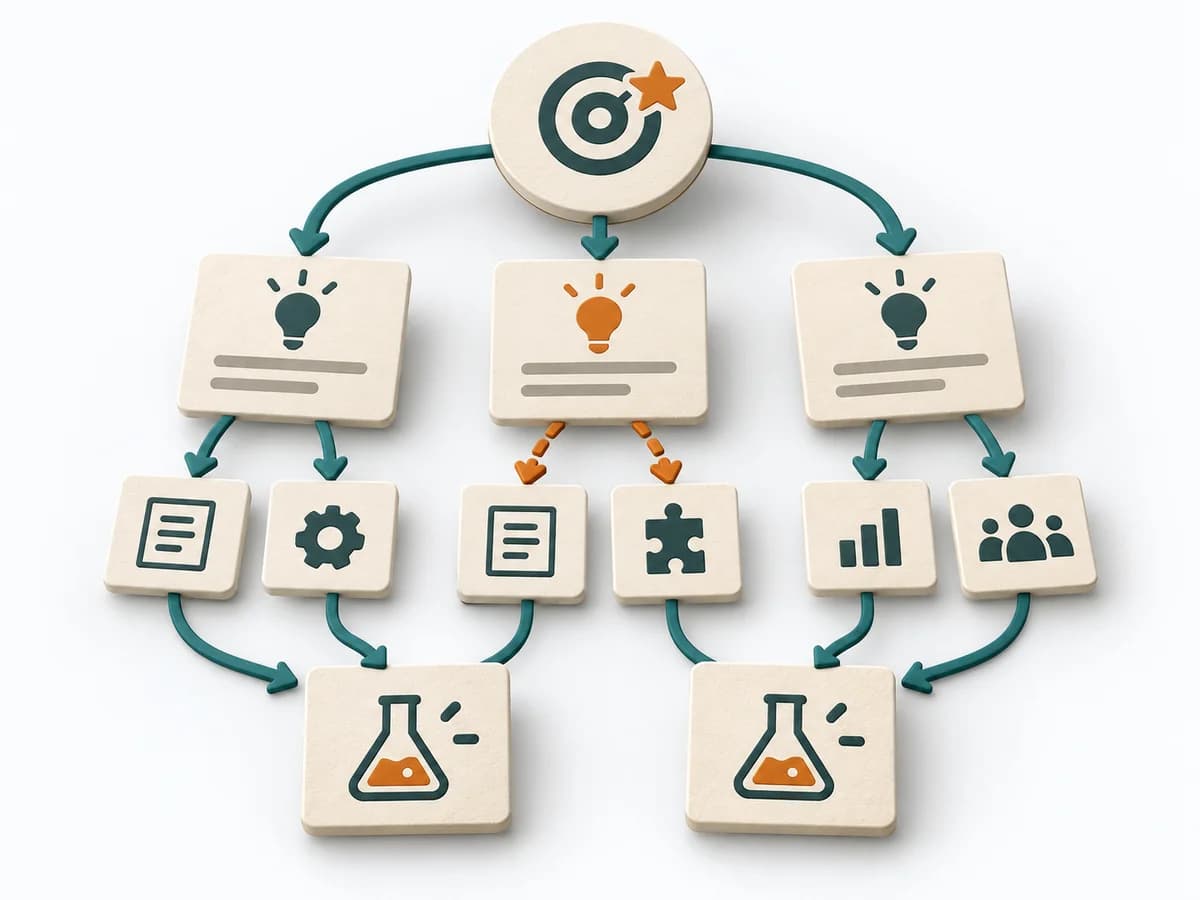
Start with Why, then branch through Who, How and What. Keep each What proposal connected to its actor and impact.
The one question this method answers
Why does the goal matter, who can influence it, how should behavior change and what could support it?
Phases with goal, actions, output and pitfall
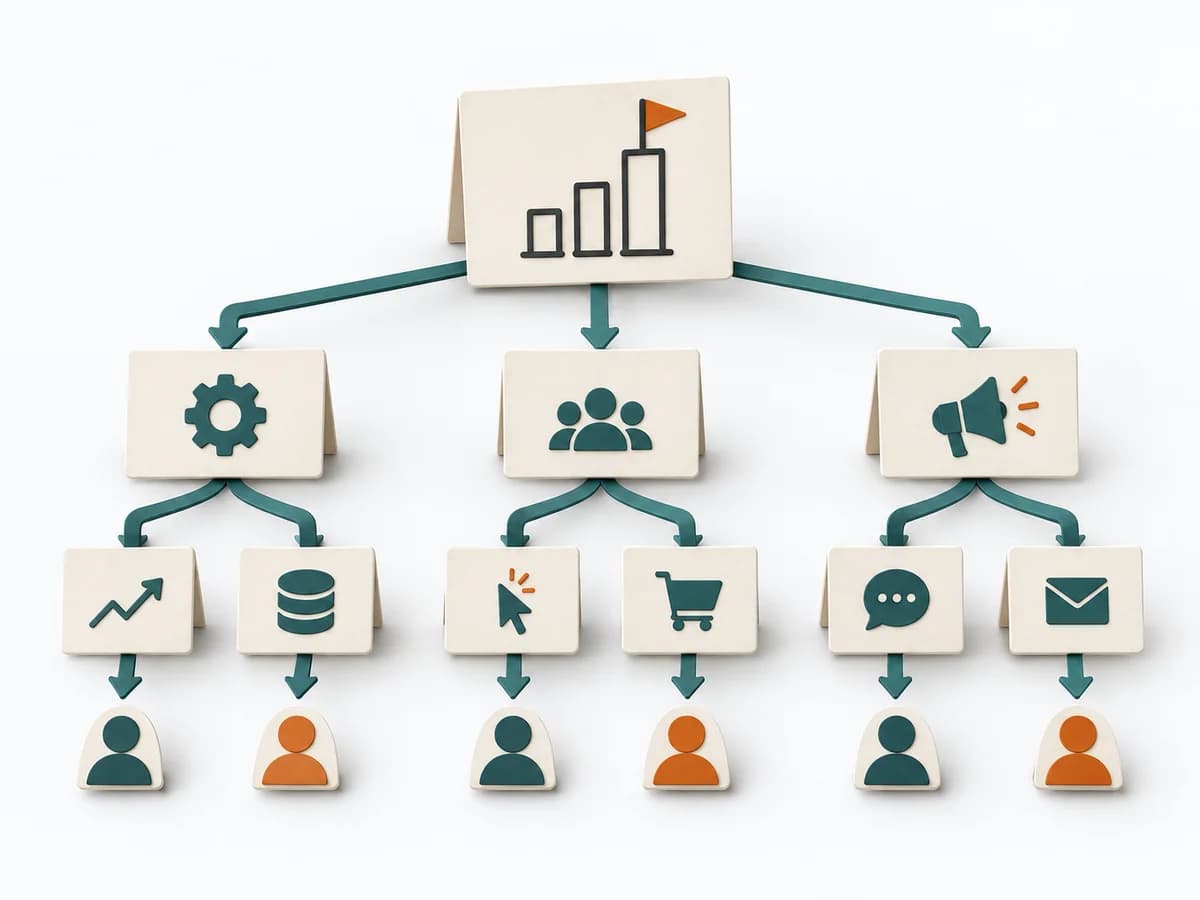
Impact Mapping is a collaborative visualization of the assumptions behind an initiative: why the goal matters, who can influence it, how behavior might change and what could support that change.
Fictional teaching example
Fictional map for a measurable outcome. The overarching Why node is stated separately; each row represents a possible actor-impact-deliverable branch.
| Possible branch | Who · actor | How · impact | What · deliverable |
|---|---|---|---|
| Branch 1Which actor, behavior and possible support belong together? | Households with occasional repair needs. | Choose available tools confidently before traveling. (Fictional impact assumption) | Availability view or firm reservation confirmation. (Option) |
| Branch 2How could this group support or obstruct the goal? | Volunteers who manage collection and returns. | Update availability and return status promptly. (Fictional impact assumption) | Simple status process or reminder workflow. (Option) |
| Branch 3Which other group can influence the impact? | Local organizations that provide tools. | Communicate stock and opening hours reliably. (Fictional impact assumption) | Coordinated stock and opening-hours process. (Option) |
Fictional Why goal: increase completed loans as a share of all reservation requests in the pilot area from 20% to 35% within eight weeks. The baseline, target and timeframe are invented. Rows are impact assumptions and options, not proven causality or delivery commitments.
Why

Goal
The map begins with a verifiable outcome instead of a feature list.
Inputs for this step
Actions
Output
Goal at the center of the impact map
Why · outcome · horizon
Quality check
Does the goal state an outcome rather than a solution delivery?
Pitfall
The goal is an activity or feature. Clarify the outcome and why it matters to the organization.
Timing: About 15 minutes.
Who

Goal
The map focuses on groups whose behavior can affect the goal.
Inputs for this step
Actions
Output
Actor groups connected to the goal
Actor · ability to influence · affectedness
Quality check
Are actors connected to the goal through their possible behavior?
Pitfall
A complete organization chart obscures relevant behavior groups. Define actors by their influence on the goal, not only by hierarchy.
Timing: About 20 minutes.
How

Goal
Each impact path is visible as a hypothesis that can be examined.
Inputs for this step
Actions
Output
Impact branches for each actor
Actor → behavior → contribution to the goal
Quality check
Does each impact describe a behavior change? Is its connection to the goal clear?
Pitfall
An impact is phrased as a delivered feature. Translate the feature idea into the behavior change it is meant to support.
Timing: About 25 minutes.
What

Goal
Scope is discussed in relation to intended impact, not as a wish list.
Inputs for this step
Actions
Output
Optional deliverables for each impact
Option → impact → actor → goal
Quality check
Can each deliverable be traced through an impact to the goal? Which assumption should be tested before delivery?
Pitfall
Deliverables are treated as committed scope. Mark them as options and measure impact after implementation.
Timing: About 20 minutes.
What comes out at the end
Sketch: what the artifact looks like
A versioned impact map with goal, actors, behavior impacts, possible deliverables, assumptions, signals and later results.
Record the goal, date and participants. Version changes to impact paths, assumptions and outcome signals; do not treat delivered items as proof of impact.
Plan the shared conversation from the goal through actors and behavior changes to possible options.
To be confirmed
To be confirmed
Develop an impact map Time: About 90–120 minutes
Complete this worksheet on paper or in your own document during the work.
| Possible branch | Actor | Behavior change | Optional deliverable |
|---|---|---|---|
| Branch 1 | |||
| Branch 2 | |||
| Branch 3 |
Blank worksheet: define the goal outside the table. For each branch, record the actor, desired behavior change, possible support and assumption.
Expected artifact: Goal at the center of the impact map
Why · outcome · horizon
Entry:
...
Expected artifact: Actor groups connected to the goal
Actor · ability to influence · affectedness
Entry:
...
Expected artifact: Impact branches for each actor
Actor → behavior → contribution to the goal
Entry:
...
Expected artifact: Optional deliverables for each impact
Option → impact → actor → goal
Entry:
...
...
Method guide: https://methodatlas.meierhoff-systems.de/en/methods/impact-mapping/run-sheet
Concrete filled scenario, fictional example
Fictional example for orientation. Counts and timings describe this case and are not universal requirements.
Concrete filled scenario, fictional example
All goals, impact assumptions and deliverables are invented; no causal evidence is available.
Why (fictional): Increase completed loans as a share of all reservation requests in the pilot area from 20% to 35% within eight weeks. The baseline, target and timeframe are invented.
Who: Households that need a tool; tool-library volunteers.
How: Households can assess availability in advance; volunteers update status promptly. These are behavior assumptions to test.
What options: Reservation confirmation; simple status workflow. Both remain options.
Next step: Examine whether availability uncertainty affects loan completion. The map is an impact model, not proof of causality.
Recognize symptoms and steer against them
Quick overview, the full text is in the matching phase in the flow
The goal is an activity or feature.
Clarify the outcome and why it matters to the organization.
A complete organization chart obscures relevant behavior groups.
Define actors by their influence on the goal, not only by hierarchy.
An impact is phrased as a delivered feature.
Translate the feature idea into the behavior change it is meant to support.
Deliverables are treated as committed scope.
Mark them as options and measure impact after implementation.
When to pause, resolve prerequisites, or choose another approach
Go to the profile for purpose, similar methods, and sources or continue to the next method in the catalog.